
Global
Cleaver Family (Cross-Cultural Overview)
Independently developed across Africa, East Asia, Southeast Asia, and Latin America
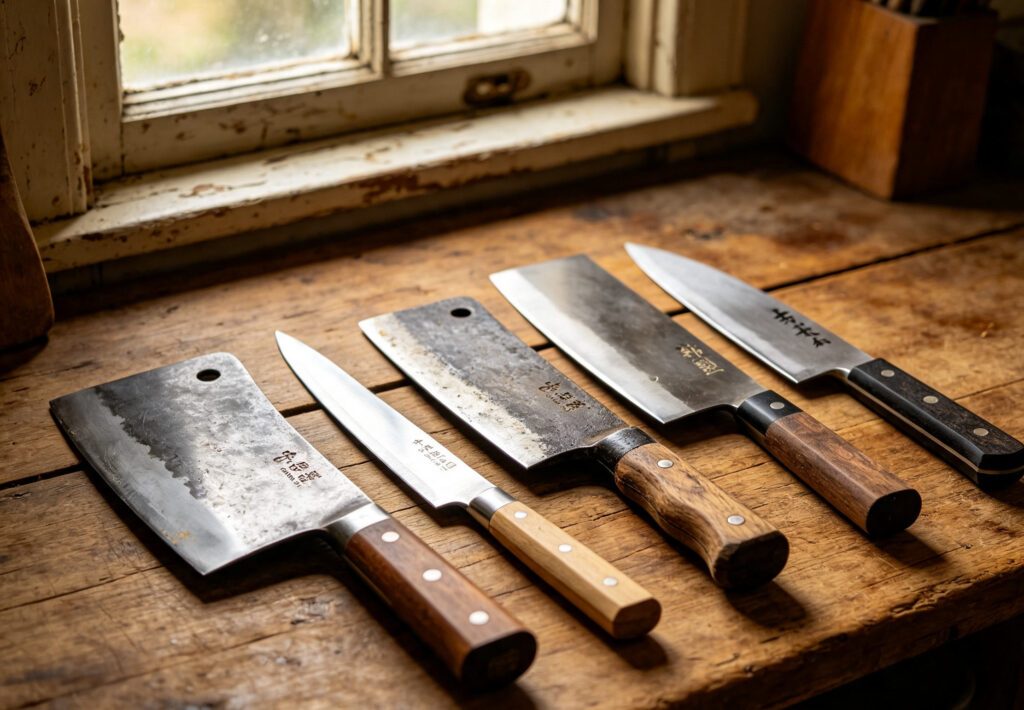
The broad, heavy-bladed cleaver — capable of both fine work and powerful chopping — recurs with striking consistency across unrelated culinary traditions: Africa's panga, China's cai dao, the Philippines' bolo, Indonesia's golok, and Latin America's machete de cocina all converge on a similar broad-blade solution to needing one tool that handles both delicate and heavy cutting.
Material & Construction
Blade width, weight, and curvature vary by regional tradition, but the core design principle — a single wide, heavy blade replacing the need for multiple specialized knives — recurs consistently.
Traditional Uses
Serving as an all-purpose or near-all-purpose kitchen tool in many of the households and food cultures where it appears, particularly common in regions without a tradition of owning multiple specialized knives.
Modern Availability / Equivalents
Western-style dedicated cleavers, along with the regional versions themselves, remain in active parallel use; no single version has displaced the others globally.
Care & Maintenance
Care varies with the material.
The cleaver is a recurring, convergent design — the panga, cai dao, bolo, golok and machete de cocina are all examples.
Please log in to leave a comment.