
Europe
Tin-Lined Copper Pot
France, broader Europe
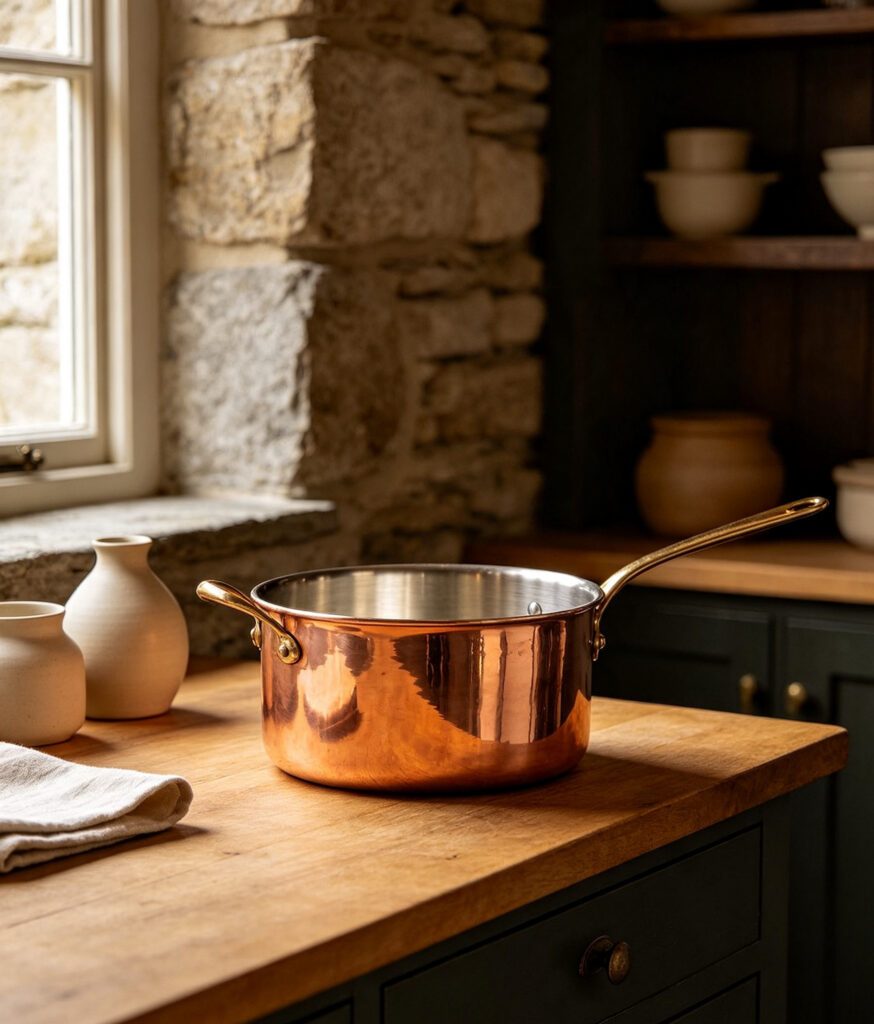
A cooking pot made of copper, prized for its extremely fast and even heat conduction, lined on the interior with tin (or, in modern versions, stainless steel) since raw copper reacts with acidic and many other foods.
Material & Construction
Copper body for heat conduction, with a thin interior lining (traditionally tin, hand-applied by a specialist tinning craftsperson) to create a food-safe cooking surface.
Traditional Uses
Precision cooking requiring rapid, even heat response — classical French sauce-making, candy-making, and egg-based preparations (such as copper bowls for whipping egg whites) in particular.
Modern Availability / Equivalents
Widely available at a significant price premium through professional and high-end kitchenware retailers, both in traditional tin-lined and modern stainless-lined versions; stainless steel or aluminum-core cookware approximates but doesn't match copper's specific heat responsiveness.
Care & Maintenance
Tin linings wear over time and require periodic re-tinning by a specialist; never use metal utensils or abrasive scrubbers on tin linings, and never use raw, unlined copper directly with acidic or alkaline foods.
The re-tinning requirement is a genuine long-term maintenance consideration distinguishing copper from most other cookware materials — an ongoing cost of ownership.
Please log in to leave a comment.