
Africa
Tagine
Morocco / broader Maghreb
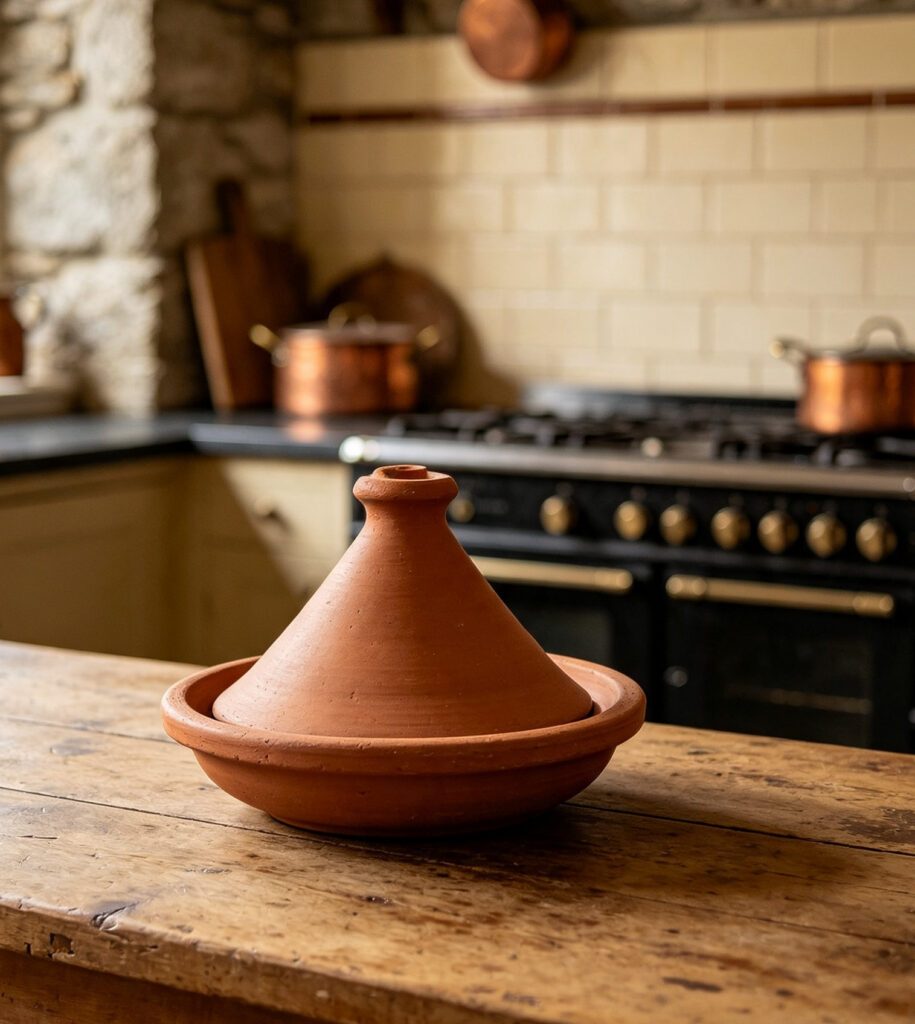
A two-piece cooking vessel consisting of a shallow, round clay base and a distinctive tall, conical lid, named after both the vessel and the slow-cooked stew traditionally prepared in it.
Material & Construction
Traditionally unglazed or partially glazed terracotta; the conical lid design returns condensed steam back down onto the food, allowing long, low cooking with minimal added liquid.
Traditional Uses
Slow-cooking meat, vegetable, and fruit stews over low charcoal heat or a diffuser on a stovetop; also used decoratively for serving at the table.
Modern Availability / Equivalents
Widely available internationally in both traditional unglazed clay and modern glazed or cast-iron-based versions designed for direct stovetop use; a Dutch oven with a tented foil lid is a common improvised substitute.
Care & Maintenance
New unglazed clay tagines typically require seasoning (soaking, then a slow initial oiled bake) before first use to reduce cracking risk; always start on low heat and avoid sudden temperature changes, which can crack the clay.
Decorative glazed tagines sold primarily for tableware are not always rated for direct stovetop cooking — worth distinguishing from cooking-grade tagines when purchasing.
Please log in to leave a comment.