
Central/South America
Metate y Mano
Mexico and broader Mesoamerica
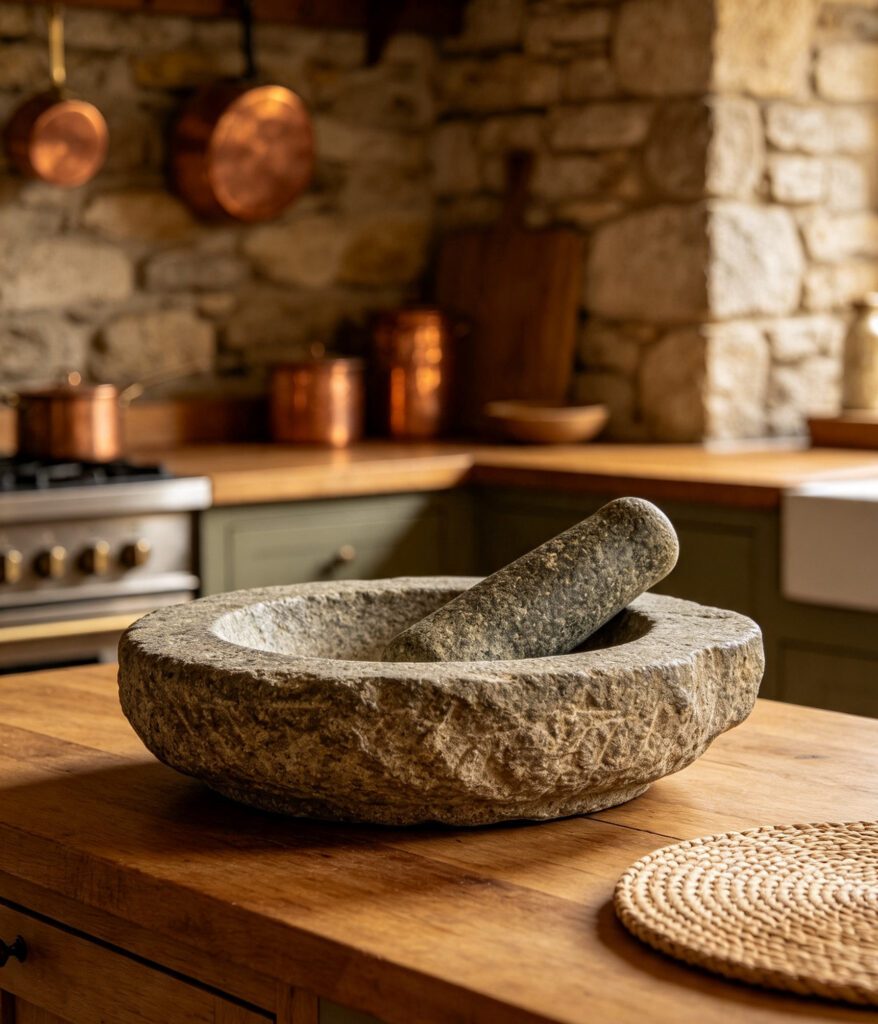
A flat or slightly concave grinding stone (metate) paired with a hand-held grinding stone (mano), used since pre-Columbian times to grind corn into masa and to process cacao, among the oldest documented cooking tools in the Americas.
Material & Construction
Carved volcanic stone, typically set at an angle to allow ground material to fall into a collection area as the mano is rolled back and forth across the surface.
Traditional Uses
Grinding nixtamalized corn into masa for tortillas and tamales; historically also used for grinding cacao beans in early chocolate preparation.
Modern Availability / Equivalents
Increasingly rare in daily use given the availability of electric corn mills and pre-made masa, though metates remain in ceremonial, traditional, and some rural household use, and are also sold as decorative or heritage items.
Care & Maintenance
Cure and clean similarly to a molcajete; the flat grinding surface benefits from periodic re-roughening as it smooths with extended use.
One of the oldest continuously used food preparation tools in this entire atlas, with archaeological evidence of metate use in Mesoamerica dating back several thousand years.
Please log in to leave a comment.