
Europe
Gliniak (Polish Clay Baker)
Poland, broader Central/Eastern Europe
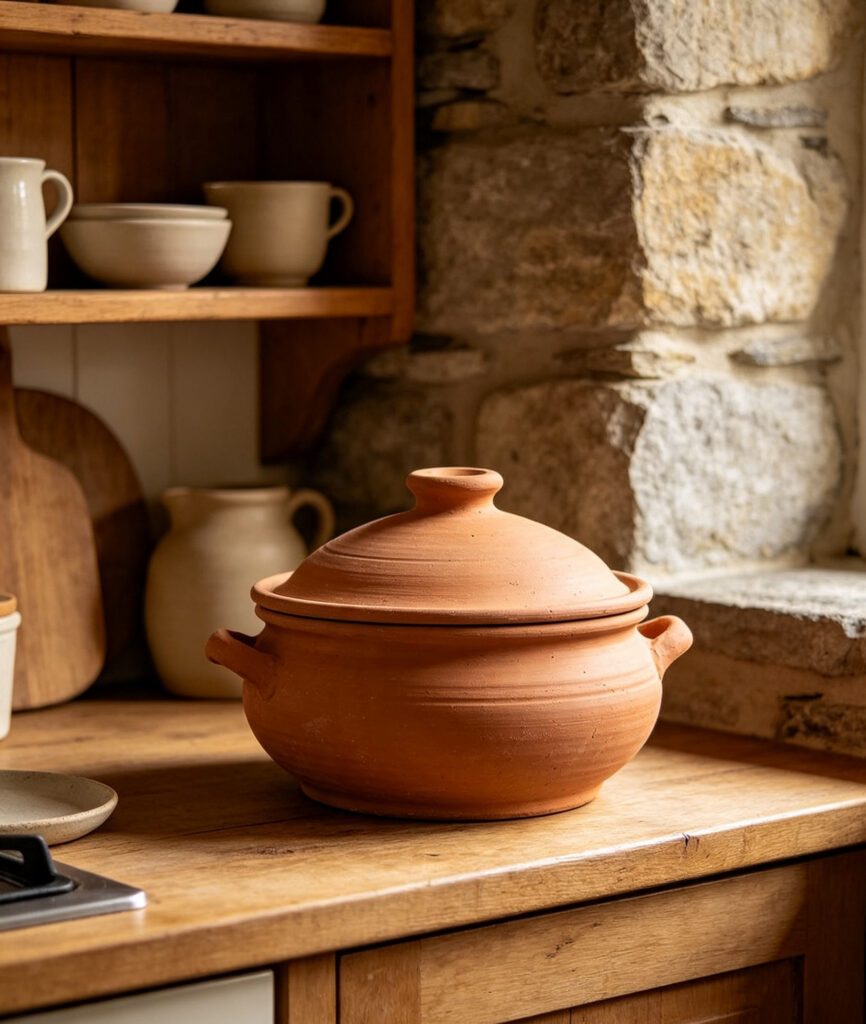
An unglazed clay baking dish, typically used with a matching lid to slow-roast meat and vegetables in their own moisture without added fat, a technique related to but independently developed from other regional clay-baking traditions.
Material & Construction
Unglazed terracotta, both the base and lid porous, allowing the vessel to absorb water (traditionally soaked before use) that then releases as steam during cooking.
Traditional Uses
Slow-roasting meat and vegetables using the moisture the soaked clay releases during baking, producing a moist result without significant added fat.
Modern Availability / Equivalents
Widely available through Polish and broader Central European kitchenware suppliers, and under related names (such as the German "Römertopf") elsewhere in the region; a covered roasting pan can substitute functionally without the specific moisture-release mechanism.
Care & Maintenance
Soak in water before each use per the specific design; season new pots per manufacturer instructions and avoid sudden temperature changes.
Part of a broader family of soaked-clay baking vessels across Central Europe, appearing under different regional names for what is functionally a very similar technique and design.
Please log in to leave a comment.