
Drinks
Ancient Egyptian Barley Beer
The Quirky Foodster Team
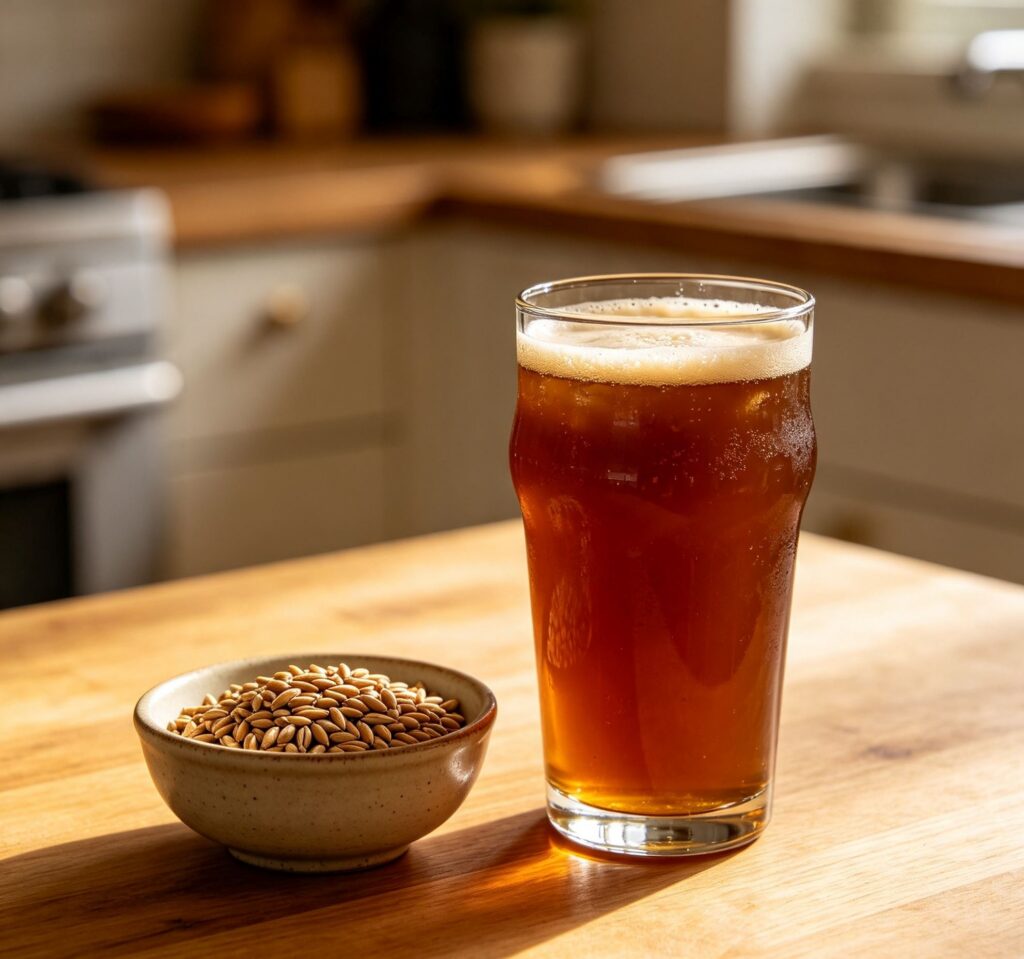
Ingredients
- 500g (about 1 lb) Coarse barley loaf or barley bread, lightly toasted and crumbled
- 2 liters (8 cups) water
- 100g (1/2 cup) Dates, chopped, for natural sweetness and wild yeast activity
- 1/2 teaspoon active dry yeast (a modern aid to fermentation)
Method
- Toast the crumbled barley bread in a dry pan until deeply browned but not burnt, about 8-10 minutes.
- Place the toasted bread in a large pot with the water and dates, bring to a simmer, and cook for 30 minutes.
- Mash the mixture roughly and strain through cheesecloth into a fermentation jar, pressing to extract as much liquid as possible.
- Once cooled to lukewarm, stir in the yeast.
- Cover loosely with cheesecloth and leave in a cool, dark place for 4-5 days, stirring once daily, until lightly fizzy and tangy-sweet.
- Strain again, bottle, and refrigerate. Serve chilled.
Native/Reconstructed Name: Henket
Cultural Background: Henket, barley beer, was as fundamental to ancient Egyptian life as bread, so much so that workers were often
paid in rations of both. Thick, only mildly alcoholic, and nutritionally significant, it was consumed daily by people
of every social class and offered in vast quantities at temples and tombs as sustenance for gods and the dead.
This home-brewing method reconstructs the process using barley bread as a starter, the technique believed to
have been used historically.
Tips:
– The deeper the toast on the bread, the darker and more robust the finished beer will taste.
– Taste daily after day 3 — fermentation time varies with room temperature.
Variations:
– Add a few crushed juniper berries or coriander seeds during simmering for extra aromatic complexity.
– Reduce fermentation to 2 days for a milder, sweeter, less alcoholic version closer to a fermented barley drink.
Storage: Refrigerate in sealed bottles for up to 1 week; release pressure from bottles carefully as carbonation builds.
Reheating: Not applicable — served cold or at cellar temperature.
Nutrition: Approx. 110 kcal, 2 g protein, 20 g carbohydrate, 1 g fat per serving.
FAQs:
Q: How alcoholic is this beer?
A: Historically, ancient Egyptian beer is estimated to have been fairly low in alcohol, likely comparable to a light
modern beer.
Q: Is this safe to make at home?
A: Yes, using basic home-fermentation hygiene, though it should be tasted before serving to confirm it has
fermented pleasantly rather than spoiled.
Please log in to leave a comment.