
Mains
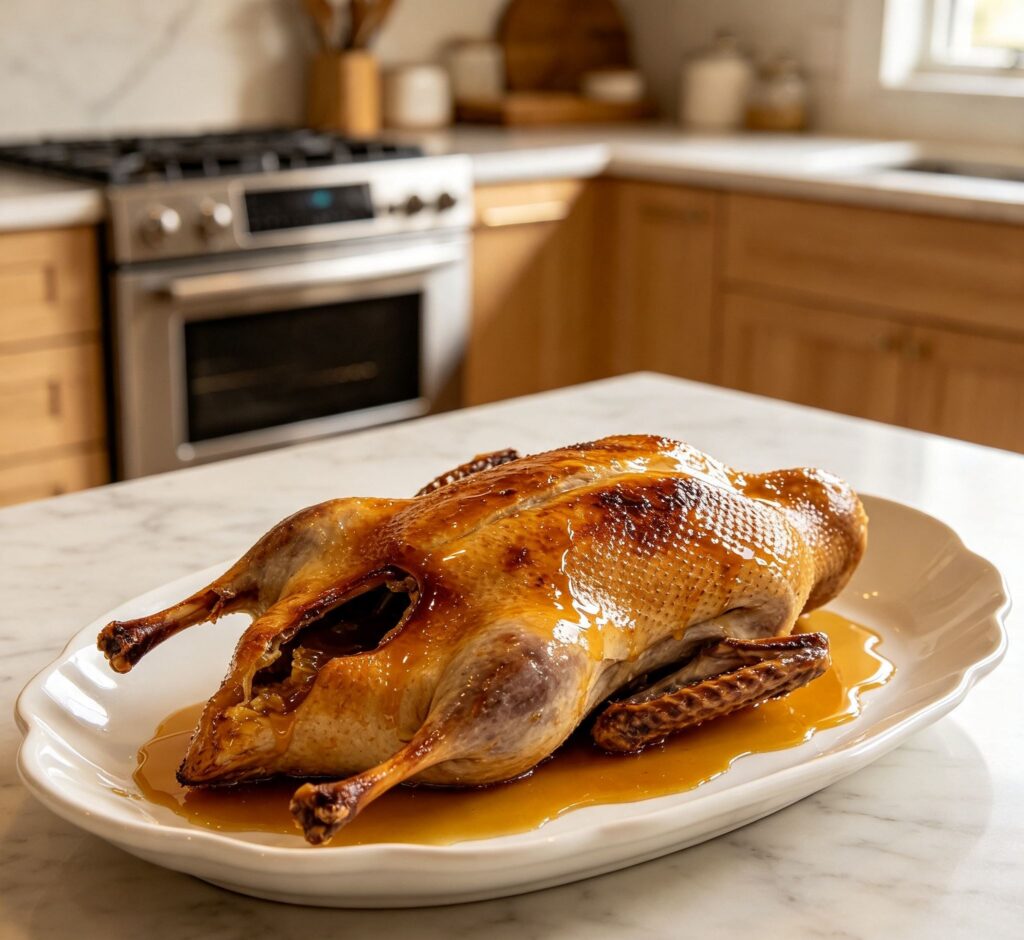
Roasted Nile Goose with Honey Glaze
The Quirky Foodster Team
Ingredients
- 1 whole goose (about 4-4.5 kg / 9-10 lb)
- 4 tablespoons honey
- 2 tablespoons sesame oil
- 4 garlic cloves, crushed
- 1 tablespoon ground coriander
- 1 tablespoon ground cumin
- 2 teaspoons salt
- 2 onions, quartered (for the cavity)
Method
- Preheat the oven to 180°C (350°F).
- Pat the goose dry and rub the cavity with half the garlic and the quartered onions.
- Mix the remaining garlic, sesame oil, coriander, cumin, and salt into a paste and rub over the skin.
- Place the goose breast-side up on a roasting tray and roast for 1 hour 15 minutes, draining excess fat from the tray periodically.
- Warm the honey slightly and brush generously over the skin, then return to the oven for a further 25-30 minutes until the internal temperature reaches 74°C (165°F) at the thickest part of the thigh.
- Rest for 15 minutes before carving.
Native/Reconstructed Name: Ser en Nedjem (reconstructed; sweet roasted goose)
Cultural Background: Waterfowl were abundant in the marshes of the Nile Delta and roast goose was one of the most celebrated
dishes of ancient Egyptian feasting, frequently depicted on the offering tables of tombs and temples as food fit
for gods and the honored dead alike. A honey glaze marks this as a dish for special occasions, since honey
was a costly ingredient reserved for households of standing or for festival cooking.
Tips:
– Pricking the skin lightly before roasting helps render the goose's naturally high fat content.
– Reserve the rendered fat — it was a valued cooking fat in its own right and keeps well refrigerated.
Variations:
– Use duck as a smaller, faster-cooking substitute with a similar flavor profile.
– Add a handful of chopped dates to the cavity for a sweeter finish, appropriate to a festival table.
Storage: Refrigerate carved leftovers for up to 3 days.
Reheating: Reheat gently in a covered dish in a 160°C (325°F) oven until warmed through, to avoid drying the meat.
Nutrition: Approx. 420 kcal, 34 g protein, 6 g carbohydrate, 28 g fat per serving.
FAQs:
Q: Why goose specifically, rather than chicken?
A: Chickens were not yet widespread in Egypt during the periods this dish reflects — goose and duck were the
primary poultry available.
Q: Is honey glazing historically accurate for everyday meals?
A: No — honey was expensive, so a honey glaze marks this dish as festival or high-status fare rather than daily
cooking.
Please log in to leave a comment.