
Special Diets
Halal describes what is permissible under Islamic law, and in the kitchen it governs everything from which animals may be eaten to how they are slaughtered and prepared. Pork and its by-products are forbidden, as is alcohol, and meat must come from an animal slaughtered according to dhabihah, a swift cut performed while invoking the name of God and allowing the blood to fully drain.
Beyond the rules of slaughter, halal cooking reflects a broader ethic of mindfulness and hospitality drawn from Islamic tradition. Meals are often shared generously with family, guests, and those in need, and dishes across the Muslim world, from Middle Eastern rice pilafs to South Asian curries, show how varied halal cuisine can be while staying rooted in the same core principles.

Jain cuisine follows one of the world's strictest vegetarian traditions, shaped by the principle of ahimsa, or non-violence toward all living beings. Root vegetables such as onions, garlic, and potatoes are avoided, since harvesting them is believed to harm the plant and any small organisms living in the soil around it.
What remains is a resourceful, flavour-forward style of cooking built on grains, legumes, dairy, and above-ground vegetables and fruits. Spices do much of the work onions and garlic might otherwise provide, and meals are often prepared and eaten with an awareness of moderation and gratitude, with many Jains also avoiding food after sunset.
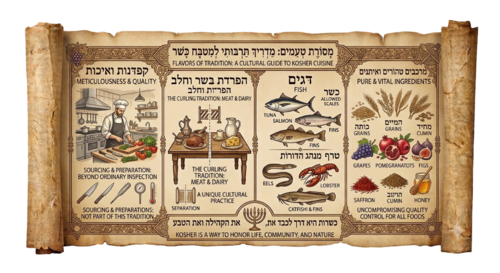
Kosher dietary law, or kashrut, sets out which foods are permitted and how they must be prepared. Land animals must both chew the cud and have split hooves, seafood must have both fins and scales, and meat and dairy are never combined, prepared, or eaten together, with separate utensils and preparation areas kept for each.
These rules have shaped a distinct culinary tradition spanning centuries and continents, from Ashkenazi comfort dishes to the bright, herb-forward cooking of Sephardic and Mizrahi communities. At its heart, keeping kosher is understood less as a restriction and more as a discipline that brings mindfulness and structure to the everyday act of eating.

In the Orthodox Christian tradition, Lent is a season of fasting observed in the weeks leading up to Easter, during which meat, dairy, eggs, and often fish, olive oil, and wine are set aside. The aim is not deprivation for its own sake but a simpler table that turns attention toward prayer and reflection.
Out of these restrictions has grown a rich, largely plant-based culinary tradition across Greece, Russia, the Middle East, and beyond, built around hearty bean soups, grain porridges, pickled vegetables, and bread. Many of these Lenten dishes have become beloved staples in their own right, eaten well outside the fasting season.