
Drinks
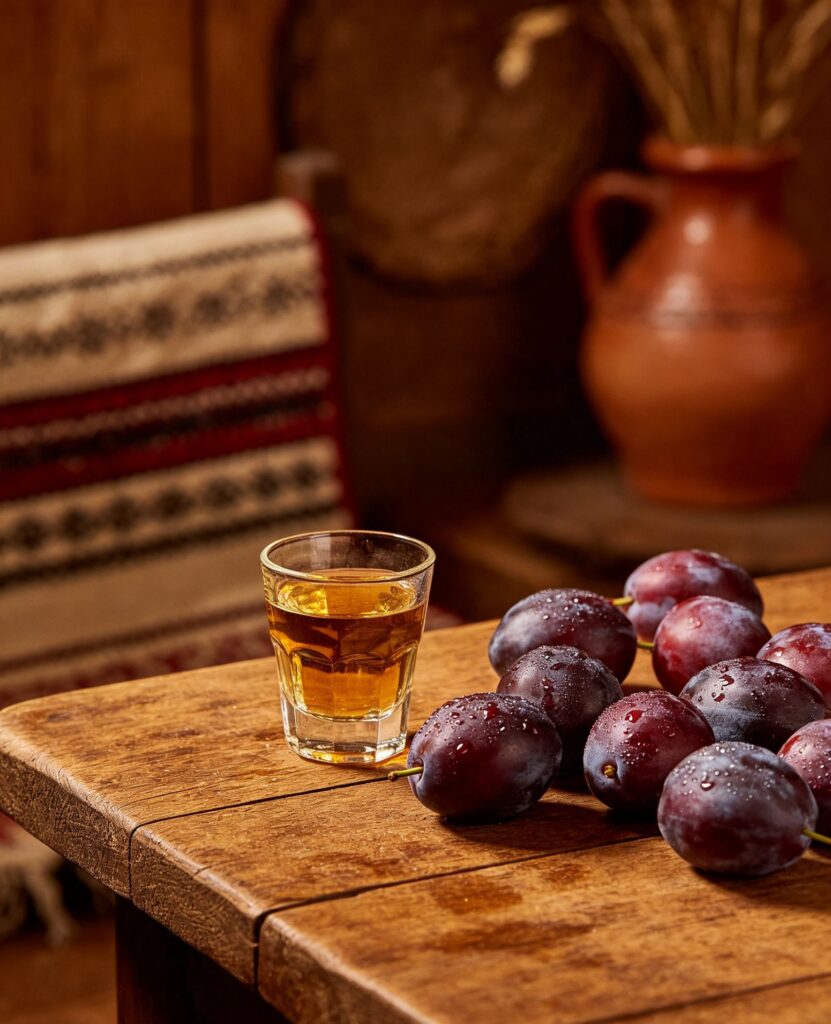
Rakija od Šljiva
The Quirky Foodster Team
Ingredients
- 5 kg (11 lb) ripe plums, pitted
- Water, as needed for fermentation
- this entry describes (Note: distillation requires specialised equipment and, in most countries, a licence
- the traditional process for cultural reference)
Method
- Crush the pitted plums thoroughly and place in a large fermentation vessel.
- Allow the mash to ferment naturally for 2-3 weeks in a cool, dark place, stirring occasionally.
- Once fermentation is complete (no more bubbling, alcoholic aroma present), the mash is distilled using a traditional copper still.
- The distillate is collected, discarding the first and last portions (heads and tails) for safety and quality.
- The resulting spirit is aged in glass or oak for at least a few months before drinking, mellowing the flavour.
Introduction: Šljivovica, plum brandy, is the most iconic spirit of Croatia and the wider Balkan region, traditionally distilled at
home from ripe autumn plums.
Cultural Background: Šljivovica, plum brandy, is the most iconic spirit of Croatia and the wider Balkan region, traditionally distilled at
home from ripe autumn plums. Often homemade in rural Slavonia, it's offered as a welcoming gesture to guests
and used in traditional toasts at celebrations.
Tips: This is a traditional home-distillation process included for cultural context; always follow local laws regarding
home distillation. Aging in oak barrels for a year or more produces a smoother, amber-coloured rakija.
Variations: Other fruits like pears (viljamovka) or quince (dunjevača) are distilled the same way.
Storage: Stored indefinitely in sealed glass bottles at room temperature, away from light.
Reheating: Not applicable.
Nutrition: Per serving (approx., 30 ml / 1 fl oz): 65 kcal, 0 g protein, 0 g fat, 0 g carbohydrate.
FAQs
Q: Is home distillation of rakija legal?
A: Laws vary significantly by country; always check and follow local regulations before attempting home distillation.
Q: How is rakija traditionally served?
A: Usually served neat, in small glasses, as a welcome drink or toast at celebrations.
Please log in to leave a comment.