
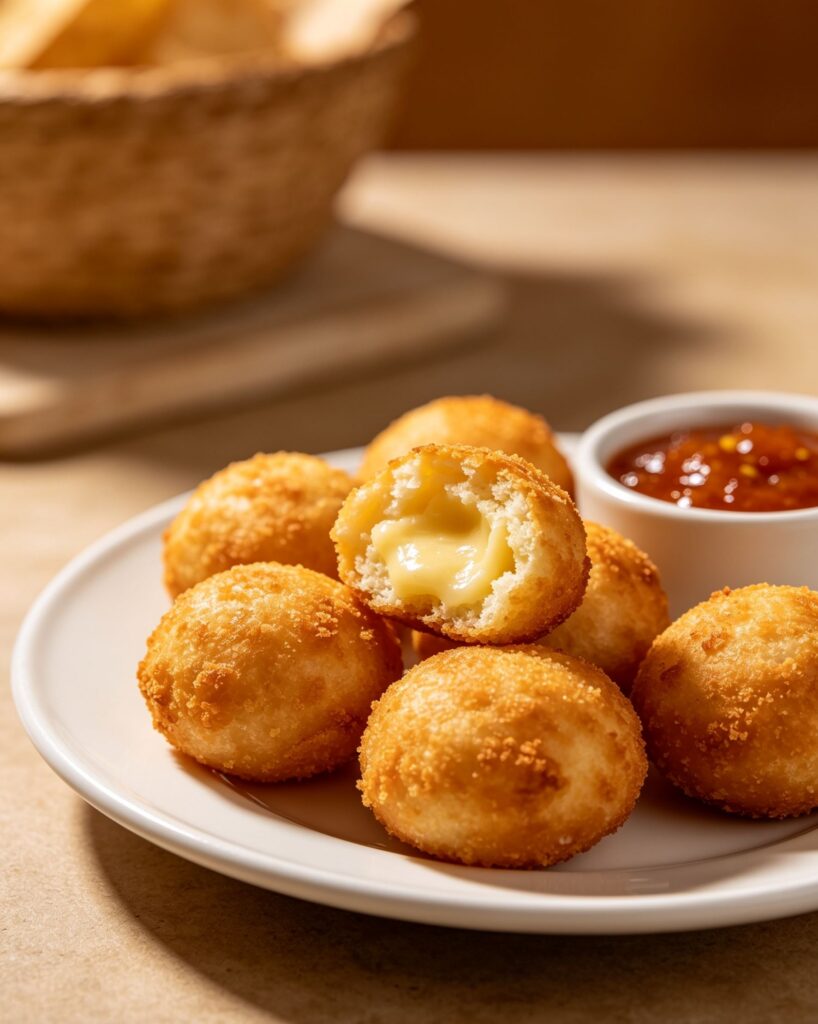
Colombian Buñuelos
The Quirky Foodster Team
Ingredients
- Fresh cuajada cheese or mild curd cheese, crumbled — 250 g (9 oz)
- Cassava starch — 150 g (1.25 cups)
- Precooked cornmeal (masarepa) — 50 g (0.4 cup)
- Large eggs — 2
- Sugar — 2 tbsp
- Baking powder — 1 tsp
- Vegetable oil, for frying — 1 L (4 cups)
Method
- Combine the crumbled cheese, cassava starch, masarepa, sugar and baking powder in a large bowl.
- Add the eggs and mix by hand until a smooth, slightly sticky dough forms.
- Roll the dough into balls about 4cm (1.5in) wide.
- Heat the oil to 160°C (320°F) — a lower, gentler temperature than most fried snacks, so the centre cooks through before the outside browns too much.
- Fry the balls in batches, turning occasionally, for 8-10 minutes until deep golden and cooked through in the centre.
- Drain on paper towels and serve warm.
Introduction: Buñuelos are deep-fried cheese balls, crisp outside and soft within, associated above all with the Christmas season in Colombia though sold year-round from street carts.
Cultural Background: Buñuelos are deep-fried cheese balls, crisp outside and soft within, associated above all with the Christmas season in Colombia though sold year-round from street carts. They descend from Spanish fritter traditions, reworked with Colombian cuajada cheese and cassava starch.
Tips: Frying at a lower, steady temperature is essential — buñuelos need time for the inside to cook through without the outside burning first.
Variations: Some households add a touch of anise for fragrance; certain regions make a slightly sweeter version for the December festive season. Naturally vegetarian as written.
Storage: Store in an airtight container at room temperature for up to 2 days.
Reheating: Reheat in a 170°C (340°F) oven for 6-8 minutes to restore crispness; avoid the microwave.
Nutrition: Per piece (approx.): 170 kcal, 5g protein, 16g carbohydrate, 9g fat, 0g fibre.
FAQs
Q: Why is the inside of my buñuelo raw?
A: The oil was too hot, browning the outside before the centre had time to cook; lower the temperature and fry a little longer.
Q: Are buñuelos only eaten at Christmas?
A: They're strongly associated with December, but are also sold year-round as an everyday street snack.
- Fresh cuajada cheese or mild curd cheese, crumbled — 250 g (9 oz)
- Cassava starch — 150 g (1.25 cups)
- Precooked cornmeal (masarepa) — 50 g (0.4 cup)
- Large eggs — 2
- Sugar — 2 tbsp
- Baking powder — 1 tsp
- Vegetable oil, for frying — 1 L (4 cups)
Please log in to leave a comment.