
Appetizers
Prahok Ktis
The Quirky Foodster Team
Ingredients
- 80 g (2.8 oz) prahok (fermented fish paste)
- 200 g (7 oz) ground pork
- 200 ml (3/4 cup + 1 tbsp) coconut milk
- 2 tbsp (30 g) kroeung paste
- 1 tbsp (15 g) palm sugar
- 2 shallots, minced
- 2 kaffir lime leaves, finely shredded
- 2 Thai chilies, sliced (optional, for heat)
- Assorted raw vegetables (cucumber, eggplant, long beans, cabbage), cut into sticks, to serve
Method
- If the prahok is very coarse, mash it through a strainer to remove bones; otherwise chop finely.
- Heat a small saucepan over medium heat and cook the ground pork, breaking it up, until no longer pink, about 4 minutes.
- Add the kroeung paste and shallots, and stir-fry for 2 minutes until fragrant.
- Stir in the prahok and coconut milk; reduce heat to low and simmer gently for 12–15 minutes, stirring occasionally, until thickened.
- Season with palm sugar and shredded kaffir lime leaf; add chilies if using.
- Transfer to a serving bowl and serve warm with a platter of raw vegetable sticks for dipping.
Introduction: Prahok, a pungent fermented fish paste, is often called the soul of Khmer cooking, used in small amounts across the cuisine to deepen savoury dishes.
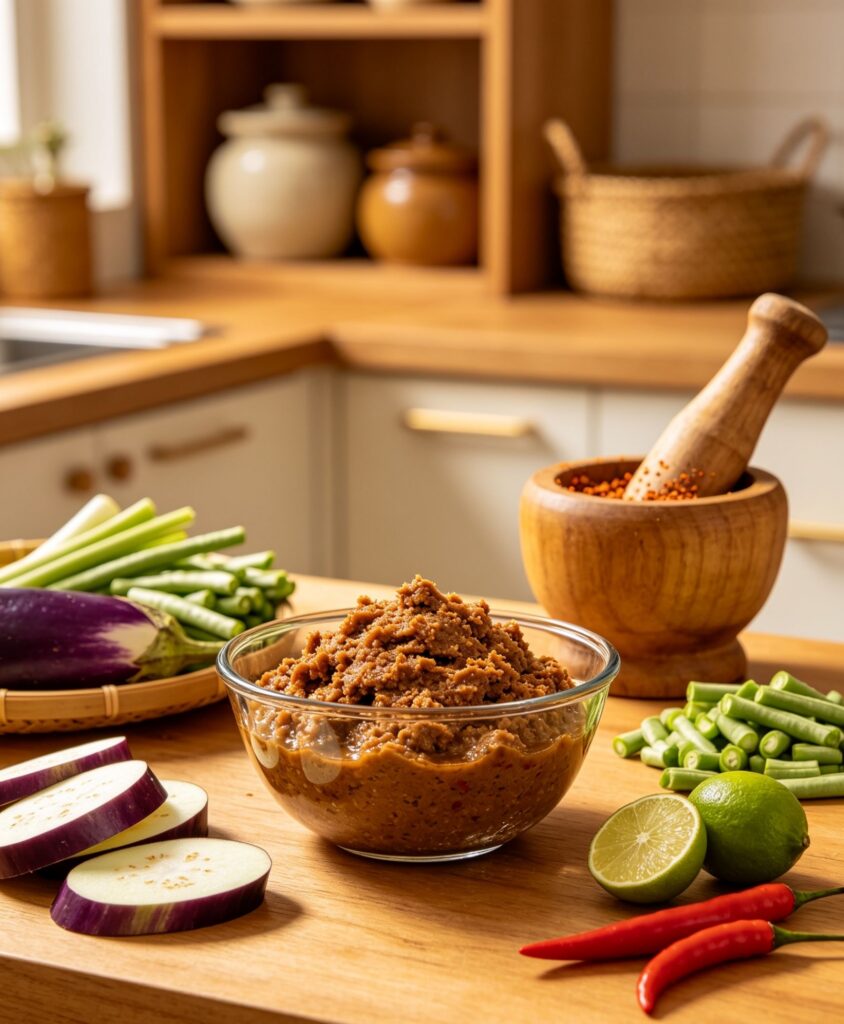
Cultural Background: Prahok, a pungent fermented fish paste, is often called the soul of Khmer cooking, used in small amounts across the cuisine to deepen savoury dishes. Prahok Ktis softens its intensity by simmering the paste with coconut milk, pork and palm sugar into a thick, aromatic dip, traditionally served with a platter of raw vegetables such as cucumber, eggplant and long beans for scooping.
Tips: Simmer over low heat — coconut milk can split if boiled too vigorously. A small amount of prahok goes a long way; start with less and add more to taste if unfamiliar with its intensity.
Variations: Ground fish or shrimp can be added alongside the pork for extra depth. Grilled instead of raw vegetables can be served for a smokier pairing. This dip relies on fermented fish for its identity and has no traditional vegetarian equivalent; a close alternative uses fermented soybean paste with mushroom for umami depth.
Storage: Store in an airtight container in the refrigerator for up to 4 days.
Reheating: Reheat gently in a saucepan over low heat, stirring, until warmed through; add a splash of coconut milk if it has thickened too much.
Nutrition: Per serving (approx.): 260 kcal, 13 g protein, 20 g fat, 8 g carbohydrate, 1 g fibre, 890 mg sodium.
FAQs:
Q: What can I substitute for prahok if unavailable?
A: A mix of fish sauce and a small amount of shrimp paste can approximate the flavour, though the result will be milder and less authentic.
Q: Is Prahok Ktis very spicy?
A: Not inherently — the chilies are optional and can be adjusted or omitted to suit taste.
Please log in to leave a comment.