
Mains
Kapama
The Quirky Foodster Team
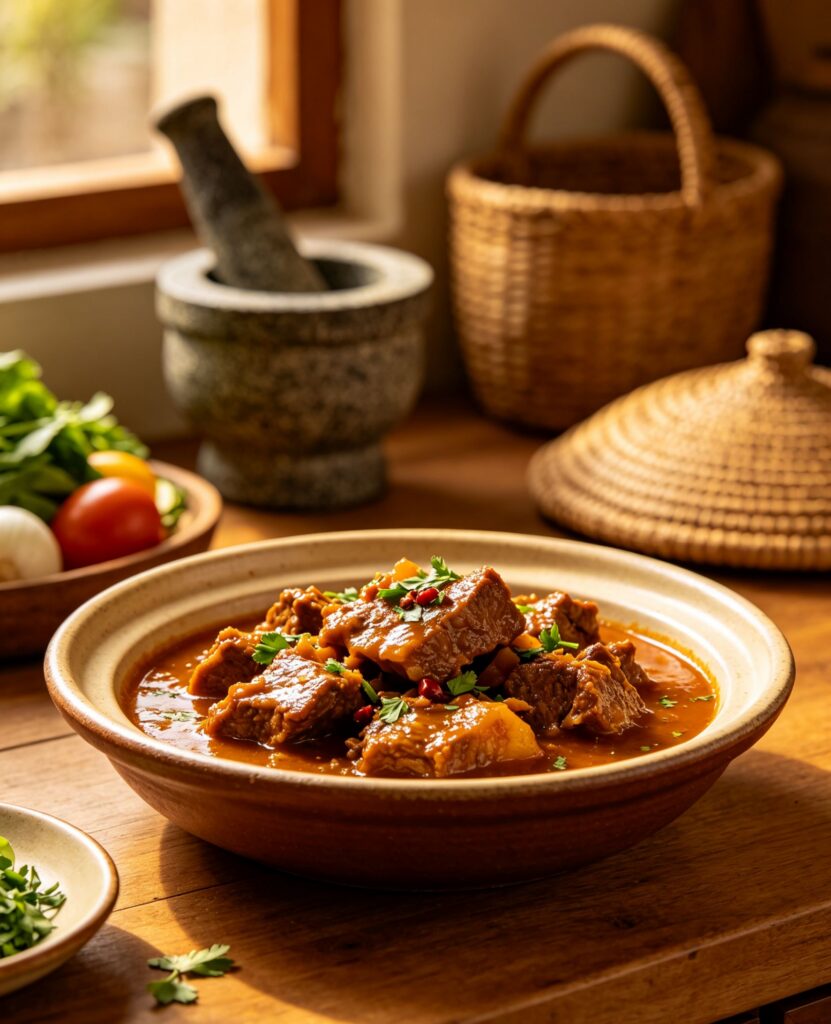
Ingredients
- 300 g (10 oz) pork, cubed
- 300 g (10 oz) chicken thigh, cubed
- 200 g (7 oz) smoked sausage, sliced
- 400 g (14 oz) sauerkraut, drained
- 100 g (1/2 cup) rice
- 2 onions, sliced
- 1 tsp paprika
- 300 ml (1 1/4 cups) stock
- Salt and black pepper, to taste
Method
- Layer half the onions in the base of the pot, followed by a layer of pork, chicken and sausage.
- Scatter rice over the meat, then top with sauerkraut and remaining onions.
- Season each layer lightly with paprika, salt and pepper.
- Pour stock over everything.
- Cover and bake at 160°C (320°F) for 2-2.5 hours until the meats are very tender.
- Serve hot directly from the pot.
Introduction: Kapama is a layered winter stew combining several meats (typically pork, chicken and sausage) with sauerkraut and rice, slow-baked in a clay pot.
Cultural Background: Kapama is a layered winter stew combining several meats (typically pork, chicken and sausage) with sauerkraut and rice, slow-baked in a clay pot. Traditionally prepared for Christmas and New Year gatherings in the Rhodope Mountains.
Tips: Layering rather than mixing keeps distinct flavors and textures in each bite. Rinse the sauerkraut briefly first if you prefer a milder tang.
Variations: Some versions add prunes for a subtle sweetness that balances the sauerkraut. A simpler version uses only pork rather than three meats. No authentic vegetarian version; the dish is defined by its combination of meats.
Storage: Refrigerate up to 3 days in an airtight container.
Reheating: Reheat covered in a low oven or on the stovetop with a splash of stock to loosen it.
Nutrition: Approx. 480 kcal, 30g protein, 28g fat, 24g carbs per serving.
FAQs:
Q: Why layer instead of stir the ingredients?
A: Layering is traditional to Kapama and allows each ingredient to cook in its own zone, creating distinct textures.
Q: Is this a Christmas-only dish?
A: It’s strongly associated with Christmas and New Year, though some households make it throughout winter.
Please log in to leave a comment.