
Brazilian Fried Pastry
The Quirky Foodster Team
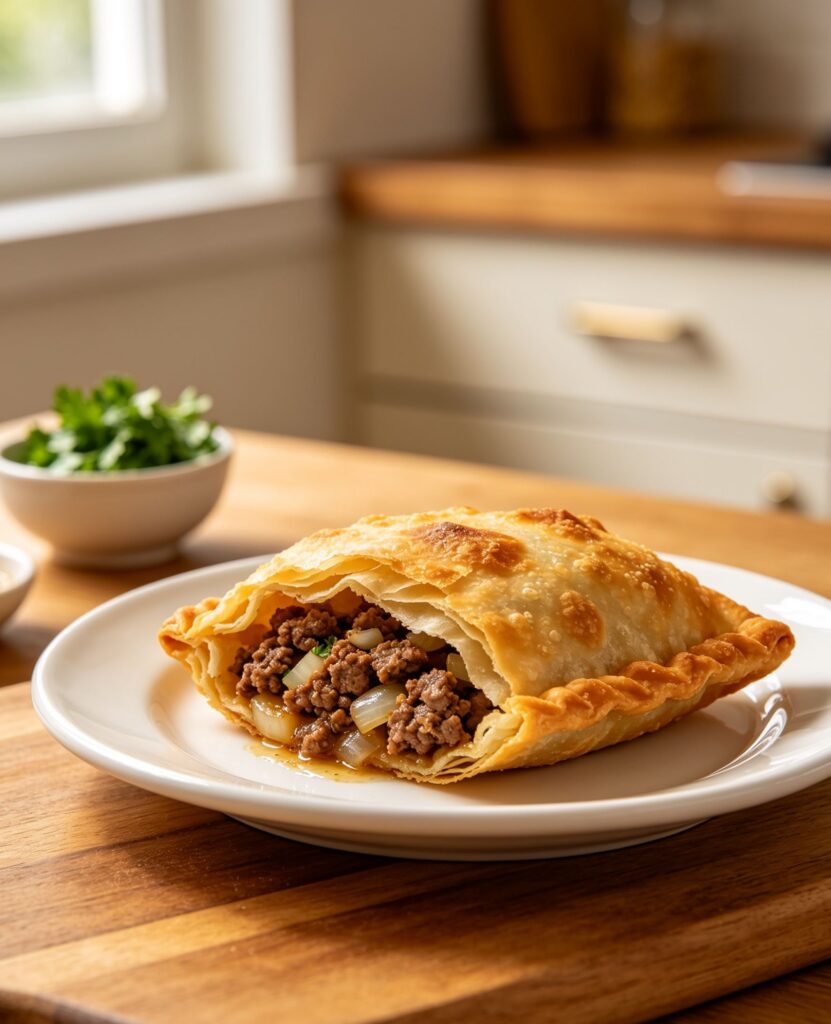
Ingredients
- Wheat flour — 400 g (3 1/4 cups)
- Cachaca or vinegar — 1 tbsp
- Neutral oil — 2 tbsp
- Salt — 1 tsp
- Warm water — 150 ml (2/3 cup)
- Ground beef, cooked and seasoned — 300 g (10 oz)
- Mozzarella cheese, shredded — 150 g (1 1/2 cups)
- Green onion, chopped — 2 stalks
- Neutral oil, for frying — 1.5 L (6 cups)
Method
- Combine the flour, cachaca or vinegar, oil and salt in a bowl, then gradually add warm water, mixing until a smooth, elastic dough forms.
- Knead the dough for 5 minutes until soft and pliable, then cover and rest for 20 minutes.
- Divide the dough into portions and roll out as thinly as possible, ideally almost translucent, using a rolling pin or pasta machine.
- Cut the rolled dough into rectangles roughly 12 x 16 cm (5 x 6 in).
- Place a spoonful of the seasoned beef filling, a little cheese, and chopped green onion onto one half of each rectangle.
- Fold the dough over the filling and press the edges firmly with a fork to seal completely, ensuring no filling leaks out.
- Heat the frying oil to 190C (375F) and fry the pastels in batches for 2-3 minutes per side until golden, blistered and crisp.
- Drain on paper towel and serve immediately while hot.
Introduction: Pastel was introduced by Chinese and Japanese immigrant communities in São Paulo in the early 20th century, adapting Chinese fried dumpling techniques with Brazilian fillings.
Cultural Background: Pastel was introduced by Chinese and Japanese immigrant communities in São Paulo in the early 20th century, adapting Chinese fried dumpling techniques with Brazilian fillings. It is now the signature snack of Brazil's open-air street markets (feiras), always eaten fresh and piping hot, often paired with sugarcane juice.
Tips: Roll the dough as thinly as possible; this is key to achieving the signature blistered, crackly texture when fried. Seal the edges very firmly, as any gaps will let oil in and filling out during frying.
Variations: Cheese-only pastel: fill simply with mozzarella and oregano for a classic vegetarian option. Shrimp pastel: use chopped cooked shrimp with catupiry cheese for a coastal variation. Vegetarian: No. Not applicable; a cheese or vegetable-only filling can approximate a vegetarian version.
Storage: Best eaten fresh and hot; unfried filled pastels can be refrigerated for up to 1 day before frying.
Reheating: Reheat in an oven at 200C (400F) for 6-8 minutes to restore crispness; avoid microwaving.
Nutrition: Per piece (approx. 10 pieces total): 260 kcal, 10 g protein, 14 g fat, 22 g carbohydrate, 1 g fibre.
FAQs:
Q: Why didn’t my pastel blister and puff like at the market?
A: The dough needs to be rolled extremely thin and the oil hot enough (190C/375F); thicker dough won’t create the signature air pockets.
Q: Can I bake pastel instead of frying?
A: Baking is possible but will not replicate the crisp, blistered texture that deep-frying produces, which is central to the dish.
- Wheat flour — 400 g (3 1/4 cups)
- Cachaca or vinegar — 1 tbsp
- Neutral oil — 2 tbsp
- Salt — 1 tsp
- Warm water — 150 ml (2/3 cup)
- Ground beef, cooked and seasoned — 300 g (10 oz)
- Mozzarella cheese, shredded — 150 g (1 1/2 cups)
- Green onion, chopped — 2 stalks
- Neutral oil, for frying — 1.5 L (6 cups)
Please log in to leave a comment.