
Legapu
The Quirky Foodster Team
Ingredients
- Watermelon flesh, deseeded and cubed — 1 kg (2.2 lb)
- Sugar — 300 g (1 1/2 cups)
- Lemon juice — 30 ml (2 tbsp)
- Cinnamon stick — 1
Method
- Place the watermelon flesh in a large heavy-based pot and bring to a gentle simmer over medium heat.
- Cook for 15-20 minutes, stirring occasionally, until the watermelon softens and releases its juices.
- Add the sugar, lemon juice and cinnamon stick, stirring until the sugar dissolves.
- Reduce heat to low and simmer gently, stirring often, for 35-40 minutes, until thickened to a jam-like consistency.
- Remove the cinnamon stick, then spoon the hot preserve into sterilised jars.
- Seal jars while still hot and allow to cool completely before storing.
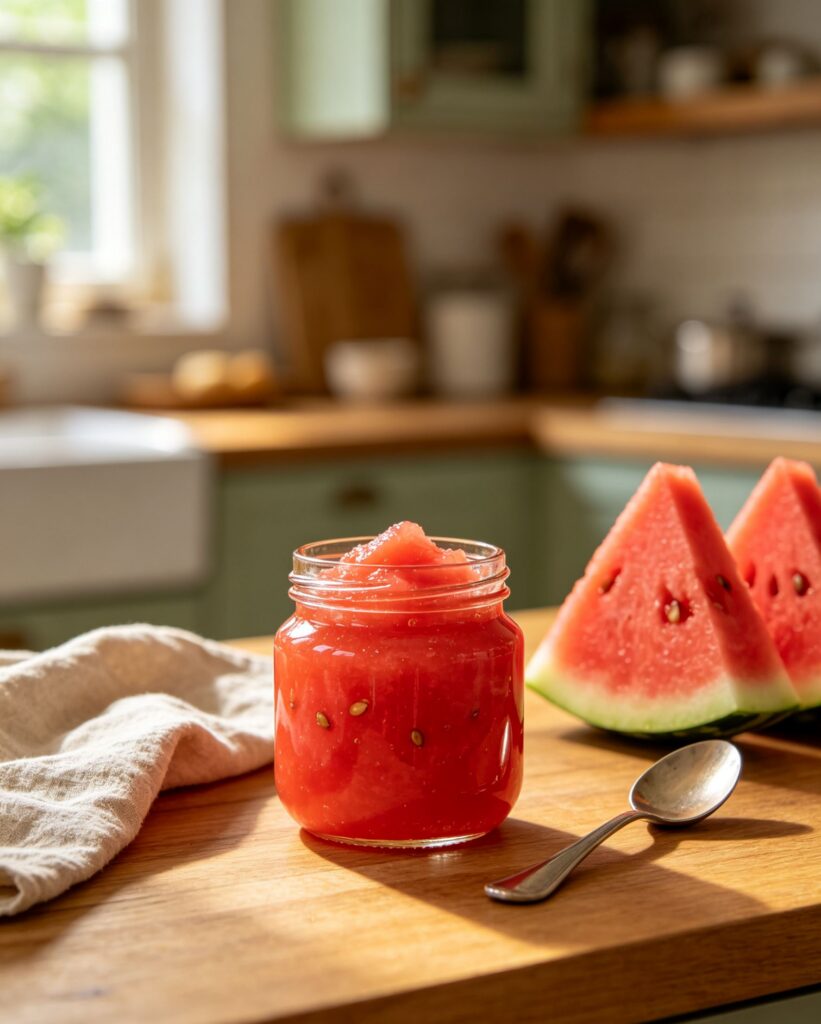
Introduction: Legapu is a slow-cooked watermelon preserve, traditionally made when watermelons are in abundant seasonal supply, as a way of extending their use well beyond the harvest.
Cultural Background: Legapu is a slow-cooked watermelon preserve, traditionally made when watermelons are in abundant seasonal supply, as a way of extending their use well beyond the harvest. Rinds and flesh are simmered down with sugar until thick and jammy, producing a treat that has long been enjoyed by Setswana households spread on bread or eaten spooned straight from the jar.
Tips: Test thickness by placing a small spoonful on a cold plate; it should hold its shape rather than run when ready. Stir frequently towards the end of cooking to prevent the sugar from catching on the bottom of the pot.
Variations: Add a few thin strips of lemon zest while cooking for a brighter citrus note. Include a small piece of fresh ginger for a warmer, spiced preserve. Naturally vegan as written.
Storage: Store sealed jars in a cool, dark place for up to 6 months; once opened, refrigerate and use within 3 weeks.
Reheating: Not applicable; served at room temperature or chilled.
Nutrition: Approx. per serving (2 tbsp): 120 kcal, 0 g protein, 31 g carbohydrates, 0 g fat, 1 g fibre.
FAQs:
Q: Can I use the watermelon rind as well as the flesh?
A: Yes, some traditional versions include the white rind, peeled and finely chopped, simmered alongside the flesh for a firmer preserve.
Q: How do I know the jars are properly sealed?
A: Once cooled, the lid should be slightly concave and not flex when pressed in the centre; if it pops, refrigerate and use promptly.
- Watermelon flesh, deseeded and cubed — 1 kg (2.2 lb)
- Sugar — 300 g (1 1/2 cups)
- Lemon juice — 30 ml (2 tbsp)
- Cinnamon stick — 1
Please log in to leave a comment.