
Serobe
The Quirky Foodster Team
Ingredients
- Mixed beef offal (tripe, liver, heart), cleaned and cut into chunks — 1 kg (2.2 lb)
- Beef intestines, cleaned well — 500 g (1 lb)
- Water — 2 L (8 cups)
- Large onion, chopped — 1
- Medium tomatoes, chopped — 2
- Garlic, crushed — 2 cloves
- Salt — 10 ml (2 tsp)
- Ground black pepper — 5 ml (1 tsp)
- Bay leaves — 2
Method
- Rinse the offal and intestines thoroughly under cold running water until the water runs clear.
- Place all the offal and intestines into a large pot and cover with the 2 litres of water.
- Bring to the boil, then skim off any foam that rises to the surface.
- Add the onion, tomatoes, garlic, salt, pepper and bay leaves.
- Reduce the heat to low, cover, and simmer gently for 2.5-3 hours, stirring occasionally, until the offal is very tender and the broth has thickened slightly.
- Taste and adjust seasoning before serving hot in bowls, with the broth included.
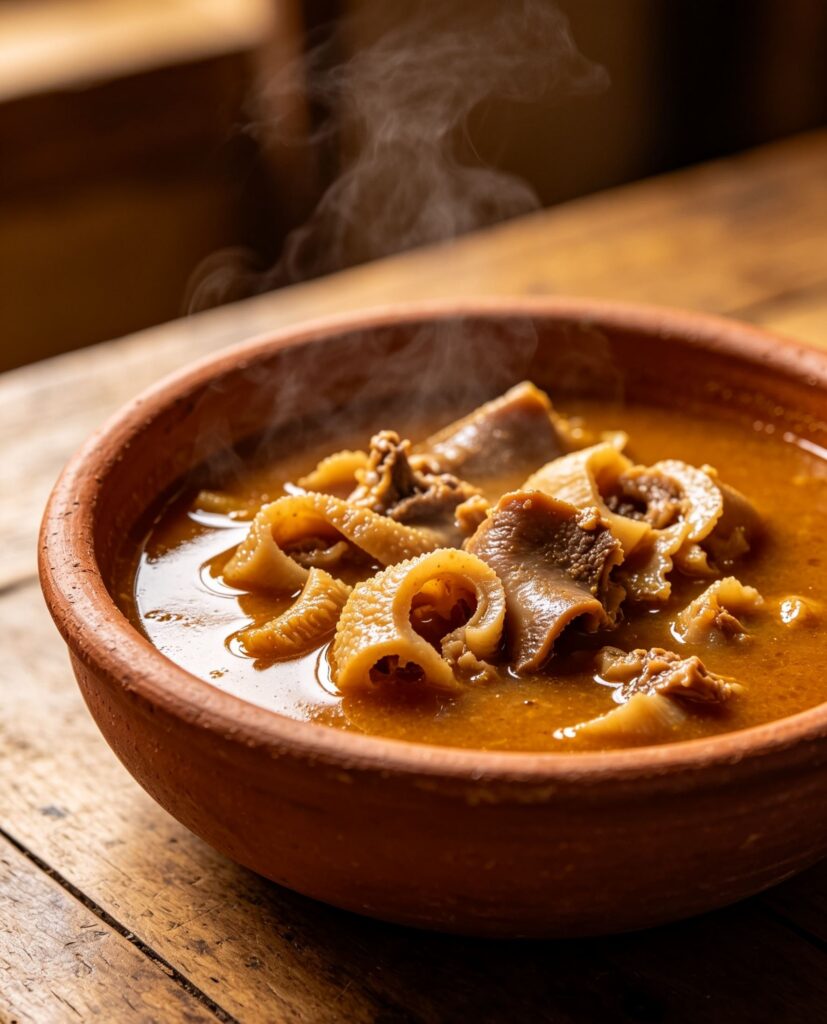
Introduction: Serobe is a rich, slow-cooked soup made from the offal of a slaughtered cow or goat, including tripe, liver, heart and intestines.
Cultural Background: Serobe is a rich, slow-cooked soup made from the offal of a slaughtered cow or goat, including tripe, liver, heart and intestines. It reflects a longstanding Setswana practice of using every part of the animal, particularly at large gatherings such as weddings, funerals and cattle-post celebrations where a beast is slaughtered and shared among the community. Serobe is valued for its deep, savoury flavour and its symbolic connection to communal eating.
Tips: Cleaning the offal thoroughly beforehand is essential for a good flavour; ask your butcher to pre-clean if possible. A long, slow simmer is key to tender texture; do not rush this dish by boiling too hard.
Variations: Use goat offal in place of beef for a slightly gamier, traditional variation common at cattle-post gatherings. Add a chopped chilli for a spicier broth. No authentic vegetarian version exists; offal is central to the dish.
Storage: Store in an airtight container in the refrigerator for up to 3 days, or freeze for up to 2 months.
Reheating: Reheat gently in a saucepan over medium-low heat, stirring occasionally, until piping hot.
Nutrition: Approx. per serving: 260 kcal, 30 g protein, 6 g carbohydrates, 12 g fat, 1 g fibre.
FAQs:
Q: What is serobe traditionally served with?
A: Serobe is typically served alongside phaletshe (stiff maize porridge) or bogobe, which help soak up the rich broth.
Q: Can I use a pressure cooker to speed this up?
A: Yes, a pressure cooker can reduce the cooking time to around 45-60 minutes at high pressure, though the slow stovetop method develops deeper flavour.
- Mixed beef offal (tripe, liver, heart), cleaned and cut into chunks — 1 kg (2.2 lb)
- Beef intestines, cleaned well — 500 g (1 lb)
- Water — 2 L (8 cups)
- Large onion, chopped — 1
- Medium tomatoes, chopped — 2
- Garlic, crushed — 2 cloves
- Salt — 10 ml (2 tsp)
- Ground black pepper — 5 ml (1 tsp)
- Bay leaves — 2
Please log in to leave a comment.