
Segwapa
The Quirky Foodster Team
Ingredients
- Lean beef topside, cut into long strips 2 cm (3/4 in) thick — 1 kg (2.2 lb)
- Coarse salt — 30 g (2 tbsp)
- Coarsely crushed black pepper — 10 g (2 tsp)
- Coriander seeds, lightly crushed — 15 ml (1 tbsp)
- White vinegar — 15 ml (1 tbsp)
Method
- Trim the beef strips of excess fat and sinew.
- Splash the strips lightly with vinegar, then rub all over with the salt, pepper and crushed coriander seeds.
- Lay the strips in a non-metallic dish, cover, and refrigerate for 12 hours to cure.
- Hang the strips from hooks or string in a cool, dry, well-ventilated and insect-free space, or place in a biltong box or dehydrator set to a low, warm setting.
- Dry for 3-5 days, depending on humidity and desired firmness, until deeply darkened and firm but still slightly pliable in the centre.
- Slice thinly against the grain to serve.
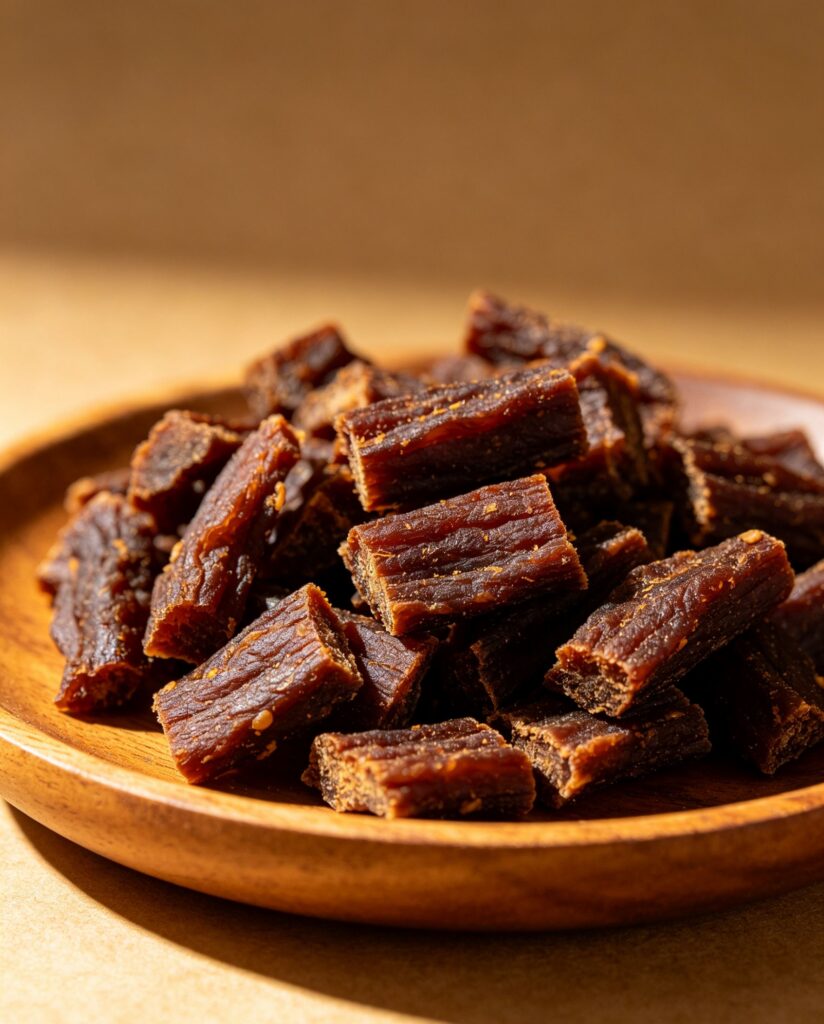
Introduction: Segwapa is dried, salted beef, cut into strips and left to dry in the sun and wind until firm and deeply savoury.
Cultural Background: Segwapa is dried, salted beef, cut into strips and left to dry in the sun and wind until firm and deeply savoury. Long used as a way of preserving meat before refrigeration was widespread, especially among cattle-herding communities where beef holds great cultural and economic importance, segwapa remains popular today as a snack or shared appetizer, often torn into pieces and served alongside drinks.
Tips: A small fan set nearby speeds even drying and helps prevent spoilage in humid conditions. Test doneness daily from day 3 by slicing a piece; segwapa can be enjoyed drier and firmer, or softer, according to preference.
Variations: Add a touch of ground chilli to the rub for a spicier version. Use game meat such as kudu in place of beef for a more traditional bushveld variation. No authentic vegetarian version exists; the dish is defined by dried beef.
Storage: Store in a paper bag or breathable container at room temperature for up to 2 weeks, or refrigerate for up to a month.
Reheating: Not applicable; segwapa is eaten as is, at room temperature.
Nutrition: Approx. per serving (50 g): 140 kcal, 24 g protein, 1 g carbohydrates, 4 g fat, 0 g fibre.
FAQs:
Q: Is this the same as South African biltong?
A: Segwapa is very closely related to biltong and made using a similar drying process, though the seasoning and cut can differ slightly by household.
Q: Can I make this in a food dehydrator?
A: Yes, a dehydrator set to around 40-45C (104-113F) works well and gives more consistent results than open-air drying.
- Lean beef topside, cut into long strips 2 cm (3/4 in) thick — 1 kg (2.2 lb)
- Coarse salt — 30 g (2 tbsp)
- Coarsely crushed black pepper — 10 g (2 tsp)
- Coriander seeds, lightly crushed — 15 ml (1 tbsp)
- White vinegar — 15 ml (1 tbsp)
Please log in to leave a comment.