
Ethiopian Berbere Wat Sauce
The Quirky Foodster Team
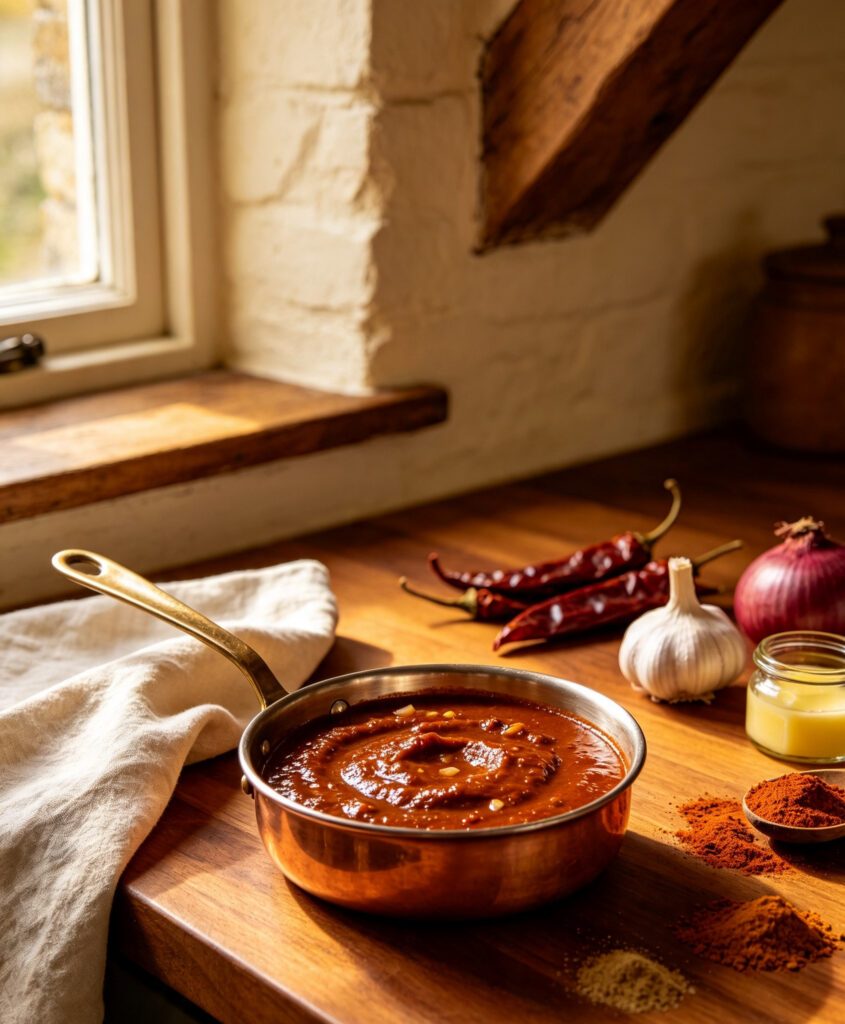
Ingredients
- Red onions, finely chopped — 800 g (1.75 lb)
- Niter kibbeh or ghee — 80 g (1/3 cup)
- Berbere spice blend — 80 g (1/2 cup + 2 tbsp)
- Garlic cloves, minced — 5
- Fresh ginger, grated — 15 g (1 tbsp)
- Tomato paste — 20 g (4 tsp)
- Red wine (optional, traditional in some regions) — 60 ml (1/4 cup)
- Stock or water — 300 ml (1 1/4 cups)
- Salt — to taste
Method
- Cook chopped onions in a dry, heavy-bottomed pot over medium-low heat, stirring frequently, 20-25 minutes until
- softened and beginning to caramelise.
- Add niter kibbeh, continue cooking until deeply golden, another 15 minutes.
- Stir in the generous amount of berbere, garlic and ginger; cook 5-7 minutes, stirring constantly to bloom the spices
- thoroughly without scorching.
- Add tomato paste and red wine if using; cook 2-3 minutes to reduce slightly.
- Gradually add stock, simmer 25-30 minutes until deeply thickened and richly flavoured; season with salt to taste.
Cultural Background: A spicier, more intensely berbere-forward relative of the standard doro wat base, this sauce leans further into Ethiopia's signature spice blend, traditionally used for the hottest, most robust wat dishes served at festive Ethiopian gatherings.
Tips: • This version uses considerably more berbere than a standard wat base, so taste and adjust carefully as it's noticeably spicier. • The long, slow blooming of the spices in fat is what develops the sauce's signature deep, complex heat rather than a flat, one-note spiciness.
Variations: • Use to simmer beef or lamb for a spicier version of the traditional meat wat dishes. • Adjust berbere quantity down slightly for a more moderate heat level if preferred.
Storage: Refrigerate up to 4 days, or freeze up to 3 months.
Reheating: Reheat gently over low heat, stirring occasionally, adding stock if too thick. Nutrition (per serving) Approx. 100 kcal, 1.5 g protein, 6.5 g fat, 9 g carbohydrate per 100 g serving.
FAQs: How spicy is this sauce compared to standard doro wat? Noticeably spicier, due to the higher proportion of berbere used relative to other ingredients. Can I make my own berbere spice blend? Yes, it typically includes dried chiles, garlic, ginger, basil, korarima, rue, ajwain and other warming spices, though a good store-bought blend is a reliable substitute.
- Red onions, finely chopped — 800 g (1.75 lb)
- Niter kibbeh or ghee — 80 g (1/3 cup)
- Berbere spice blend — 80 g (1/2 cup + 2 tbsp)
- Garlic cloves, minced — 5
- Fresh ginger, grated — 15 g (1 tbsp)
- Tomato paste — 20 g (4 tsp)
- Red wine (optional, traditional in some regions) — 60 ml (1/4 cup)
- Stock or water — 300 ml (1 1/4 cups)
- Salt — to taste
Please log in to leave a comment.