
Ghanaian Groundnut Stew Sauce
The Quirky Foodster Team
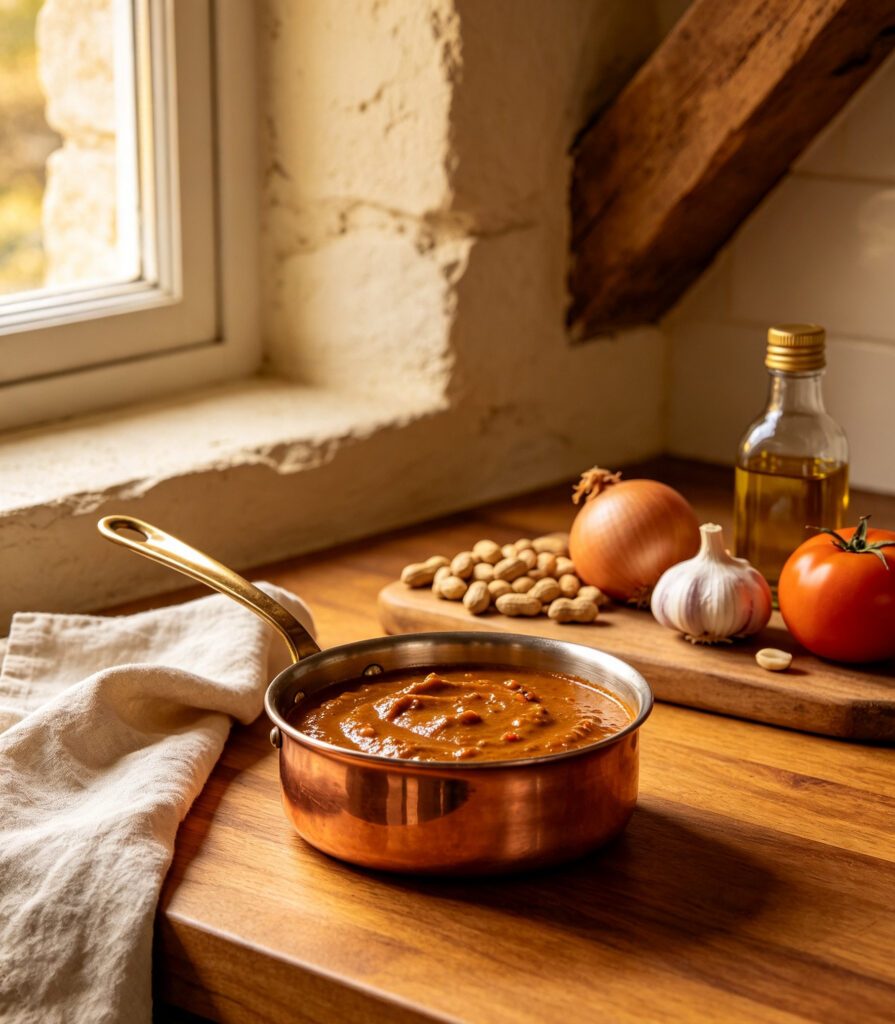
Ingredients
- Natural peanut butter (unsweetened) — 200 g (3/4 cup + 2 tbsp)
- Onion, diced — 1 large
- Ripe tomatoes, chopped — 300 g (10.5 oz)
- Tomato paste — 30 g (2 tbsp)
- Garlic and ginger, minced — 2 cloves and 10 g (2 cloves and 1 tbsp)
- Scotch bonnet pepper, whole — 1
- Chicken stock — 500 ml (2 cups)
- Vegetable oil — 30 ml (2 tbsp)
- Salt — to taste
Method
- Heat oil in a heavy-bottomed pot over medium heat; sauté onion until softened, about 5-7 minutes.
- Add garlic and ginger, cook 1-2 minutes until fragrant.
- Stir in tomato paste, cook 2 minutes, then add chopped tomatoes; simmer 10 minutes until softened.
- Whisk in peanut butter and stock gradually until smooth; add whole scotch bonnet.
- Simmer 30-35 minutes, stirring frequently to prevent scorching, until thickened; remove scotch bonnet and season
- with salt.
Cultural Background: Ghana's beloved peanut stew sauce, nkatenkwan is typically made with chicken and simmered with tomatoes and warm spices into a rich, thick groundnut-based sauce, closely related to mafé but with a distinctly Ghanaian flavour profile and often chile-forward finish.
Tips: • Stir frequently as the sauce thickens to prevent the peanut base from catching on the bottom of the pot. • This sauce is traditionally simmered with chicken pieces directly in it, so account for extra cooking time if doing so.
Variations: • Add small dried fish for extra umami depth, a traditional regional touch. • Adjust chile heat by piercing the scotch bonnet for more heat, or leaving it whole for milder aromatic warmth.
Storage: Refrigerate up to 4 days, or freeze up to 3 months.
Reheating: Reheat gently over low heat, stirring frequently, adding stock if too thick. Nutrition (per serving) Approx. 150 kcal, 5 g protein, 12 g fat, 6 g carbohydrate per 100 ml serving.
FAQs: What is nkatenkwan traditionally served with? Rice, fufu, or banku, typically with chicken or fish simmered directly in the sauce. How is it different from Senegalese mafé? Nkatenkwan tends to be tomato-forward and often features a distinctly Ghanaian spice profile, while mafé is generally simpler and more purely peanut-focused.
- Natural peanut butter (unsweetened) — 200 g (3/4 cup + 2 tbsp)
- Onion, diced — 1 large
- Ripe tomatoes, chopped — 300 g (10.5 oz)
- Tomato paste — 30 g (2 tbsp)
- Garlic and ginger, minced — 2 cloves and 10 g (2 cloves and 1 tbsp)
- Scotch bonnet pepper, whole — 1
- Chicken stock — 500 ml (2 cups)
- Vegetable oil — 30 ml (2 tbsp)
- Salt — to taste
Please log in to leave a comment.