
Vindaloo Sauce
The Quirky Foodster Team
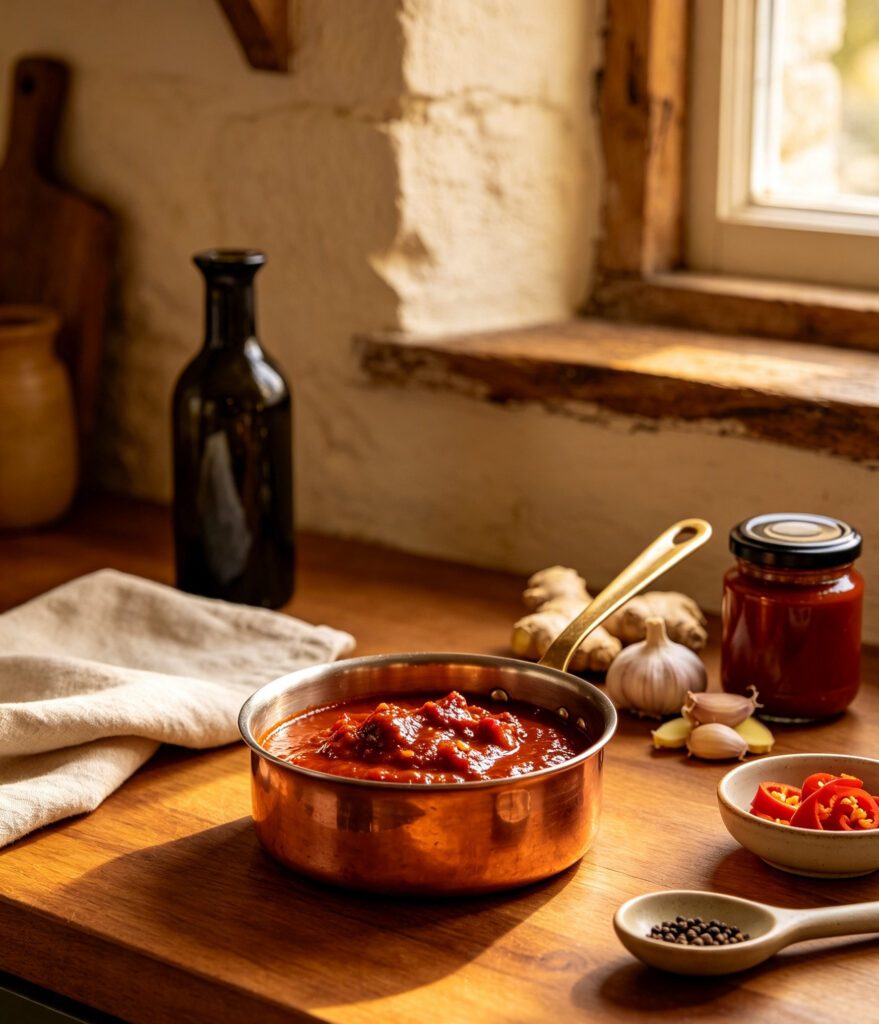
Ingredients
- Dried red chiles — 8
- Garlic cloves — 8
- Fresh ginger — 20 g (2 tbsp)
- Malt or white vinegar — 80 ml (1/3 cup)
- Ground cumin, mustard seed and turmeric — 5 g each (1.5 tsp each)
- Onion, chopped — 1 large
- Tomatoes, chopped — 200 g (7 oz)
- Vegetable oil — 45 ml (3 tbsp)
Method
- Soak dried chiles in hot water 15 minutes to soften; drain.
- Blend softened chiles, garlic, ginger, vinegar, cumin, mustard seed and turmeric to a smooth paste.
- Heat oil in a heavy-bottomed pot; sauté onion until golden, about 10 minutes.
- Add the chile-vinegar paste, cook 5 minutes until fragrant.
- Add chopped tomatoes and a little water; simmer 25-30 minutes until thickened, deeply red and richly flavoured.
Cultural Background: A fiery, tangy sauce with Portuguese Goan roots (derived from 'carne de vinha d'alhos', wine and garlic marinated pork), vindaloo evolved with local Indian chiles and vinegar into one of the spiciest sauces in Indian cuisine.
Tips: • The vinegar-forward tang is what defines vindaloo, distinguishing it from most other Indian curry sauces — don't skimp on it. • Marinating meat in the paste before cooking, if making the full dish, develops significantly deeper flavour.
Variations: • Adjust dried chile quantity for varying (already high) heat levels. • Traditionally made with pork in Goa; also common with chicken or lamb.
Storage: Refrigerate up to 4 days, or freeze up to 3 months.
Reheating: Reheat gently over low heat, stirring occasionally. Nutrition (per serving) Approx. 90 kcal, 1.5 g protein, 6.5 g fat, 6 g carbohydrate per 100 ml serving.
FAQs: What is vindaloo sauce traditionally used for? A fiery, tangy gravy for pork (traditional Goan), chicken or lamb, one of the spiciest classic Indian curries. Why does vindaloo taste different from other Indian curries? Its pronounced vinegar tang, inherited from Portuguese colonial influence in Goa, sets it apart from the broader Indian curry tradition.
- Dried red chiles — 8
- Garlic cloves — 8
- Fresh ginger — 20 g (2 tbsp)
- Malt or white vinegar — 80 ml (1/3 cup)
- Ground cumin, mustard seed and turmeric — 5 g each (1.5 tsp each)
- Onion, chopped — 1 large
- Tomatoes, chopped — 200 g (7 oz)
- Vegetable oil — 45 ml (3 tbsp)
Please log in to leave a comment.