
Filipino Adobo Sauce
The Quirky Foodster Team
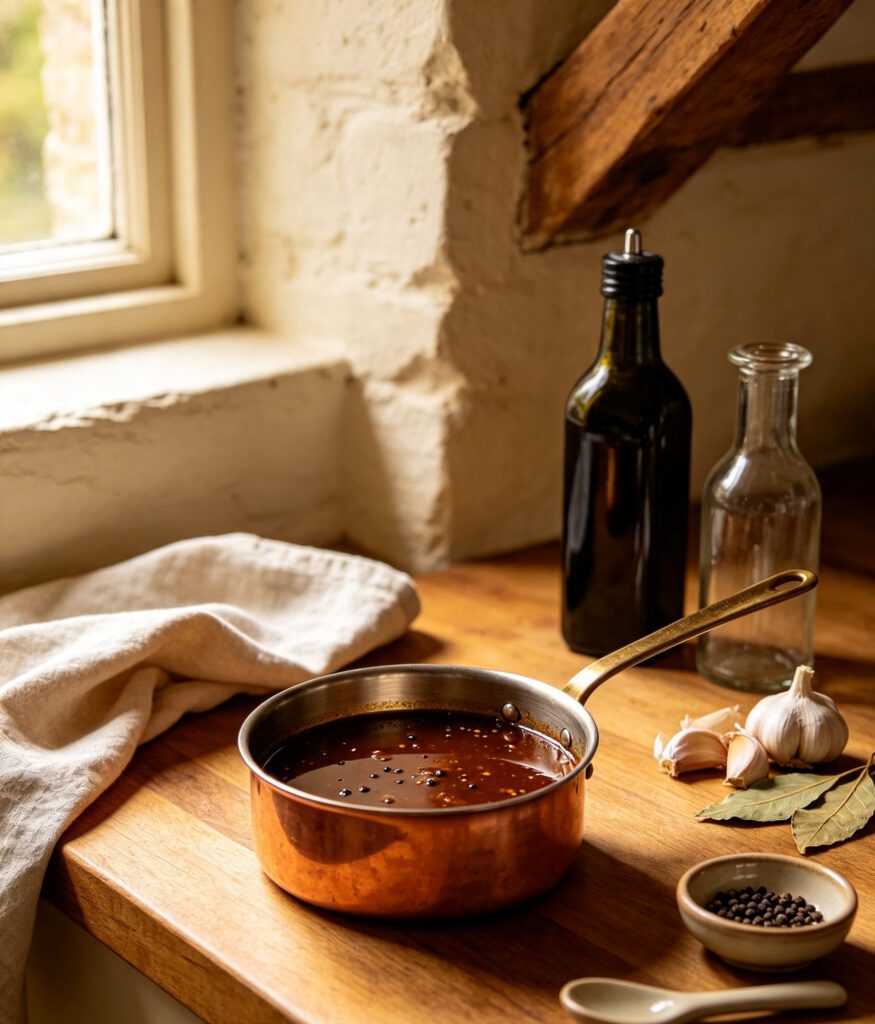
Ingredients
- Soy sauce — 100 ml (1/3 cup + 1 tbsp)
- White or cane vinegar — 100 ml (1/3 cup + 1 tbsp)
- Garlic cloves, crushed — 8
- Bay leaves — 3
- Black peppercorns, whole — 5 g (1.5 tsp)
- Water — 150 ml (2/3 cup)
- Sugar (optional) — 10 g (2 tsp)
Method
- Combine soy sauce, vinegar, garlic, bay leaves, peppercorns and water in a heavy-bottomed pot (traditionally with
- chicken or pork pieces added directly).
- Bring to a boil without stirring, then reduce heat and simmer, covered, 30-40 minutes.
- Uncover and continue simmering 15-20 minutes to reduce and thicken the sauce, turning meat occasionally if
- included.
- Add sugar if using to balance acidity.
- Taste and adjust the soy-vinegar balance to preference; sauce should be glossy and well reduced.
Cultural Background: A tangy soy-vinegar braising sauce, Filipino adobo predates Spanish colonization, with the name later applied by colonists who noted its resemblance to their own marinades; it remains the Philippines' most iconic, near-universally beloved dish.
Tips: • Traditional technique avoids stirring the vinegar too early, allowing it to first come to a boil undisturbed, which some cooks believe mellows its sharpness. • This sauce is meant to be cooked directly with meat rather than served as a separate condiment.
Variations: • Add coconut milk for adobo sa gata, a regional variation. • Use with pork, chicken, or a mix of both for the classic combination adobo.
Storage: Refrigerate up to 4 days, or freeze up to 3 months; flavour improves with a day's rest.
Reheating: Reheat gently over low heat, stirring occasionally. Nutrition (per serving) Approx. 20 kcal, 0.7 g protein, 0 g fat, 2.5 g carbohydrate per 30 ml serving.
FAQs: What is adobo sauce traditionally used for? Braising chicken and/or pork into the Philippines' most iconic national dish, adobo. Why shouldn't I stir the vinegar too early? Traditional technique holds that letting it boil undisturbed first mellows its raw sharpness before the sauce is stirred and reduced further.
- Soy sauce — 100 ml (1/3 cup + 1 tbsp)
- White or cane vinegar — 100 ml (1/3 cup + 1 tbsp)
- Garlic cloves, crushed — 8
- Bay leaves — 3
- Black peppercorns, whole — 5 g (1.5 tsp)
- Water — 150 ml (2/3 cup)
- Sugar (optional) — 10 g (2 tsp)
Please log in to leave a comment.