
Rendang Sauce Base
The Quirky Foodster Team
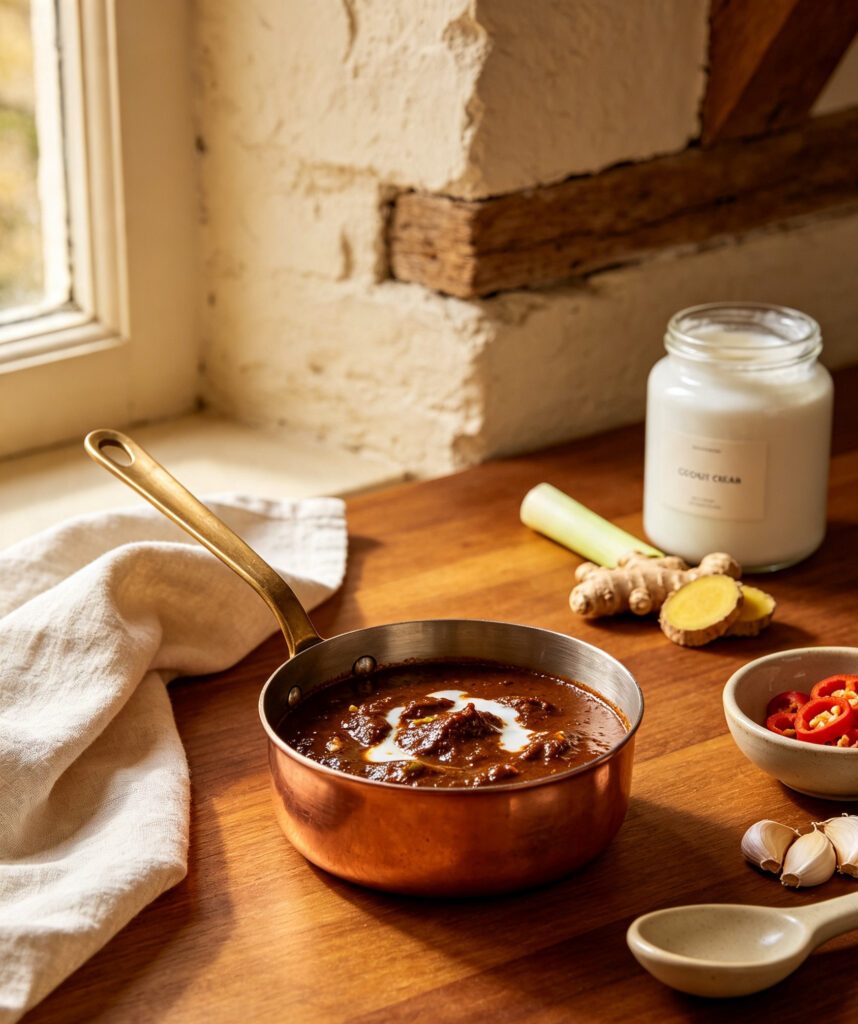
Ingredients
- Shallots — 8
- Garlic cloves — 6
- Fresh red chiles — 6
- Fresh ginger and galangal — 20 g each (2 tbsp each)
- Lemongrass, inner part — 2 stalks
- Ground turmeric, coriander and cumin — 5 g each (1.5 tsp each)
- Coconut milk — 800 ml (3.25 cups)
- Kaffir lime leaves and turmeric leaf (optional) — 4 and 1
Method
- Combine shallots, garlic, chiles, ginger, galangal and lemongrass in a food processor; blend to a smooth paste.
- Add ground turmeric, coriander and cumin; blend again to combine.
- Heat the spice paste in a heavy-bottomed pot over medium heat, stirring, until fragrant, about 5-7 minutes.
- Add coconut milk and lime leaves; bring to a simmer.
- Simmer uncovered over low heat, stirring occasionally, for 1.5-2.5 hours (traditionally with beef added), until deeply
- reduced, dark brown and the oil separates.
Cultural Background: A richly spiced coconut sauce base, rendang bumbu underlies West Sumatra's iconic slow-cooked beef dish, its complex blend of aromatics and coconut milk reduced over hours until deeply caramelised, often cited among the world's most flavourful dishes.
Tips: • This sauce is traditionally cooked for hours directly with beef chunks until the liquid reduces almost entirely, coating the meat in a thick, dark paste. • Stir more frequently toward the end of cooking as the sauce thickens, to prevent scorching.
Variations: • Add toasted grated coconut (kerisik) for extra nutty depth, a traditional addition. • Adjust chile quantity for varying heat levels.
Storage: Refrigerate up to 4 days, or freeze up to 3 months; rendang famously improves with a day or two of resting.
Reheating: Reheat gently over low heat, stirring occasionally. Nutrition (per serving) Approx. 130 kcal, 2 g protein, 11 g fat, 6 g carbohydrate per 100 ml serving.
FAQs: What is rendang sauce traditionally used for? Slow-cooking beef (or other meats) into the iconic Indonesian/Malaysian dish rendang, until the sauce reduces to a thick, dark coating. Why does rendang take so long to cook? The extended slow simmer is what develops rendang's signature deep, caramelised, complex flavour and its thick, nearly dry final consistency.
- Shallots — 8
- Garlic cloves — 6
- Fresh red chiles — 6
- Fresh ginger and galangal — 20 g each (2 tbsp each)
- Lemongrass, inner part — 2 stalks
- Ground turmeric, coriander and cumin — 5 g each (1.5 tsp each)
- Coconut milk — 800 ml (3.25 cups)
- Kaffir lime leaves and turmeric leaf (optional) — 4 and 1
Please log in to leave a comment.