
Sudanese Dakwa Sauce
The Quirky Foodster Team
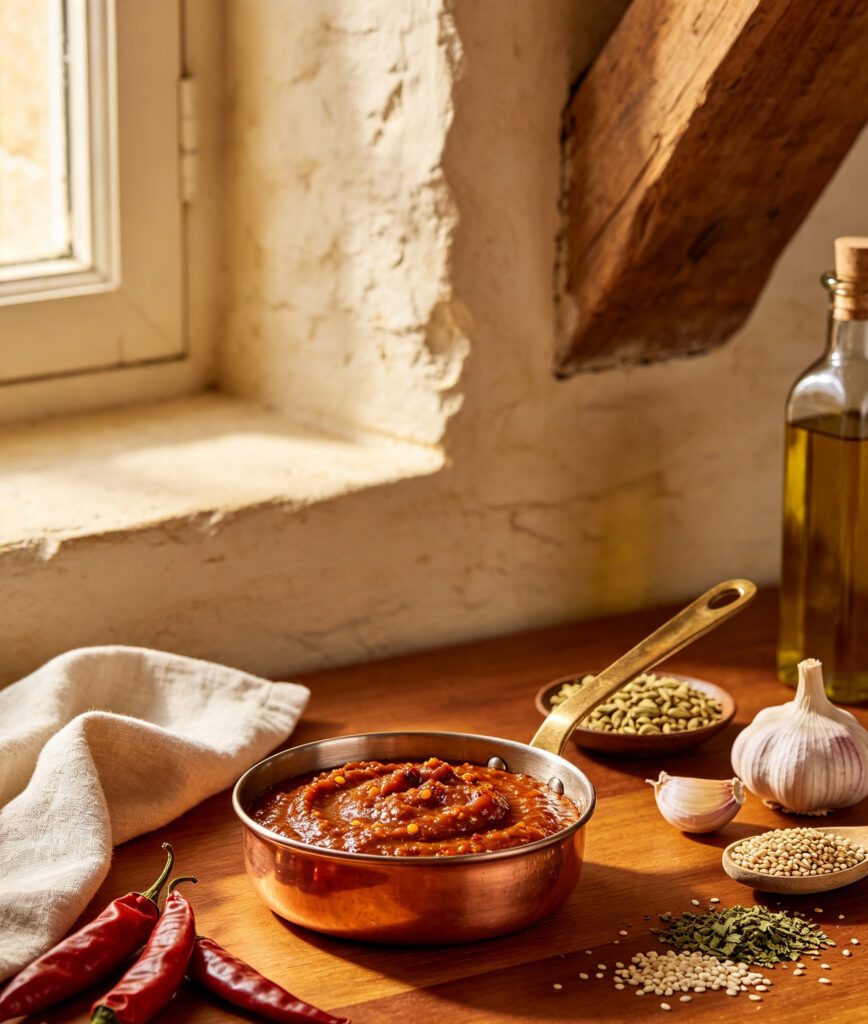
Ingredients
- Natural peanut butter (unsweetened) — 150 g (1/2 cup + 2 tbsp)
- Ripe tomatoes, chopped — 200 g (7 oz)
- Onion, finely diced — 1 medium
- Garlic cloves, minced — 3
- Vegetable oil — 30 ml (2 tbsp)
- Ground cumin — 3 g (1 tsp)
- Cayenne pepper — 2 g (1/2 tsp)
- Water or stock — 250 ml (1 cup)
- Salt — 5 g (1 tsp)
Method
- Heat oil in a saucepan over medium heat; sauté onion until softened, about 5 minutes.
- Add garlic, cumin and cayenne; cook 1 minute until fragrant.
- Stir in chopped tomatoes, cook 5-7 minutes until softened and beginning to break down.
- Whisk in peanut butter and water or stock gradually until smooth.
- Simmer gently 15-20 minutes, stirring frequently to prevent sticking, until thickened; season with salt to taste.
Cultural Background: A rich peanut-based sauce reflecting Sudan's position along historic trans-Saharan trade routes connecting West and North Africa, dakwa combines ground peanuts with tomato and warm spices, traditionally served with meat, vegetables or grains as a hearty stew-sauce.
Tips: • Whisk the peanut butter in gradually with warm liquid to avoid clumps forming. • Stir frequently as the sauce thickens, since peanut-based sauces can catch and scorch on the bottom of the pan.
Variations: • Add chopped leafy greens for a heartier vegetable-forward version. • Use roasted, ground peanuts instead of peanut butter for a more rustic texture.
Storage: Refrigerate up to 4 days in an airtight container.
Reheating: Reheat gently over low heat, stirring frequently and adding a splash of water if too thick. Nutrition (per serving) Approx. 140 kcal, 5 g protein, 11 g fat, 6 g carbohydrate per 100 ml serving.
FAQs: What is dakwa traditionally served with? Meat, grains like rice or millet porridge, and vegetables, as a hearty everyday Sudanese sauce. Can I use smooth or chunky peanut butter? Smooth, natural (unsweetened) peanut butter is traditional and blends more evenly; chunky can be used for a more textured result.
- Natural peanut butter (unsweetened) — 150 g (1/2 cup + 2 tbsp)
- Ripe tomatoes, chopped — 200 g (7 oz)
- Onion, finely diced — 1 medium
- Garlic cloves, minced — 3
- Vegetable oil — 30 ml (2 tbsp)
- Ground cumin — 3 g (1 tsp)
- Cayenne pepper — 2 g (1/2 tsp)
- Water or stock — 250 ml (1 cup)
- Salt — 5 g (1 tsp)
Please log in to leave a comment.