
Gochujang Sauce
The Quirky Foodster Team
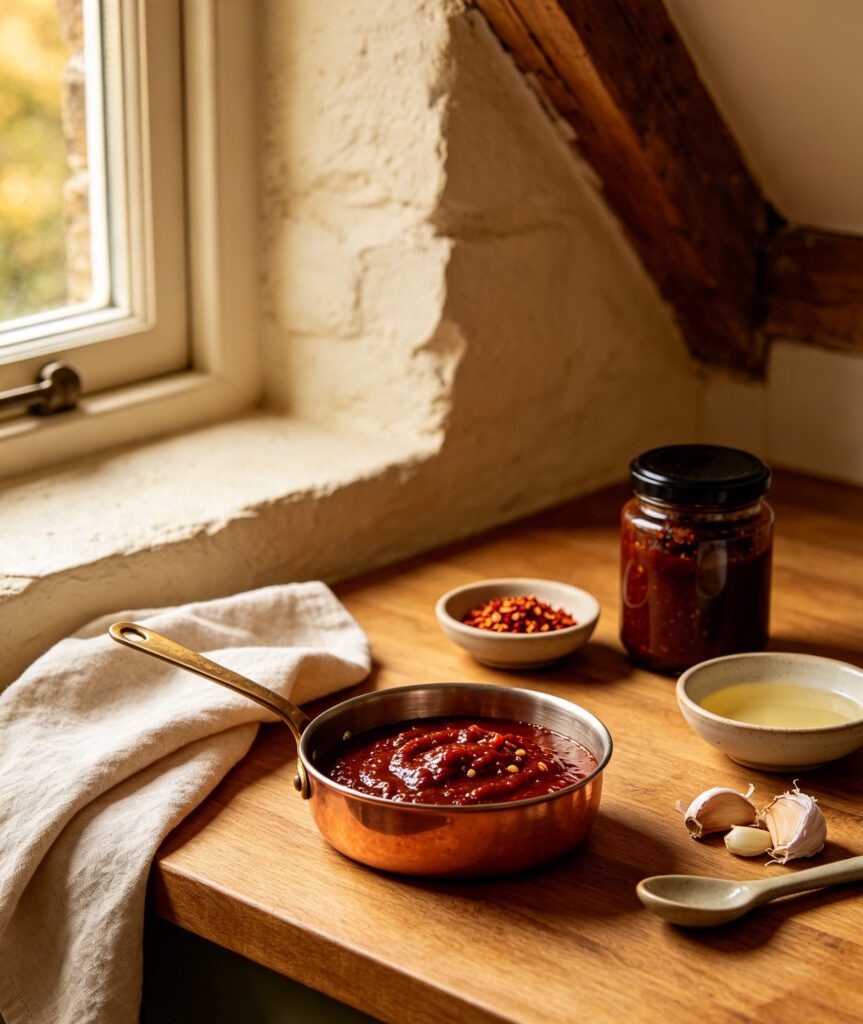
Ingredients
Method
- Combine gochujang and soy sauce in a mixing bowl.
- Whisk in rice vinegar and sugar until sugar dissolves.
- Stir in sesame oil and minced garlic.
- Mix thoroughly until smooth and well combined.
- Sprinkle with sesame seeds before serving.
Cultural Background: Built on Korea's iconic fermented red chile paste, this enriched gochujang sauce softens the paste's intense funk with sugar, vinegar and sesame, becoming a versatile everyday condiment for bibimbap, rice cakes and grilled meats.
Tips: • Adjust sugar and vinegar to balance gochujang's intense saltiness and heat to your preference. • This sauce works well thinned slightly with water for a more pourable dressing-style consistency.
Variations: • Add grated pear or apple for natural sweetness, a common variation. • Adjust gochujang quantity for a milder or more intensely spicy result.
Storage: Refrigerate in an airtight container up to 3 weeks.
Reheating: Not applicable; served cold or at room temperature. Nutrition (per serving) Approx. 35 kcal, 0.8 g protein, 1.5 g fat, 5.5 g carbohydrate per 15 g serving.
FAQs: What is gochujang sauce traditionally used for? Bibimbap, tteokbokki (spicy rice cakes), bulgogi marinades, and as a general dipping sauce. How spicy is gochujang sauce? Moderately spicy with a distinct savoury-sweet fermented depth, less sharply hot than fresh chile sauces.
- Gochujang (Korean fermented chile paste) — 100 g (1/3 cup + 1 tbsp)
- Soy sauce — 15 ml (1 tbsp)
- Rice vinegar — 20 ml (4 tsp)
- Sugar — 20 g (4 tsp)
- Sesame oil — 10 ml (2 tsp)
- Garlic clove, minced — 1
- Toasted sesame seeds — 5 g (1.5 tsp)
Please log in to leave a comment.