
Salsa Alfredo
The Quirky Foodster Team
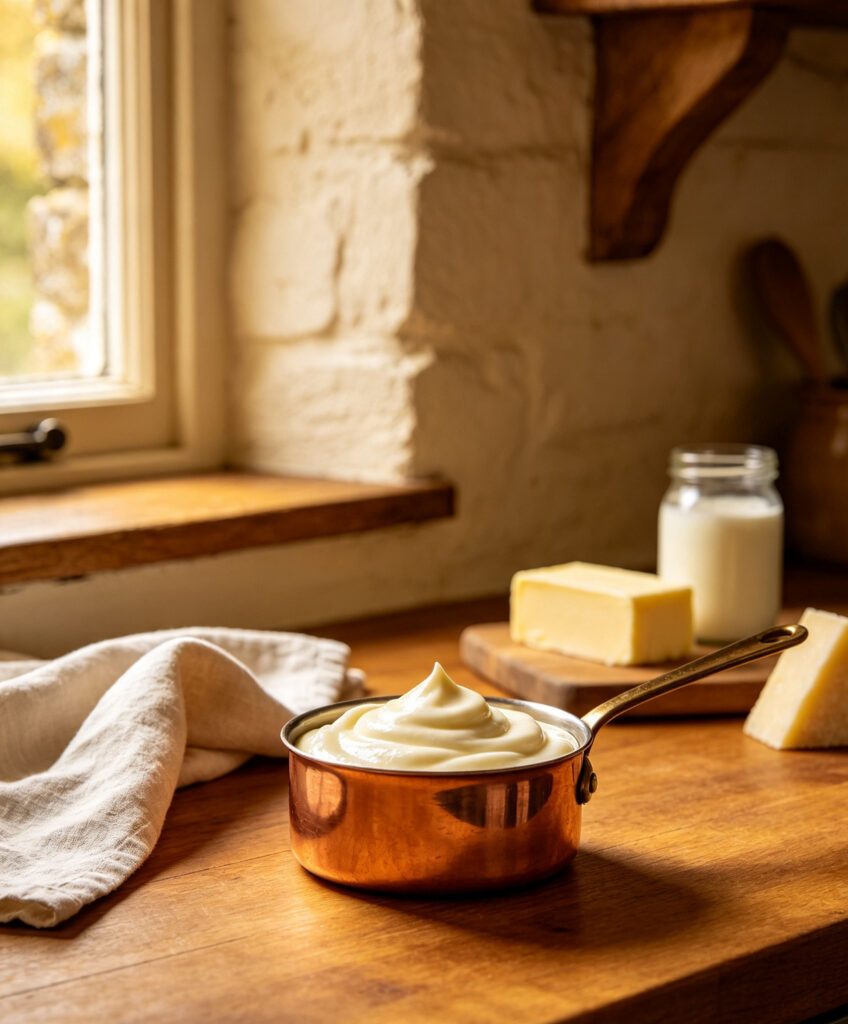
Ingredients
- Unsalted butter — 115 g (1/2 cup)
- Parmesan, finely grated — 150 g (1.5 cups)
- Reserved pasta cooking water — 150 ml (2/3 cup)
- Black pepper, freshly ground — 1 g (1/4 tsp)
- Salt — to taste
Method
- Melt butter gently in a large pan over low heat.
- Add cooked, drained fettuccine directly to the pan along with a splash of reserved pasta water.
- Off the heat, gradually add grated Parmesan while tossing continuously with tongs, adding more pasta water as
- needed to form a smooth, glossy emulsion.
- Season with black pepper and salt to taste.
- Serve immediately while the sauce is silky and warm.
Cultural Background: Created in early 20th-century Rome by restaurateur Alfredo di Lelio for his pregnant wife, the original was simply butter and Parmesan tossed with fettuccine to form a silky emulsion; the cream-heavy version widely known abroad is largely an American adaptation.
Tips: • Finely grated, freshly grated Parmesan melts smoothly — pre-shredded cheese with anti-caking agents can clump. • Toss off direct heat to prevent the cheese from seizing or the sauce from becoming greasy.
Variations: • Add a small amount of cream for the richer, more widespread international version. • Add sautéed garlic for extra depth (not traditional, but common).
Storage: Best made fresh; refrigerating causes the emulsion to separate and the sauce to congeal.
Reheating: Reheat gently in a pan over low heat with a splash of water or milk, tossing continuously to re-emulsify. Nutrition (per serving) Approx. 230 kcal, 6 g protein, 21 g fat, 2 g carbohydrate per 30 g serving.
FAQs: Is the traditional Alfredo made with cream? No — the original Roman version uses only butter, Parmesan and pasta water; cream is a later addition popularised abroad. Why did my sauce turn clumpy? The cheese likely seized from heat that was too high or added too quickly; toss off heat and add pasta water gradually.
- Unsalted butter — 115 g (1/2 cup)
- Parmesan, finely grated — 150 g (1.5 cups)
- Reserved pasta cooking water — 150 ml (2/3 cup)
- Black pepper, freshly ground — 1 g (1/4 tsp)
- Salt — to taste
Please log in to leave a comment.