
Peking Duck Sauce
The Quirky Foodster Team
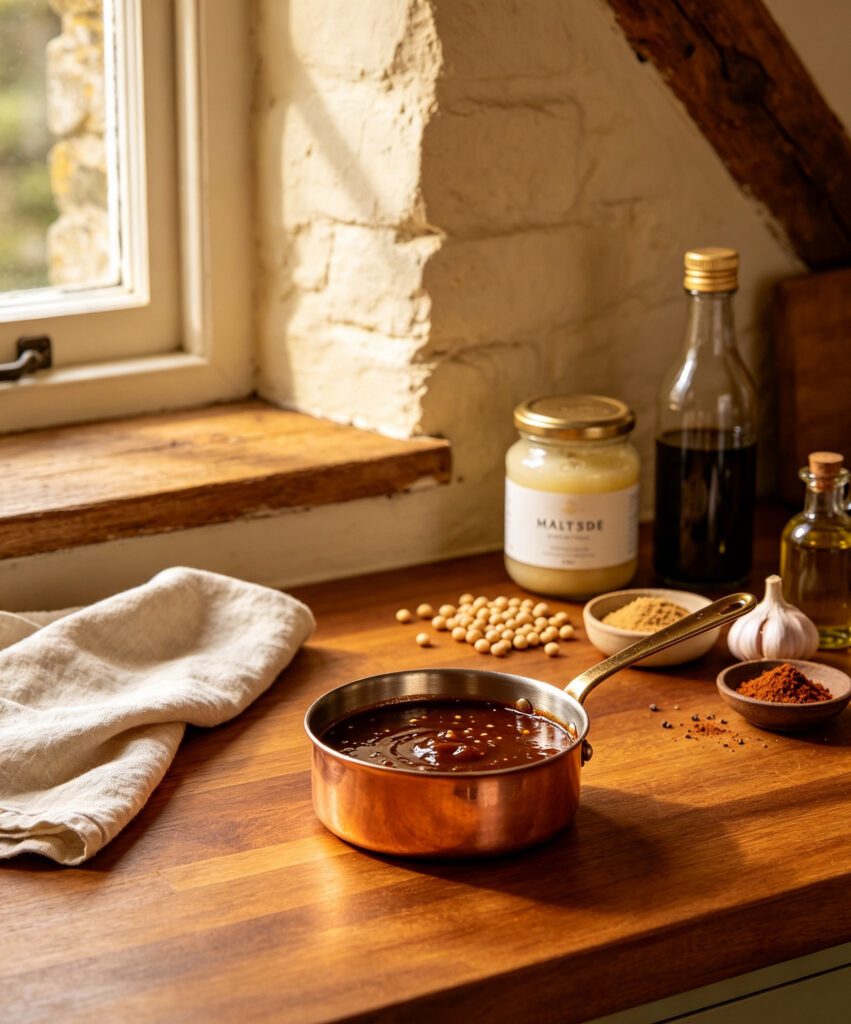
Ingredients
- Sweet bean paste (tianmianjiang) or hoisin sauce — 100 g (1/3 cup + 1 tbsp)
- Sugar — 20 g (4 tsp)
- Sesame oil — 10 ml (2 tsp)
- Water — 30 ml (2 tbsp)
Method
- Combine sweet bean paste and sugar in a small saucepan.
- Add water and whisk to loosen slightly.
- Warm gently over low heat, stirring, for 3-4 minutes until glossy and well combined.
- Stir in sesame oil.
- Cool slightly before serving alongside Peking duck, pancakes and scallions.
Cultural Background: A sweet fermented bean sauce (often conflated with plum sauce outside China) served with Peking duck, this sauce complements the crispy skin and delicate pancakes central to Beijing's most famous culinary export, a dish with roots in imperial court cooking.
Tips: • Tianmianjiang (sweet wheat/bean paste) is the most traditional base; hoisin sauce is a widely available and reasonable substitute. • The sauce should be thick enough to spread easily on a thin pancake without dripping.
Variations: • Add a splash of Shaoxing wine for extra depth. • Adjust sugar for a sweeter or less sweet final result.
Storage: Refrigerate in an airtight container up to 3 weeks.
Reheating: Serve at room temperature or slightly warmed. Nutrition (per serving) Approx. 30 kcal, 0.5 g protein, 1 g fat, 5.5 g carbohydrate per 15 g serving.
FAQs: What is Peking duck sauce traditionally served with? Peking duck, spread on thin pancakes along with sliced duck skin, scallions and cucumber. Is this the same as plum sauce? No, though the two are sometimes confused or substituted outside China — traditional Peking duck sauce is based on sweet fermented bean paste, not plum.
- Sweet bean paste (tianmianjiang) or hoisin sauce — 100 g (1/3 cup + 1 tbsp)
- Sugar — 20 g (4 tsp)
- Sesame oil — 10 ml (2 tsp)
- Water — 30 ml (2 tbsp)
Please log in to leave a comment.