
Bazhe
The Quirky Foodster Team
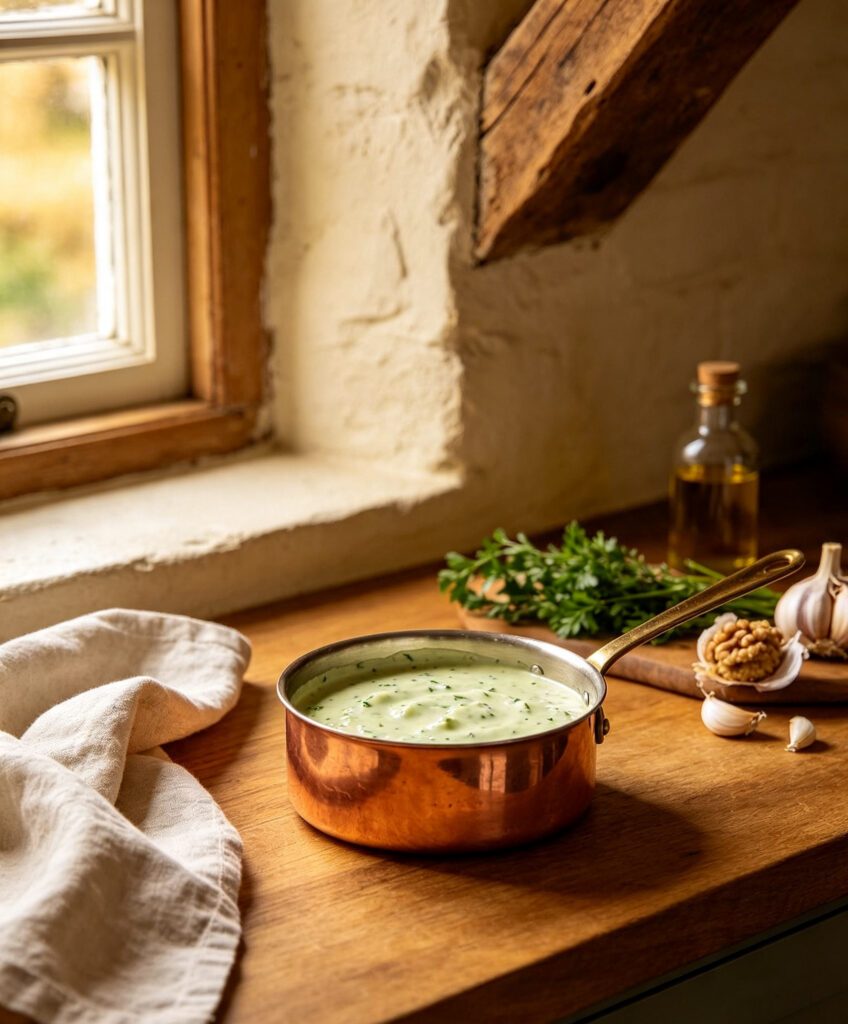
Ingredients
- Walnuts, shelled — 200 g (2 cups)
- Garlic cloves — 3
- Warm water — 200 ml (3/4 cup + 2 tbsp)
- White wine vinegar — 20 ml (4 tsp)
- Ground Georgian blue fenugreek (utskho suneli) — 3 g (1 tsp)
- Dried marigold petals — 2 g (1/2 tsp)
- Salt and cayenne pepper — to taste
Method
- Process walnuts and garlic in a food processor to a fine, almost buttery paste.
- Gradually add warm water while processing, until the mixture reaches a smooth, pourable, cream-like consistency.
- Add vinegar, fenugreek, marigold and cayenne; process briefly to combine.
- Season with salt to taste.
- Let rest 15 minutes before serving to allow flavours to meld; thin with more water if needed.
Cultural Background: A close cousin of satsivi, bazhe is a Georgian walnut sauce typically thinner and used more broadly as a table sauce, spooned over vegetables, poultry, and used to dress the layered eggplant and walnut dish badrijani.
Tips: • Processing the walnuts thoroughly before adding water gives a much smoother, less grainy final sauce. • Bazhe should be noticeably thinner and more pourable than the thicker satsivi.
Variations: • Use as a dressing for badrijani (rolled eggplant with walnut filling). • Add a squeeze of pomegranate juice for extra tang and colour, a common regional touch.
Storage: Refrigerate in an airtight container up to 3 days.
Reheating: Not applicable; served cold or at room temperature. Nutrition (per serving) Approx. 130 kcal, 3 g protein, 13 g fat, 2.5 g carbohydrate per 45 g serving.
FAQs: What is bazhe traditionally served with? Poultry, boiled or roasted vegetables, and as a dressing for badrijani (Georgian eggplant rolls). How is it different from satsivi? Bazhe is generally thinner and simpler, without the onion base and longer simmering time of satsivi.
- Walnuts, shelled — 200 g (2 cups)
- Garlic cloves — 3
- Warm water — 200 ml (3/4 cup + 2 tbsp)
- White wine vinegar — 20 ml (4 tsp)
- Ground Georgian blue fenugreek (utskho suneli) — 3 g (1 tsp)
- Dried marigold petals — 2 g (1/2 tsp)
- Salt and cayenne pepper — to taste
Please log in to leave a comment.