
Global
Whisk Family (Cross-Cultural Overview)
Independently developed across Africa, Asia, and Europe
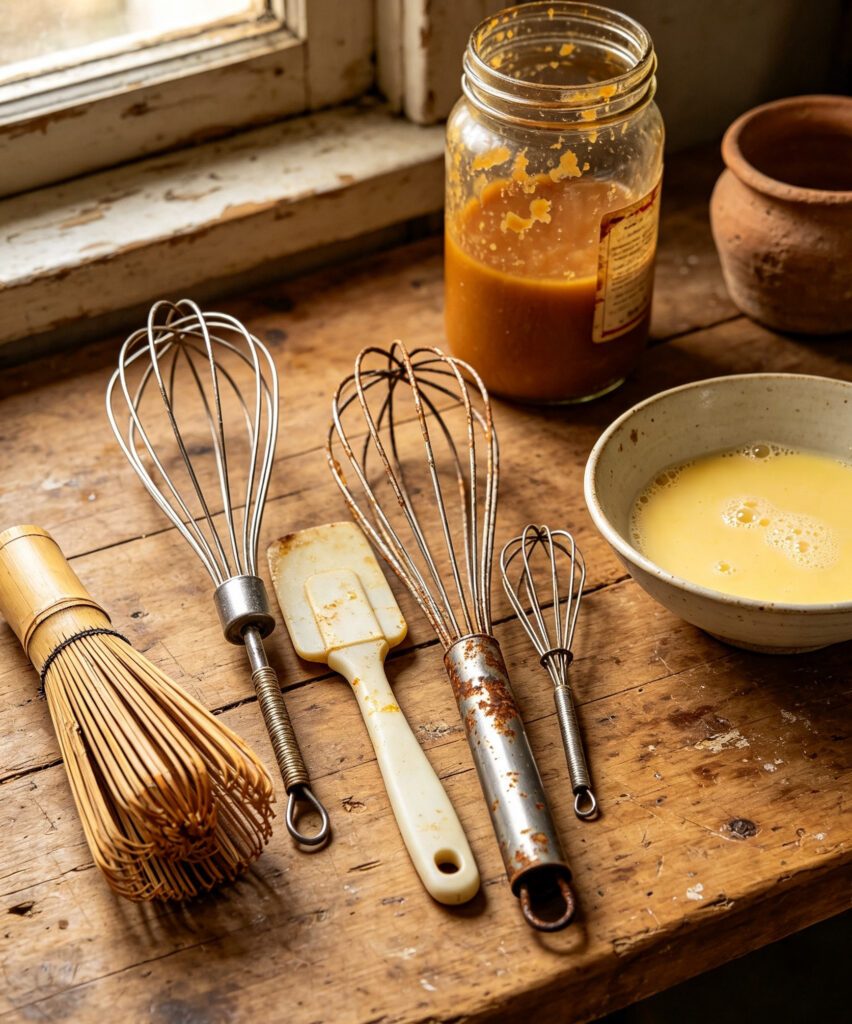
Whisking tools — from West Africa's palm rib whisk to Japan's bamboo chasen to Europe's wire balloon whisk — represent a recurring convergent solution to incorporating air or blending liquids by rapid agitation, achieved through remarkably different materials in each region.
Material & Construction
Natural fiber and split-wood whisks (palm rib, bamboo, grass) predominate in regions without a strong metalworking tradition applied to kitchenware, while wire whisks became standard where metal fabrication was more accessible, though this pattern has largely converged globally today.
Traditional Uses
Frothing beverages, aerating eggs and batters, and blending sauces — the specific technique and texture produced varies meaningfully by whisk type even where the basic function is shared.
Modern Availability / Equivalents
The European wire balloon whisk has become the default global standard sold in most kitchenware markets, though traditional fiber and bamboo whisks persist deliberately in specific ceremonial and culinary contexts (notably Japan's tea ceremony).
Care & Maintenance
Care varies with the material.
Whisking tools recur across cultures — the mehbash, palm rib whisk, chasen, ekiyiko, ayran whisk and European balloon whisk are all examples.
Please log in to leave a comment.