
Global
Wooden Spoon (Global Family Overview)
Independently developed across nearly every cooking culture worldwide
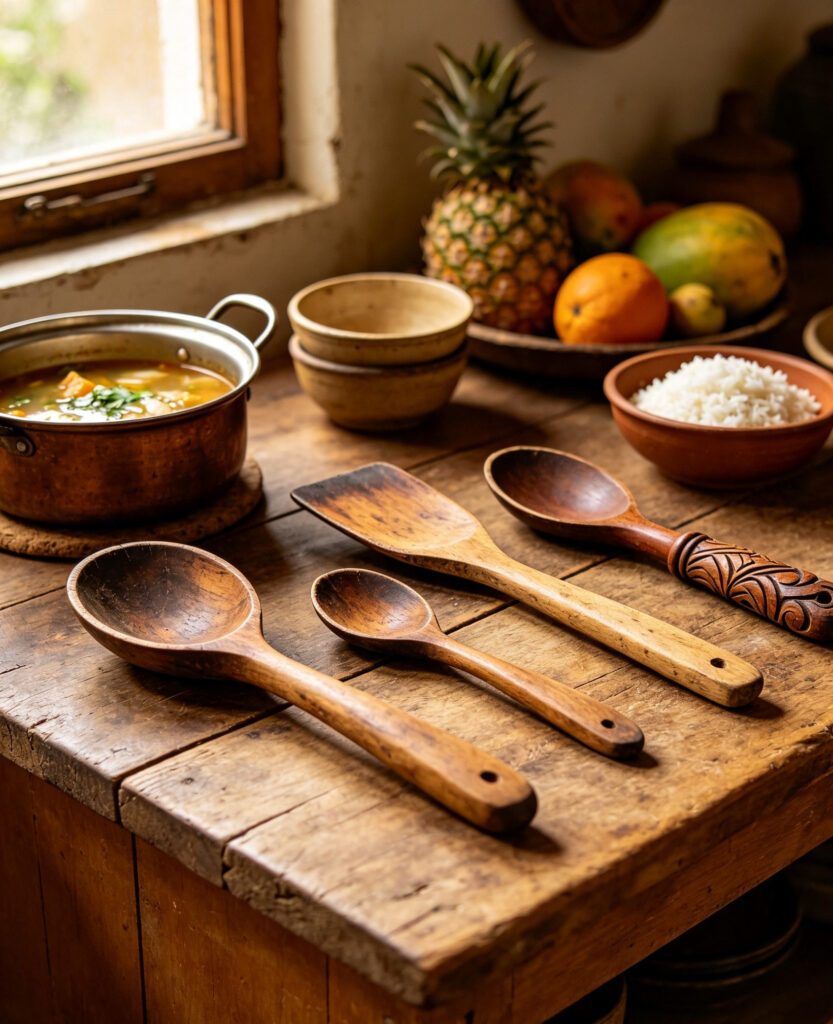
The wooden stirring spoon is among the most universally convergent kitchen tools documented in this Atlas — from East Africa's mwiko to the European wooden spoon to Latin America's cuchara de palo — each developed independently to solve the same basic problem of stirring hot food without scratching cookware or conducting heat.
Material & Construction
Materials and exact proportions vary by region and locally available hardwoods, but the underlying design — a single carved piece with a rounded bowl and a plain handle — recurs with remarkably little structural variation worldwide.
Traditional Uses
Stirring, tasting and serving across virtually every cuisine, with regional variations shaped by specific dishes and techniques.
Modern Availability / Equivalents
Modern manufacturing has standardized wooden spoon designs globally, though regional variations in bowl shape and handle length persist even in mass-produced versions sold today.
Care & Maintenance
General wooden-utensil care applies across all regional versions: hand-wash without soaking, dry promptly, and oil periodically to prevent cracking.
The wooden spoon is a recurring, independently invented design found in nearly every region.
Please log in to leave a comment.