
Caribbean
Taíno Cassava Grater Board
Caribbean islands (Taíno-descended tradition, Puerto Rico, Dominican Republic, and wider Antilles)
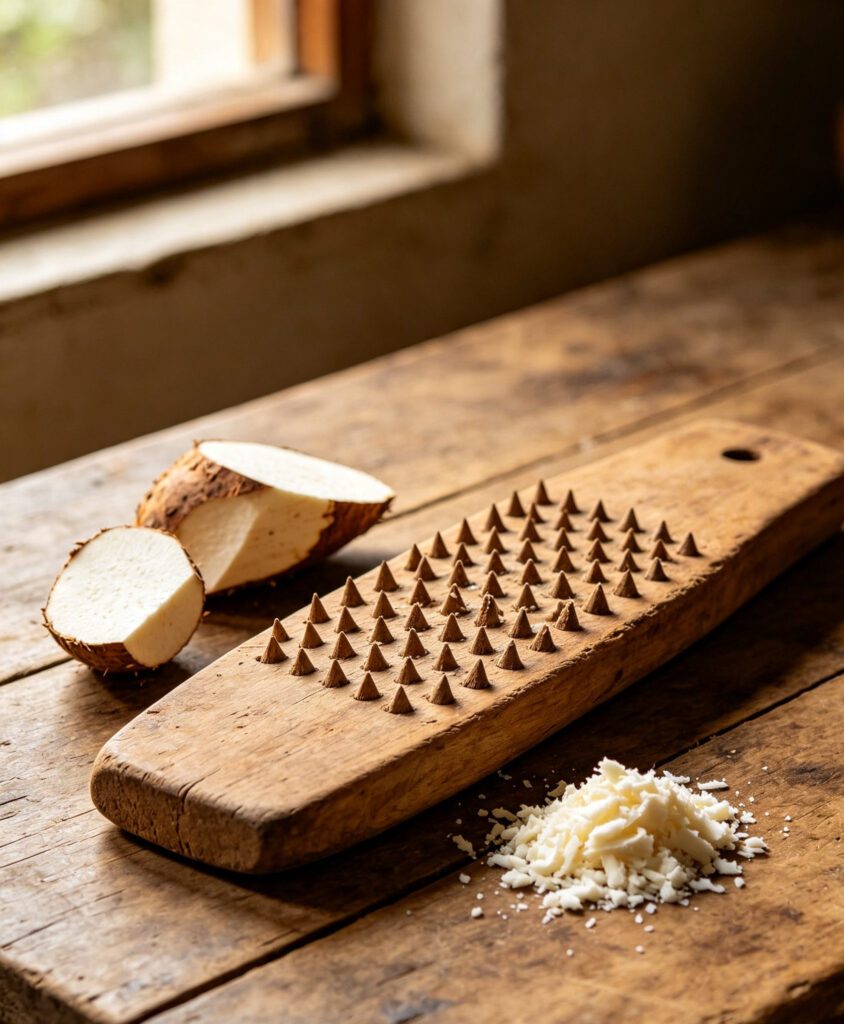
A wooden board embedded with small sharp stone chips, used historically and in some communities still today to grate bitter cassava root into pulp, part of a food-processing tradition documented archaeologically to pre-Columbian Taíno communities.
Material & Construction
A flat wooden board studded with small sharp stone fragments set into the surface, functionally similar to South America's rallador de yuca but developed independently within Caribbean island tradition.
Traditional Uses
Grating cassava root as an early step in processing it into cassava bread, a foundational indigenous Caribbean food still made in some communities using traditional methods.
Modern Availability / Equivalents
A metal grater has replaced the traditional board for most modern cassava processing; the historical board is now more commonly encountered in cultural and archaeological contexts.
Care & Maintenance
Rinse thoroughly to clear starch from between the stone points, and dry fully to prevent warping.
A close regional cousin of South America's rallador de yuca; the two developed within related but distinct indigenous traditions.
Please log in to leave a comment.