
Africa
Muno (Hand Grinding Stone)
East and Southern Africa broadly, companion tool to the stationary grinding slab
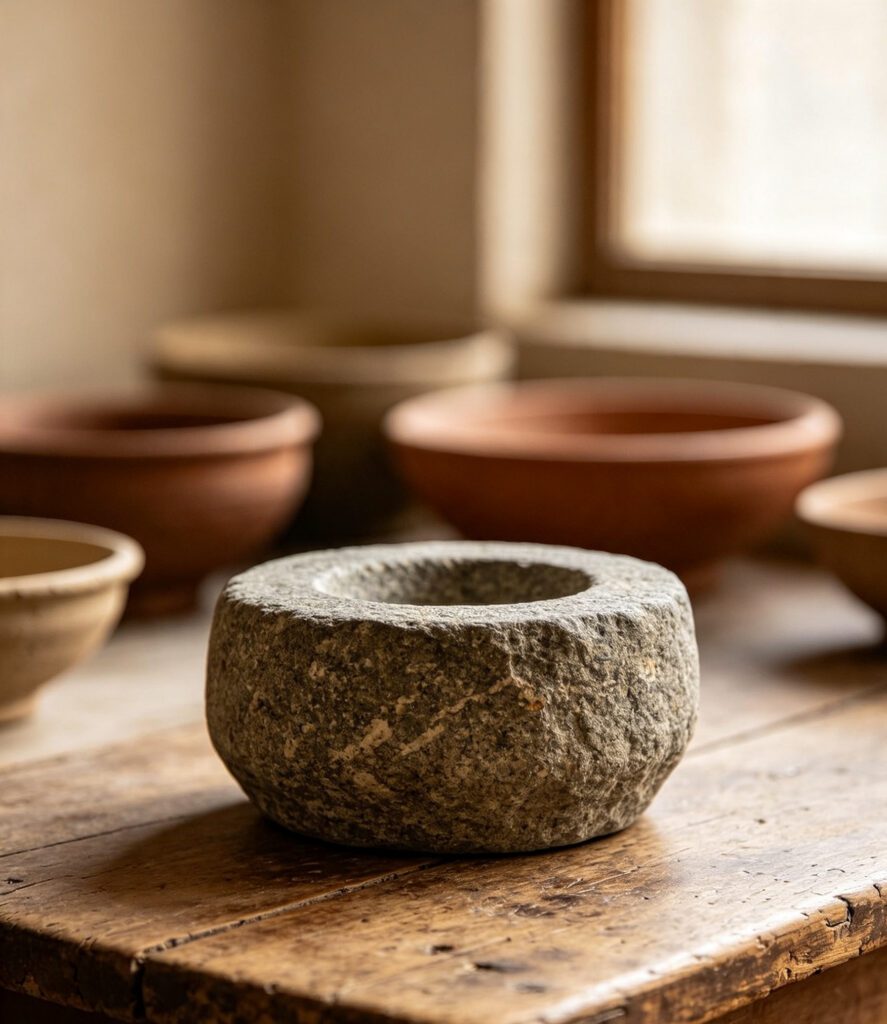
The smaller, hand-held upper stone used against a larger stationary grinding slab to crush and grind grain, spices and vegetables through a rocking or rolling motion.
Material & Construction
A dense, smooth river stone selected and shaped by wear rather than deliberate carving, sized to be gripped comfortably with both hands and rolled or rocked back and forth across the slab's surface.
Traditional Uses
Rolled with both hands over the slab to reduce soaked maize, sorghum, or millet to a fine paste or flour, and used similarly for grinding chili, tomato, and other vegetables into cooking pastes.
Modern Availability / Equivalents
A mortar and pestle or an electric grain mill has replaced this two-stone system in most urban kitchens; the technique survives mainly in rural households and is increasingly documented as a heritage practice.
Care & Maintenance
Rinse and air-dry; unlike wooden tools it requires no oiling, but the grinding surface should be kept free of soap residue, which can affect the flavor of food ground on it.
The stationary slab this stone is used against is documented as cookware/equipment rather than a utensil; the two are listed separately across the two Atlas volumes but are never used independently of each other.
Please log in to leave a comment.