
Global
Ceremonial/Personal Knife Family (Cross-Cultural Overview)
Independently developed across Yemen, Nepal, and pastoralist communities worldwide
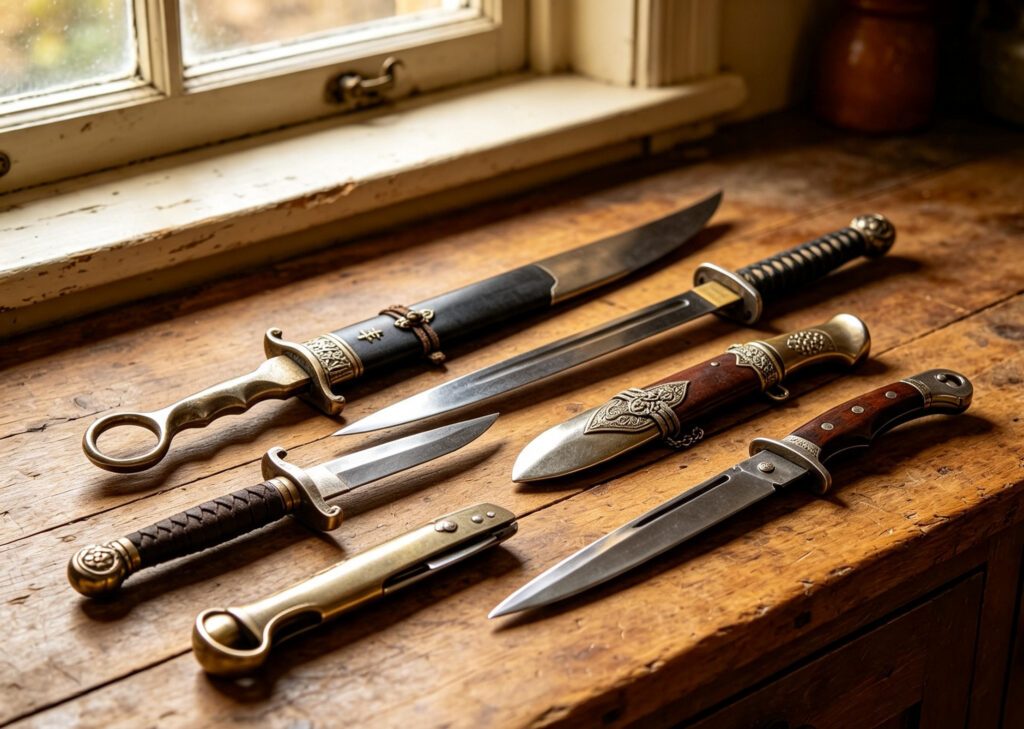
A recurring pattern across this Atlas is the personal knife that carries significant cultural, ceremonial, or status meaning alongside a secondary, genuine culinary role — Yemen's jambiya, Nepal's khukuri, the Maasai's beaded knife, and Zulu ceremonial knives all share this dual identity, where the object's primary significance is cultural even as it retains documented practical food-related use.
Material & Construction
Each is produced through specialized regional craft traditions, typically featuring decorated handles or sheaths that mark status, identity, or ceremonial role rather than purely functional design choices.
Traditional Uses
Primary use is cultural, ceremonial, or status-related; secondary, genuine culinary applications (butchering, communal meat-carving) are documented but should not be read as the object's main significance.
Modern Availability / Equivalents
Standard kitchen knives cover any practical culinary function; these objects have no substitute for their primary cultural role, which is not a kitchen-tool function to begin with.
Care & Maintenance
Each requires care appropriate to a significant cultural object.
A recurring cross-cultural pattern seen in the jambiya, khukuri, Maasai beaded knife and Zulu eating knife — each with its own distinct significance.
Please log in to leave a comment.