
Europe
Bread Knife
Europe broadly, with the serrated form standardized in the 19th–20th century
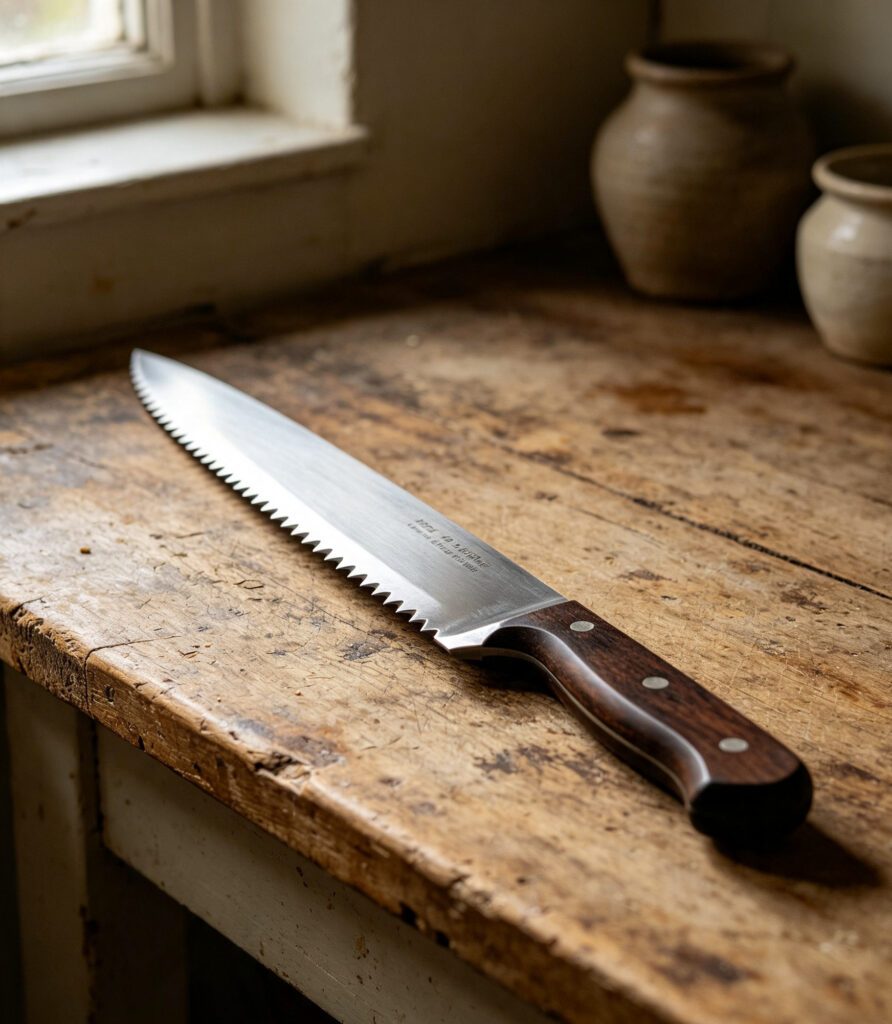
A long knife with a serrated edge, designed to saw through a crusty exterior without crushing a soft interior, addressing a problem straight-edged knives handle poorly on crusty European breads.
Material & Construction
A long steel blade with a wavy or scalloped serrated edge, the tooth pattern allowing a sawing motion to cut cleanly through crust without significant downward pressure.
Traditional Uses
Slicing loaves of bread, particularly those with a firm or crusty exterior and soft interior crumb, where a straight blade would crush the loaf before cutting through the crust.
Modern Availability / Equivalents
This remains a standard, widely manufactured knife internationally, sold as part of nearly every general kitchen knife set.
Care & Maintenance
Hand-wash and dry promptly; serrated edges are typically professionally sharpened or replaced rather than home-honed, given the specialized tooth geometry.
Please log in to leave a comment.