
South Asia
Khukuri
Nepal
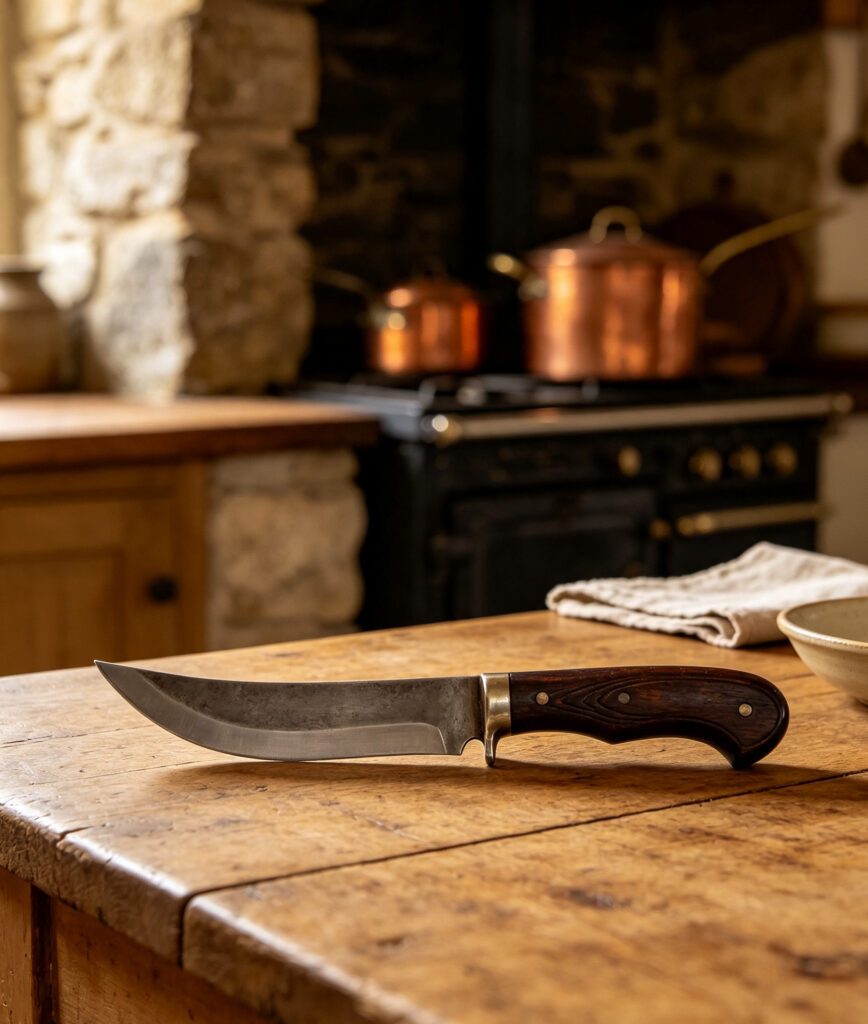
A distinctive curved, forward-angled blade widely recognized as a symbol of Nepali and Gurkha identity, which — alongside its primary role as a personal and ceremonial weapon/tool — has also seen genuine practical use in food preparation tasks such as butchering and chopping in rural Nepali households.
Material & Construction
A forged, inward-curving steel blade with a wooden or horn handle, produced by specialized traditional blacksmiths, generally carried in a fitted sheath.
Traditional Uses
Documented culinary use includes butchering and heavy chopping tasks in rural and household settings, secondary to its far more prominent ceremonial, military, and cultural significance.
Modern Availability / Equivalents
A heavy kitchen cleaver covers the equivalent culinary function; the khukuri itself has no substitute given its primarily cultural and symbolic role.
Care & Maintenance
Wipe the blade clean and dry; decorated handles and sheaths warrant care appropriate to a significant cultural object rather than routine kitchenware.
Included here for its documented but secondary culinary use; its primary significance is cultural, ceremonial, and symbolic rather than as standard kitchen cutlery.
Please log in to leave a comment.