
Global
Wok / Karahi / Kadai Family (Global Overview)
Independently and semi-independently developed across South and East Asia, with documented historical trade and cultural exchange contributing to some cross-pollination between traditions
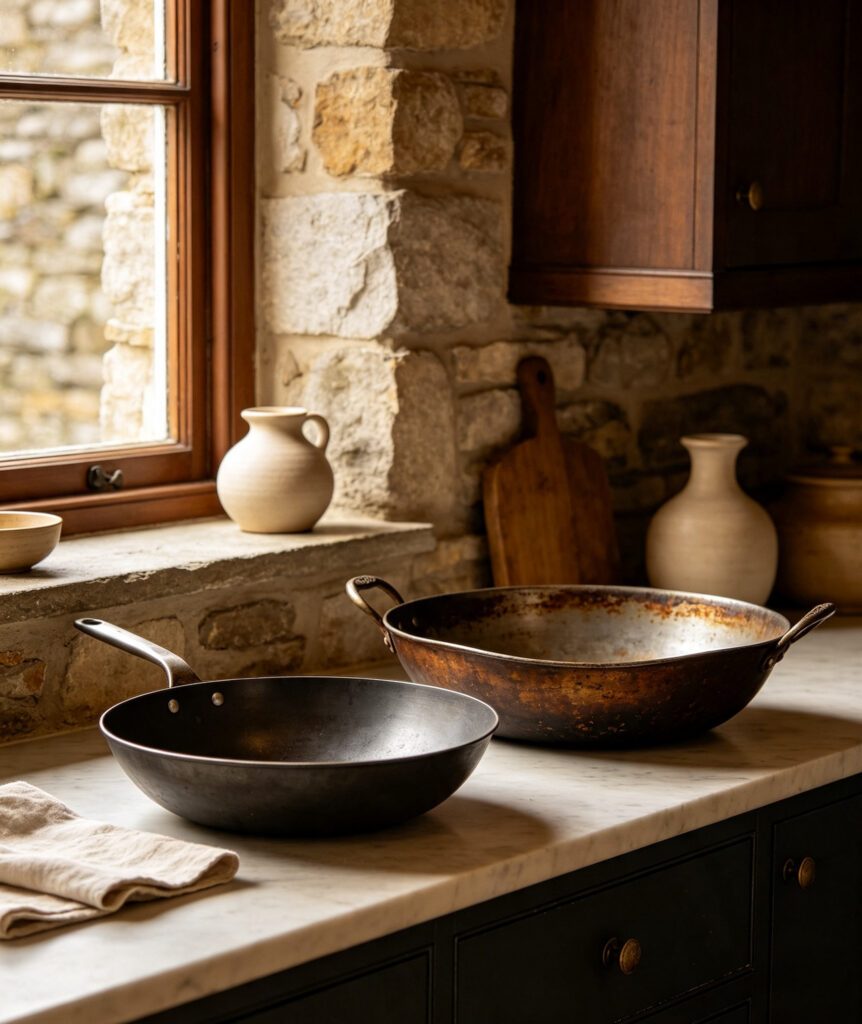
A synthesis entry grouping the round-bottomed, deep, sloped-sided cooking vessel format that recurs from China's wok through South Asia's karahi/kadhai to Southeast Asia's kuali — structurally very similar tools that reflect both genuine convergent design logic (a round bottom concentrates heat efficiently for high-heat frying) and real historical trade contact between the regions.
Material & Construction
Varies by regional material tradition (cast iron, carbon steel, hammered steel) but structurally consistent across the family: round-bottomed, deep, sloped sides.
Modern Availability / Equivalents
The Chinese wok, South Asian kadhai/karahi and Southeast Asian kuali are the most directly comparable examples.
Care & Maintenance
N/A — this is a category overview.
The wok/karahi/kadai family likely reflects at least some degree of genuine historical trade and cultural exchange across Asia, alongside independent local development — not purely coincidental convergence.
Please log in to leave a comment.