
East Asia
Dolsot
Korea
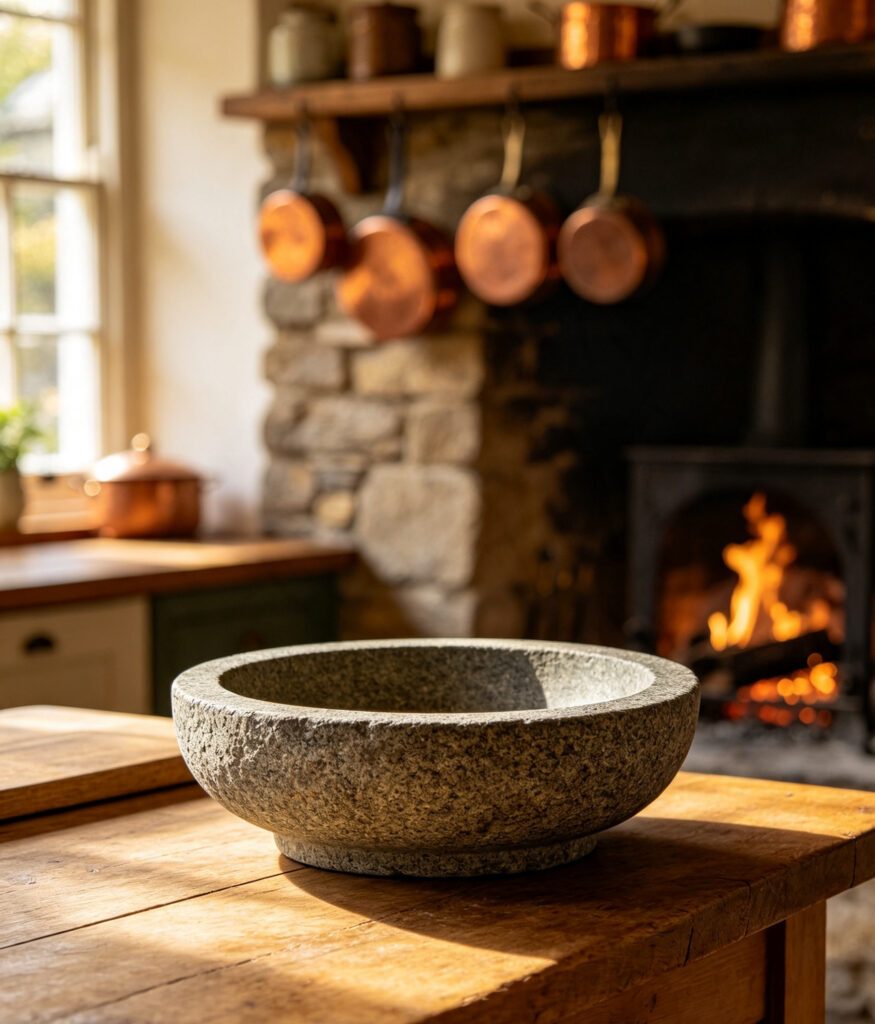
A heavy stone bowl, heated to a very high temperature before serving, used most famously for dolsot bibimbap, where the residual heat continues cooking the rice against the bowl's sides into a crisp, toasted layer.
Material & Construction
Carved or cast stone (traditionally a specific granite-like stone), extremely heat-retentive and capable of staying dangerously hot for a significant time after being removed from direct heat.
Traditional Uses
Serving dolsot bibimbap and similar dishes where a crisped rice layer (nurungji) forming against the hot stone is the specific desired effect.
Modern Availability / Equivalents
Widely available through Korean kitchenware suppliers; no close substitute fully replicates the specific stone heat retention, though a very hot cast iron skillet can approximate the crisping effect.
Care & Maintenance
Always use appropriate heat protection when serving, given how hot the stone remains; avoid sudden temperature changes, which can crack the stone.
A genuine burn hazard when freshly heated — restaurants typically serve dolsot dishes with an explicit verbal warning, worth noting given how easily the bowl's continued heat can be underestimated by unfamiliar diners.
Please log in to leave a comment.