
South Asia
Pressure Cooker
Invented in France (17th century); adopted and adapted especially widely across South Asian kitchens
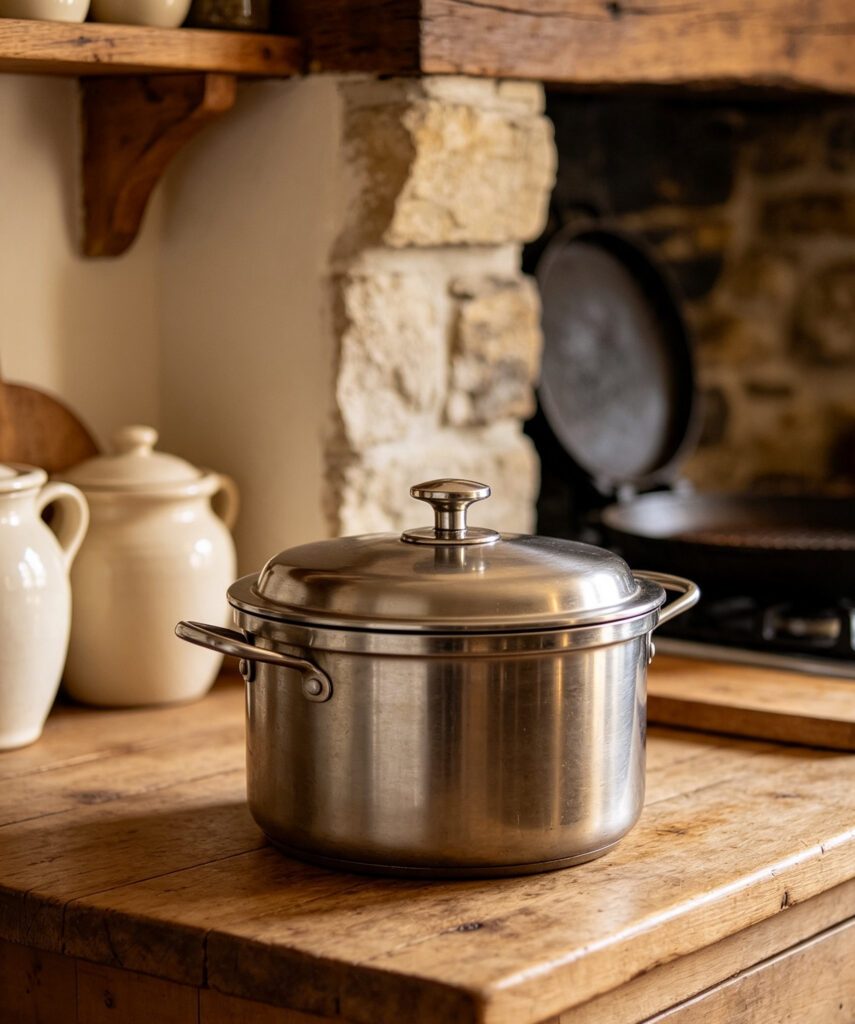
A sealed pot that cooks food quickly under high-pressure steam, dramatically reducing cooking time for dal, rice, and tough cuts of meat — while not originally South Asian, the pressure cooker has become one of the most essential, near-universal pieces of equipment in South Asian households specifically.
Material & Construction
Aluminum or stainless steel body with a locking, pressure-sealed lid and a pressure-release valve or weight (the characteristic "whistle" of Indian pressure cooking).
Traditional Uses
Rapidly cooking dal, rice, tough meat cuts, and countless other dishes; the number of "whistles" a dish requires is a commonly used, informal South Asian home-cooking timing measure.
Modern Availability / Equivalents
Extremely widely available; stovetop and modern electric multi-cooker versions both serve this function, with stovetop whistle-style cookers remaining strongly preferred in many South Asian households specifically for the tactile, audible timing cue.
Care & Maintenance
Regularly inspect and replace the rubber gasket seal; never open a pressure cooker before pressure has fully released, a genuine safety consideration given the sealed, high-pressure design.
Despite its non-South-Asian origin, it has become central to South Asian home cooking.
Please log in to leave a comment.