
Dashi (Kombu-Katsuo)
The Quirky Foodster Team
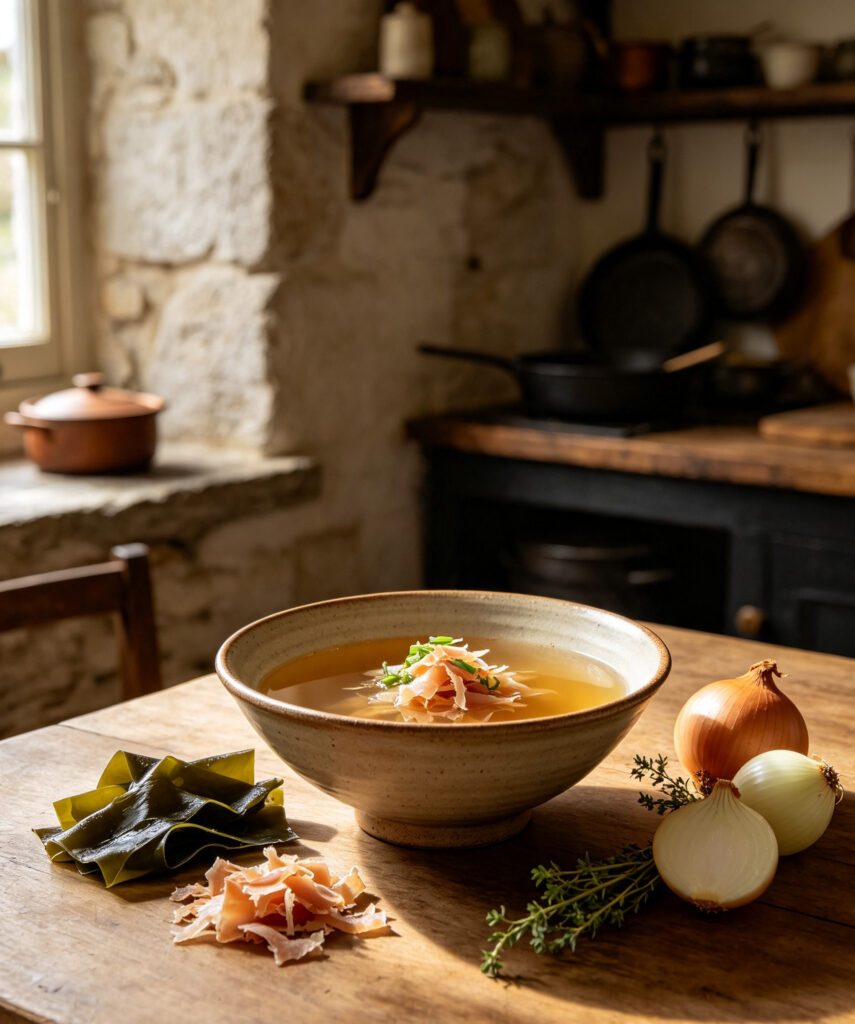
Ingredients
- Kombu (dried kelp)
- Katsuobushi (dried bonito flakes)
Method
- A foundational stock made by steeping kombu (dried kelp) in near-boiling water, removing it just before boiling, then adding katsuobushi (dried bonito flakes) and straining — the single most foundational stock in Japanese cuisine.
Origin: Japan. A foundational stock made by steeping kombu (dried kelp) in near-boiling water, removing it just before boiling, then adding katsuobushi (dried bonito flakes) and straining — the single most foundational stock in Japanese cuisine.
Flavor Profile: Delicately savory-umami with a clean oceanic quality, far lighter than most meat-based stocks.
Culinary Uses: Base for miso soup, noodle broths, and countless simmered dishes; the foundation from which much of Japanese cuisine’s flavor structure is built.
Regional Variations: Ichiban dashi (first extraction, most delicate) versus niban dashi (second extraction from the same kombu/katsuobushi, more robust and used for heartier dishes) represent a foundational technical distinction.
Storage: Best used fresh the same day; refrigerate up to 2 days, though flavor is noticeably diminished.
Notes: Ponzu typically uses dashi as one of its base components.
- Kombu (dried kelp)
- Katsuobushi (dried bonito flakes)
Please log in to leave a comment.