
Harissa
The Quirky Foodster Team
Ingredients
Method
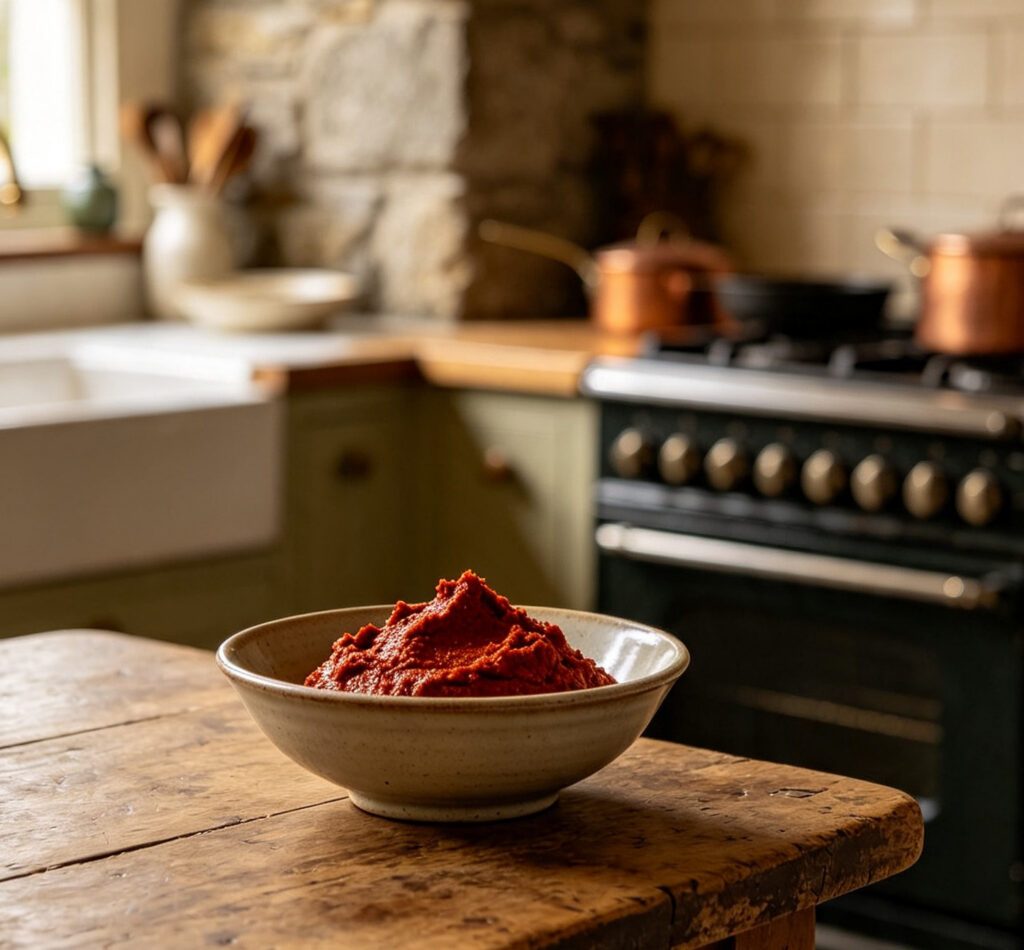
- A thick, deep-red chili paste built from rehydrated dried chilies (often baklouti or guajillo-type), garlic, olive oil, and a warm spice base of caraway, coriander, and cumin. Tunisia's national condiment and one of the most exported North African products; commercial jarred versions vary hugely in heat and quality.
Origin: Tunisia / Maghreb (Algeria, Libya). A thick, deep-red chili paste built from rehydrated dried chilies (often baklouti or guajillo-type), garlic, olive oil, and a warm spice base of caraway, coriander, and cumin. Tunisia’s national condiment and one of the most exported North African products; commercial jarred versions vary hugely in heat and quality.
Flavor Profile: Hot, smoky, and earthy, with a garlicky pungency and a background warmth from toasted cumin and caraway rather than raw chili burn alone.
Culinary Uses: Stirred into couscous, tagines, and soups (notably chorba); thinned with olive oil and lemon as a dip; used as a base for shakshuka; spread on bread or sandwiches (fricassé, casse-croûte); rubbed onto meat and fish before grilling.
Regional Variations: Tunisian harissa is typically hotter and more caraway-forward than Libyan versions; Algerian harissa often includes preserved lemon or tomato; rose harissa (a Western reinterpretation, not traditional) adds dried rose petals and is milder.
Storage: Refrigerate after opening under a film of olive oil; keeps several months refrigerated. Freezes well in small portions (ice cube trays).
Notes: Do not confuse with Middle Eastern muhammara (walnut-pomegranate based) or Yemeni zhoug (herb-forward, green) — all three are sometimes mislabeled as “hot sauce” interchangeably in retail.
- Rehydrated dried chilies (baklouti or guajillo-type)
- Garlic
- Olive oil
- Caraway
- Coriander
- Cumin
Please log in to leave a comment.