
Vietnamese Saté Seasoning
The Quirky Foodster Team
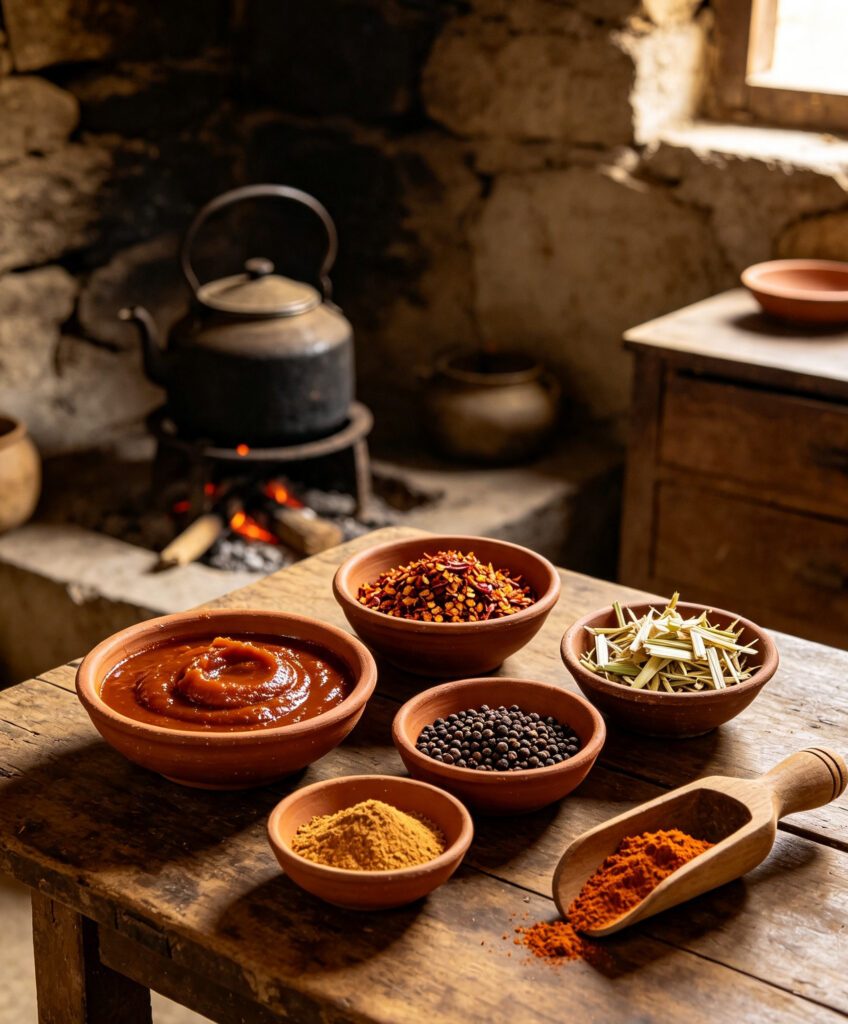
Ingredients
- Dried chile
- lemongrass
- garlic
- shallot
- and oil
- cooked together into a spicy
- aromatic chile oil/paste (sa tế)
Method
- Sauté the aromatics in oil until fragrant, then combine with chile and simmer briefly to infuse the oil.
- The aromatics are sautéed rather than dry-toasted.
Origin: Vietnam — a chile-lemongrass oil/paste distinct from Indonesian/Malay satay, sharing only a name-adjacent etymological root via the broader Southeast Asian satay tradition.
Use: A condiment and flavoring oil stirred into noodle soups (notably bún bò Huế) and used as a dipping sauce component.
Classic Dishes: Bún bò Huế (a spicy beef noodle soup where sa tế is a defining flavor component).
Storage: Keeps several weeks refrigerated, given its oil-preserved form.
Variations: Despite the name’s apparent connection to Indonesian/Malay satay (a skewered, peanut-sauce-associated dish), Vietnamese sa tế is a fundamentally different preparation — a chile-lemongrass oil rather than a peanut sauce — worth flagging as a naming false-friend across Southeast Asian culinary traditions.
Substitutions: A simplified chile-garlic oil with lemongrass stirred in.
- Dried chile
- lemongrass
- garlic
- shallot
- and oil
- cooked together into a spicy
- aromatic chile oil/paste (sa tế)
Please log in to leave a comment.