
Radhuni-Based Panch Phoron
The Quirky Foodster Team
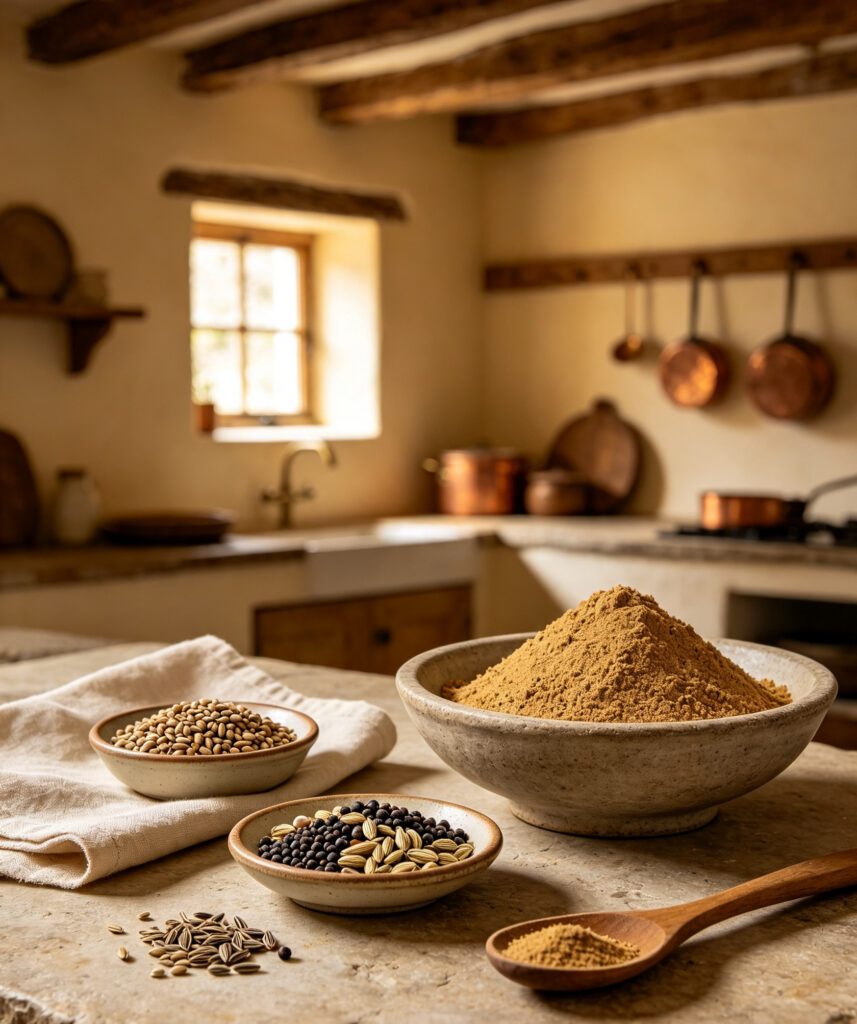
Ingredients
- Equal parts (traditionally by volume, not weight) of five whole seeds: fenugreek
- nigella (kalonji)
- cumin
- black mustard seed
- and fennel seed — notably used WHOLE
- never ground
- distinguishing it structurally from every garam-masala-family entry above
- As panch phoron, with radhuni substituted for fenugreek seed, or in some household versions, for mustard seed
Method
- Combine the five whole seeds, radhuni included, in equal measure.
- Not pre-toasted for storage, tempered fresh as with standard panch phoron.
Origin: Bengal, eastern India — a regional variant substituting radhuni (Trachyspermum roxburghianum, a celery-seed relative distinct from both celery seed and ajwain despite some flavor similarity) for one of the standard five seeds.
Use: Tempered whole in hot oil or ghee at the start of cooking, in the South Asian tadka tradition. As panch phoron, tempered in hot oil at the start of cooking.
Classic Dishes: Certain Bengali vegetable and fish preparations specifically calling for radhuni’s distinctive bitter-aromatic note over standard fenugreek.
Storage: Whole seed mix keeps well over a year sealed and dark, since none of the components are ground. As panch phoron.
Variations: A genuinely distinct regional variant rather than a simple renaming — radhuni is its own botanically distinct seed, not interchangeable in flavor with fenugreek despite occupying the same structural slot in the five-seed formula.
Substitutions: A rough approximation can be made from whichever four of the five seeds are on hand, adjusted proportionally, though the specific balance is part of the blend’s identity. Standard panch phoron if radhuni is unavailable, accepting the flavor shift.
- Equal parts (traditionally by volume, not weight) of five whole seeds: fenugreek
- nigella (kalonji)
- cumin
- black mustard seed
- and fennel seed — notably used WHOLE
- never ground
- distinguishing it structurally from every garam-masala-family entry above
- As panch phoron, with radhuni substituted for fenugreek seed, or in some household versions, for mustard seed
Please log in to leave a comment.