
Pacific & Oceania
Anise Myrtle
Syzygium anisatum (syn. Backhousia anisata).
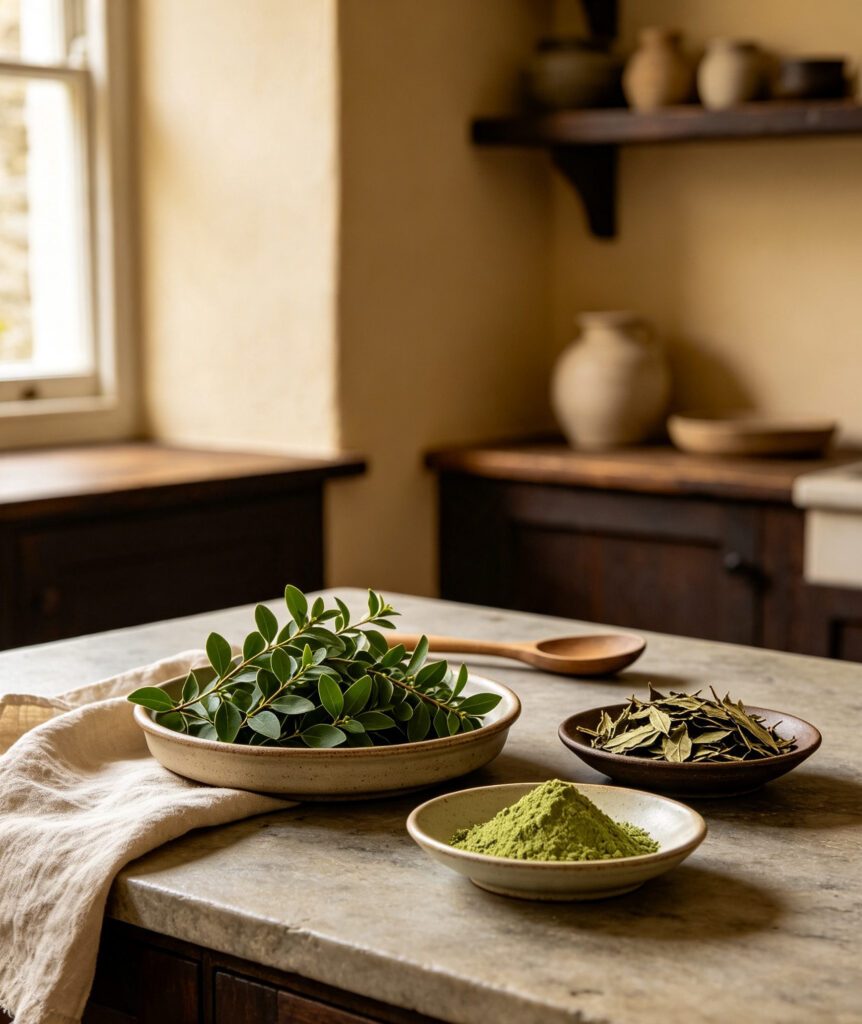
Local / Regional Names
Anise myrtle, aniseed myrtle (English); various Aboriginal Australian names specific to individual language groups.
Countries / Cuisines
Australia (native to northern New South Wales subtropical rainforest).
Flavor & Aroma
Sweet, intensely aniseed/licorice, with one of the highest natural anethole concentrations of any plant – reportedly even more concentrated than true star anise.
Culinary Uses
A versatile anise-flavoring herb for both sweet and savory dishes.
Classic Dishes
Used in baking, ice cream, and savory dishes such as fish and pork where an anise note is wanted.
Pairings
Fish, pork, chocolate, stone fruit.
Timing
Add dried/ground leaf early in baking or a savory braise for a gradually infused anise note.
Storage
Dried leaf keeps well over a year sealed and dark.
Substitutions
Star anise or fennel seed, though genuine anise myrtle is considered notably more concentrated and refined in flavor.
Cultural / History Notes
Reported to have an even higher concentration of anethole (the primary anise-flavor compound) than true star anise itself – another example, alongside lemon myrtle, of an Australian native ingredient achieving a more concentrated version of a familiar flavor profile than the plants conventionally associated with that flavor.
Blend Cross-References
Not typically a component of a standardized dry blend; used as a standalone flavoring herb.
Please log in to leave a comment.