
Pacific & Oceania
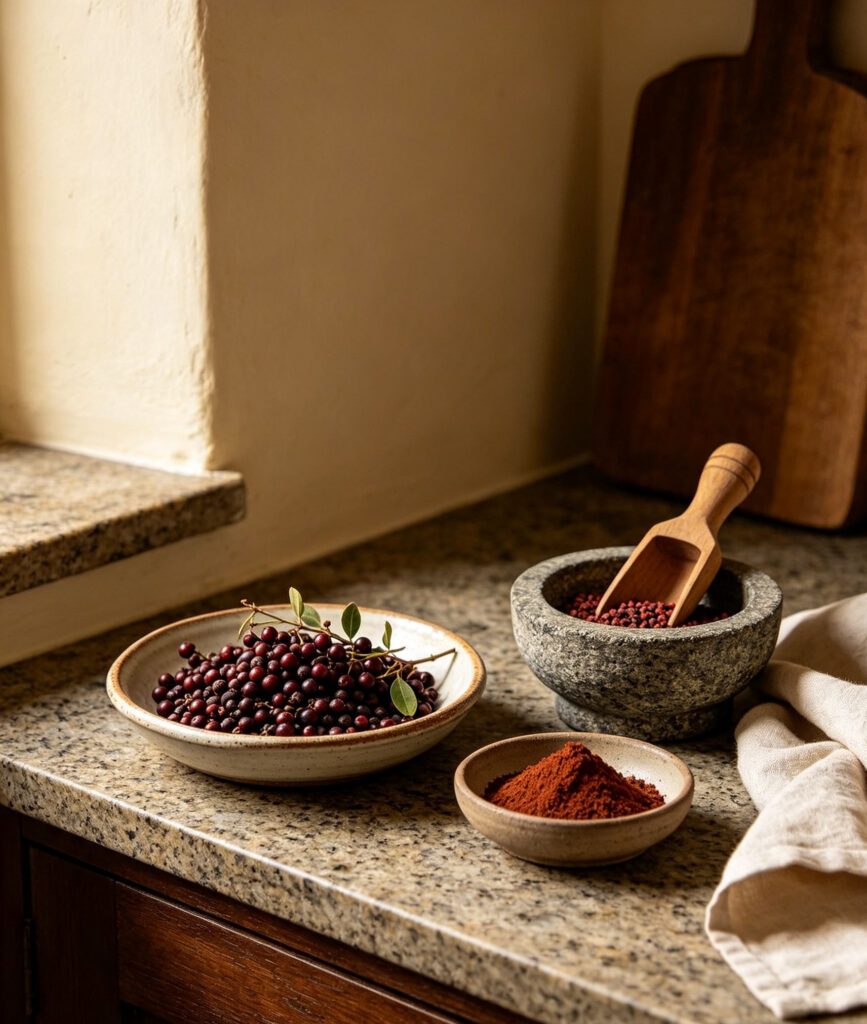
Mountain Pepper / Tasmanian Pepperberry
Tasmannia lanceolata, both leaf and berry used.
Local / Regional Names
Tasmanian pepper, pepperberry, pepperleaf (English); various Aboriginal Australian names specific to individual language groups.
Countries / Cuisines
Australia (Tasmania and southeastern mainland cool-temperate forests).
Flavor & Aroma
Fruity-sweet upfront, building into a sharp, lingering, building heat notably hotter than black pepper by most comparative accounts – described by some as 'the aroma of Australian bush scrub with perfumed, fruit lolly notes.'
Culinary Uses
A distinctive native pepper substitute, increasingly featured in commercial 'pink and native pepper' blends internationally.
Classic Dishes
Contemporary Australian native-food menus use it across marinades, sauces, dressings, pastas, desserts, and ice creams; also increasingly exported into international pink-peppercorn-style blends.
Pairings
Native Australian ingredients generally (finger lime, wattleseed), grilled meats.
Timing
Add ground berry or leaf toward the end of cooking, as with most pepper-style spices, to preserve its building heat character.
Storage
Dried berries and leaf both keep well over a year sealed and dark.
Substitutions
Black pepper for general heat, though the specific fruity building-heat character and building intensity are not closely replicated.
Cultural / History Notes
The berry's heat is frequently described by chefs as building progressively rather than hitting immediately like black pepper's sharper, more instant bite – a genuinely distinct sensory experience worth conveying clearly, similar in spirit to Sichuan pepper's distinctive numbing quality as another example of a 'pepper' with a fundamentally different sensory mechanism from true Piper nigrum.
Blend Cross-References
Commercial native pepper/pink peppercorn blends (largely a modern export product).
Please log in to leave a comment.