
North America
Wintergreen
Gaultheria procumbens.
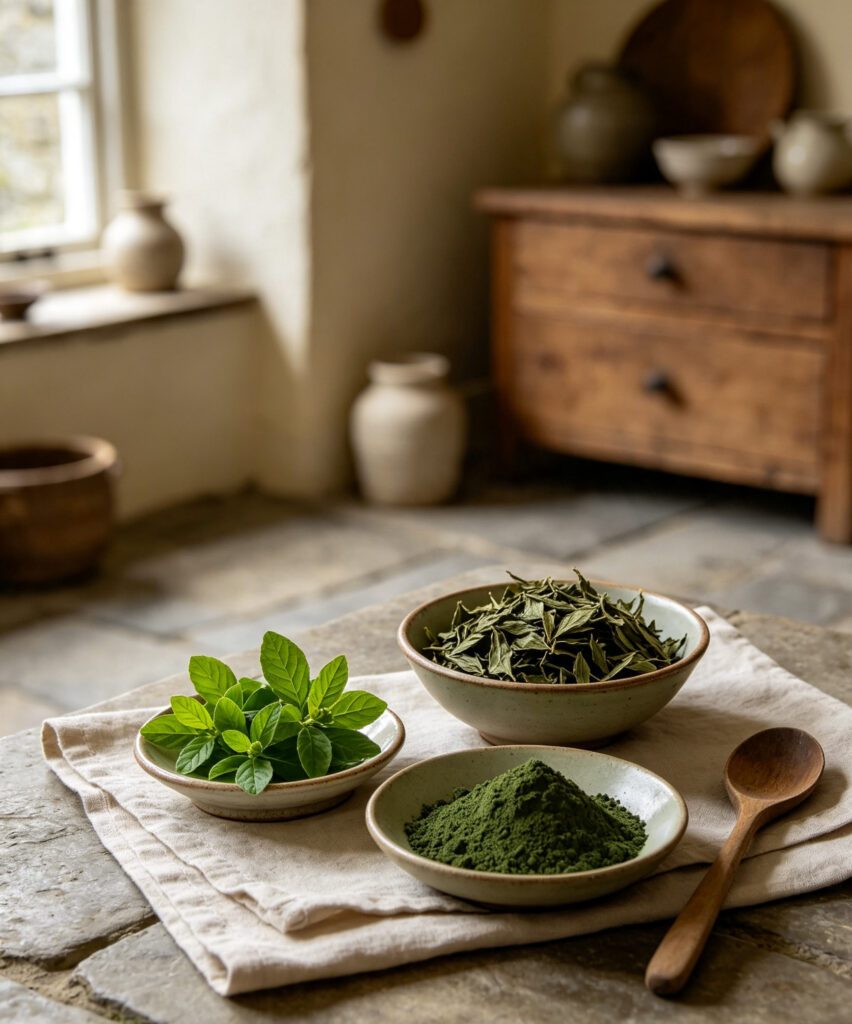
Local / Regional Names
Wintergreen, teaberry (regional English names); various Indigenous names specific to individual nations.
Countries / Cuisines
Eastern United States and Canada.
Flavor & Aroma
Distinctively minty-medicinal, the source of the classic 'wintergreen' flavor familiar from commercial candy and gum.
Culinary Uses
Traditional tea and flavoring among numerous Indigenous nations, and historically a significant source of natural wintergreen oil.
Classic Dishes
Wintergreen tea; historically, the natural flavor source for commercial wintergreen-flavored products before synthetic methyl salicylate became the dominant commercial source.
Pairings
Not extensively documented beyond its traditional tea preparation.
Timing
Steep fresh or dried leaves for tea.
Storage
Dried leaves keep several months to a year in a dry container.
Substitutions
No true substitute for the specific wintergreen flavor compound.
Cultural / History Notes
IMPORTANT SAFETY FLAG: wintergreen oil is highly concentrated in methyl salicylate and can be toxic in even relatively small doses if the concentrated oil (as opposed to a mild leaf tea) is ingested – a genuinely important distinction between the mild traditional leaf tea and the much more concentrated oil extraction, worth stating clearly.
Blend Cross-References
Not a culinary blend component; used for tea and historically for oil extraction.
Please log in to leave a comment.