
North America
California Bay Leaf
Umbellularia californica.
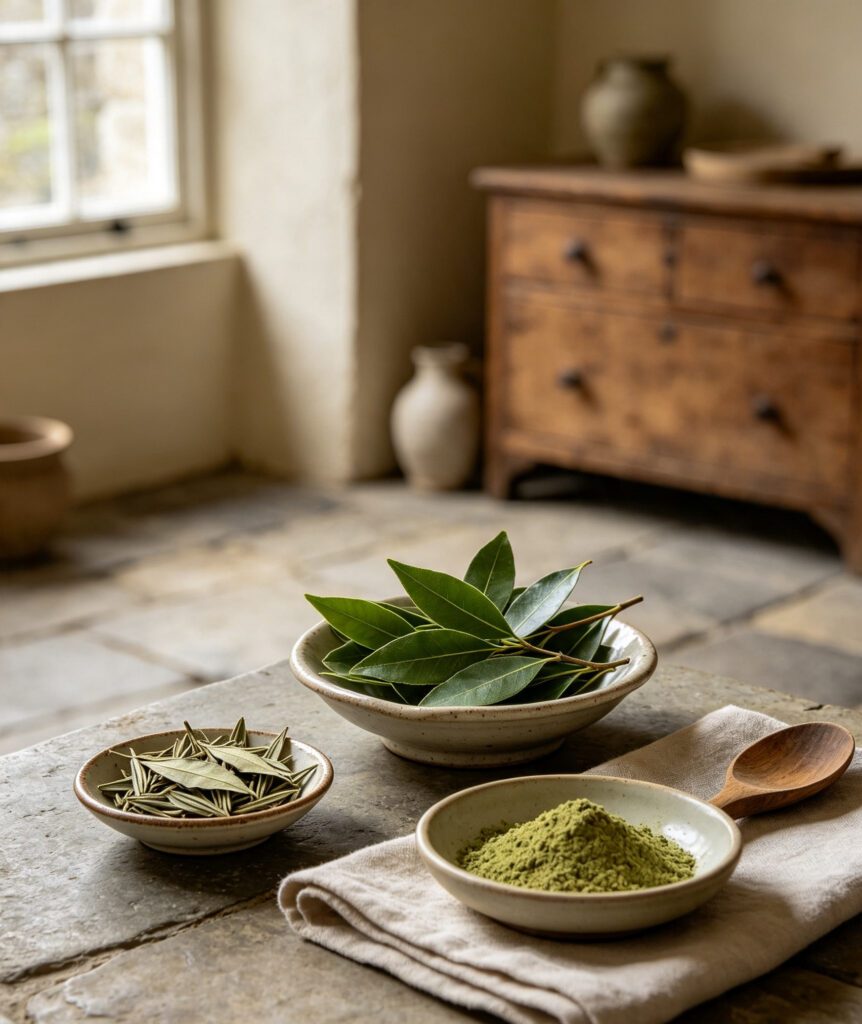
Local / Regional Names
California bay laurel, Oregon myrtle (regional English names) – a distinct species from true Mediterranean bay laurel despite the shared 'bay' name and generally similar appearance.
Countries / Cuisines
United States (California and southern Oregon, native range).
Flavor & Aroma
Considerably stronger, more pungent and peppery-camphorous than Mediterranean bay laurel – strong enough that it can cause headaches in some people if inhaled directly and deeply from a freshly crushed leaf.
Culinary Uses
A regional substitute for Mediterranean bay laurel in West Coast American cooking, used in reduced quantity given its stronger flavor.
Classic Dishes
Regional braises and stocks calling specifically for California bay leaf, or used as a home-foraged substitute for the Mediterranean variety.
Pairings
Similar culinary pairings to Mediterranean bay leaf – stocks, braises, roasted meats.
Timing
Add whole, in smaller quantity than would be used for Mediterranean bay leaf, early in a long simmer; remove before serving.
Storage
Dried leaves keep well over a year sealed and dark.
Substitutions
Mediterranean bay laurel, using roughly double the quantity given California bay's greater intensity.
Cultural / History Notes
IMPORTANT USAGE-CAUTION FLAG: notably more potent than Mediterranean bay laurel – recipes assuming a 1:1 substitution can produce an overpoweringly bitter, medicinal result, and some sources note that deeply inhaling a freshly crushed leaf's aroma can trigger headaches in sensitive individuals. A genuinely practical caution, distinct from the simple naming confusion attached to most 'bay leaf' ingredients.
Blend Cross-References
Not a standard blend component; used as a whole leaf, singly, in place of Mediterranean bay leaf.
Please log in to leave a comment.