
Central & South America
Rocoto
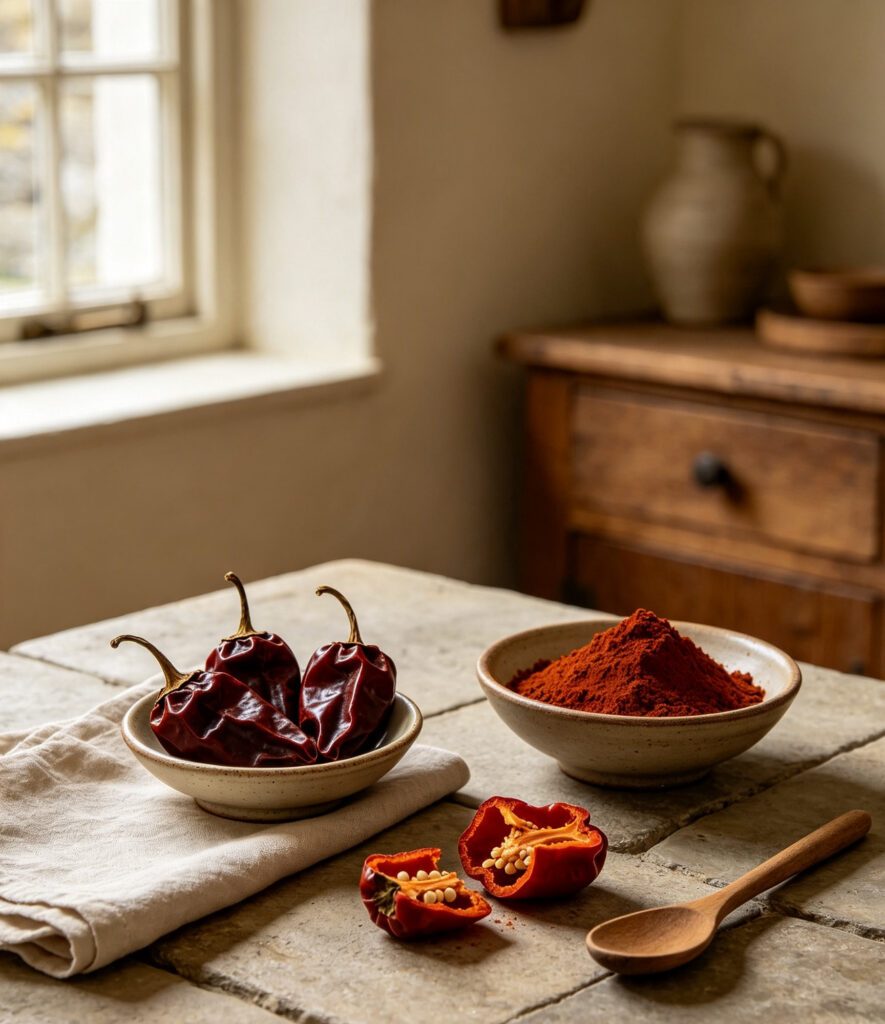
Capsicum pubescens – notably a distinct chile species from the more common Capsicum annuum and Capsicum chinense that dominate most of this list, identifiable by its black seeds and thick, apple-like flesh.
Local / Regional Names
Rocoto (Spanish, from Quechua).
Countries / Cuisines
Peru, Bolivia, broader Andean region.
Flavor & Aroma
Sharply hot, with a crisp, apple-like flesh texture very different from the thinner walls of most other chiles in this reference.
Culinary Uses
A very hot, thick-fleshed chile often stuffed and baked, similar in preparation style to a bell pepper.
Classic Dishes
Rocoto relleno (stuffed rocoto, a signature Arequipa dish); various fresh salsas.
Pairings
Ground meat, cheese, potatoes (as fillings for rocoto relleno).
Timing
For stuffed preparations, the pods are typically parboiled first to temper some heat before stuffing and baking.
Storage
Fresh keeps 1-2 weeks refrigerated.
Substitutions
Habanero for heat, though the thick, apple-like flesh texture cannot be replicated by any other common chile.
Cultural / History Notes
One of only a handful of Capsicum pubescens chiles in widespread culinary use worldwide – its black seeds (all other common culinary chiles have pale/cream-colored seeds) are a genuinely distinguishing identification feature worth noting.
Blend Cross-References
Not a blend component; used as a fresh whole chile, typically stuffed.
Please log in to leave a comment.