
Europe & Mediterranean
Dill
Anethum graveolens.
Local / Regional Names
Aneth (French); dilla / koper (various Central/Northern European terms).
Countries / Cuisines
Scandinavia, Central and Eastern Europe, broader Northern Europe.
Flavor & Aroma
Fresh leaf: bright, grassy, anisic. Seed: warmer, more caraway-adjacent and concentrated.
Culinary Uses
Foundational herb for Northern and Central European fish, pickle, and potato dishes.
Classic Dishes
Gravlax; dill pickles; Scandinavian potato salads.
Pairings
Salmon, cucumber, sour cream, vinegar.
Timing
Add fresh leaf toward the end of cooking or as garnish; add seed early to pickling brine or bread dough.
Storage
Fresh leaf keeps about a week refrigerated; dried seed keeps 2+ years sealed and dark.
Substitutions
Fennel frond as a rough textural and mild flavor approximation for the fresh leaf.
Cultural / History Notes
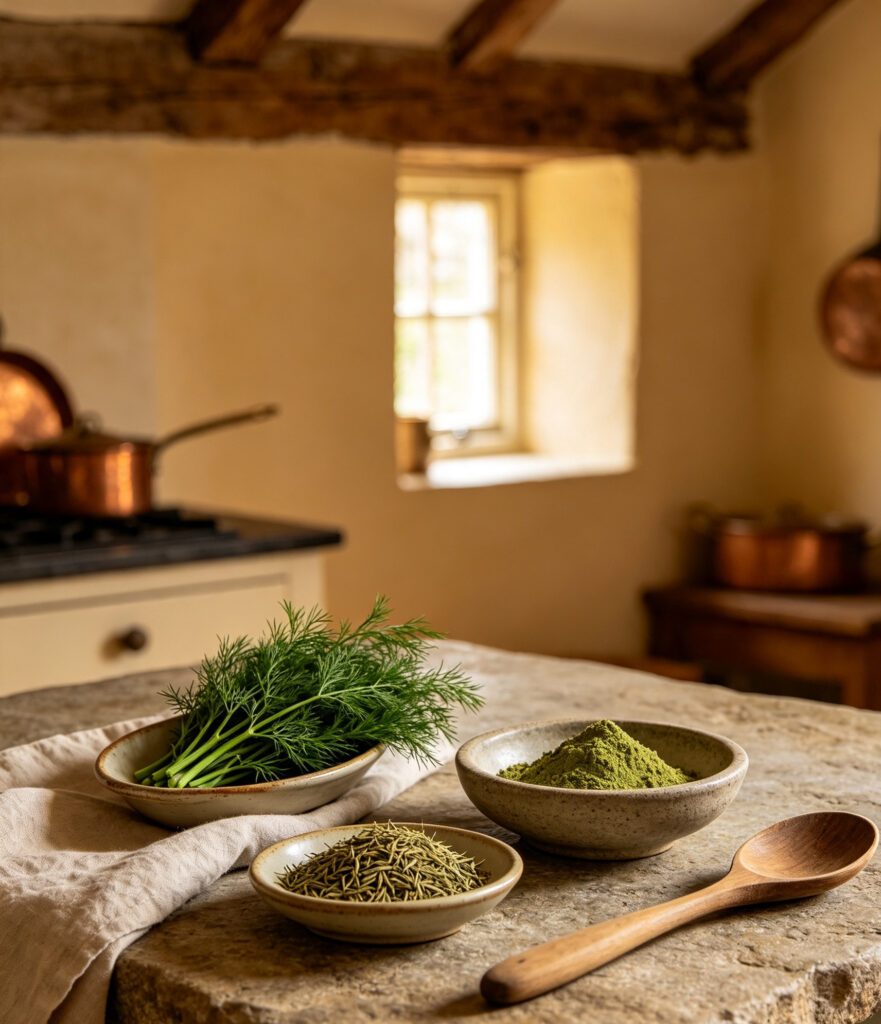
The fresh leaf and dried seed are used in genuinely distinct culinary contexts (leaf for fresh/finishing applications, seed for pickling and baking) despite coming from the same plant – worth presenting as two related but distinct culinary forms within one entry.
Blend Cross-References
Not typically part of a standardized dry blend; used in its own dedicated preparations (pickling, gravlax cure).
Please log in to leave a comment.