
Europe & Mediterranean
Bay Laurel
Laurus nobilis.
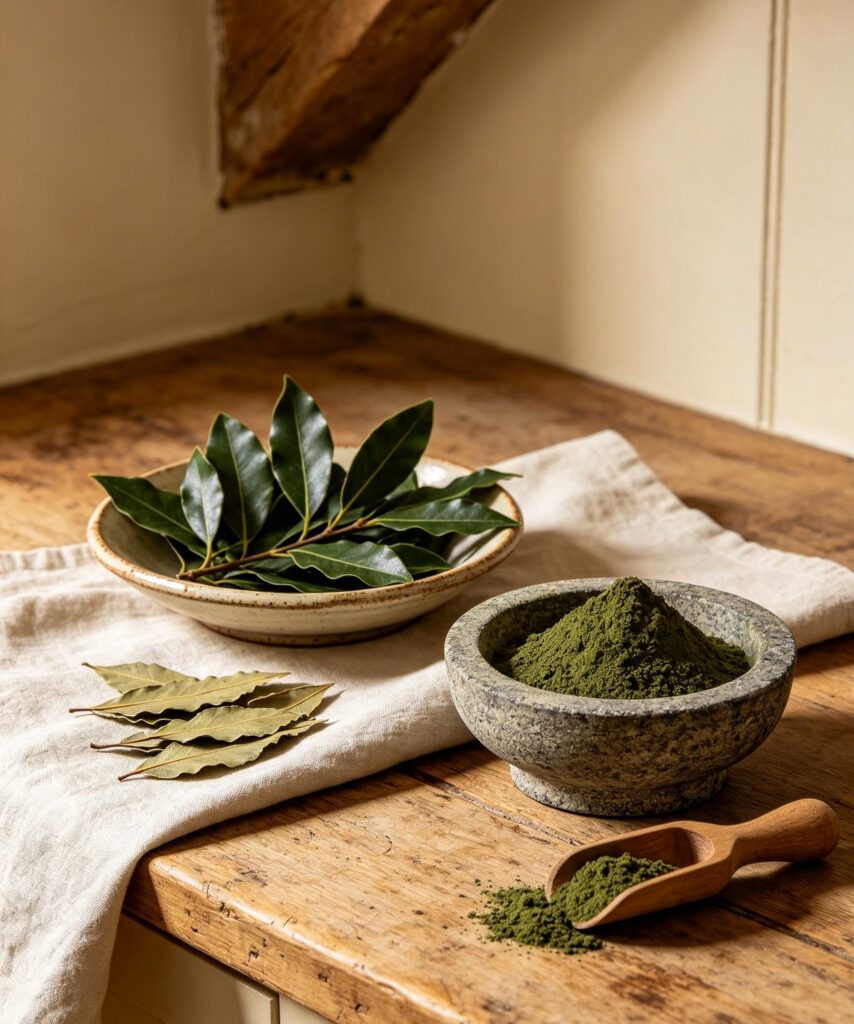
Local / Regional Names
Laurier (French); alloro (Italian) – the TRUE bay leaf (Laurus nobilis), distinct from the Indian, Indonesian, and Californian 'bay leaves' flagged as naming hazards elsewhere in this reference.
Countries / Cuisines
Widespread across the Mediterranean, especially Turkey, Greece, Italy.
Flavor & Aroma
Herbal, slightly floral, with a mild eucalyptus-menthol edge – milder and more purely aromatic than the cinnamon-clove-adjacent 'bay leaves' of South and Southeast Asia.
Culinary Uses
Foundational aromatic for stocks, braises, and bouquet garni.
Classic Dishes
Bouquet garni; countless European stocks, soups, and braises.
Pairings
Thyme, parsley, onion, peppercorns.
Timing
Add whole dried leaves early in a long simmer; remove before serving as the leaf itself remains tough and inedible.
Storage
Dried keeps well over a year sealed and dark; actually improves somewhat in the first weeks after drying as the flavor mellows from a harsher fresh-leaf bitterness.
Substitutions
No true substitute for its specific mild, herbal-menthol profile; Indian bay leaf/tejpat is NOT an acceptable substitute despite frequent packaging confusion, given how different the two flavors actually are.
Cultural / History Notes
THE reference point against which every other 'bay leaf' naming hazard in this entire book should be measured – this is the one true botanical bay laurel (Laurus nobilis); every other 'bay leaf' entry across this reference (Indian/tejpat, Indonesian/salam, Californian) is a different plant from a different family entirely, unified only by translation convention.
Blend Cross-References
Bouquet garni.
Please log in to leave a comment.