
Europe & Mediterranean
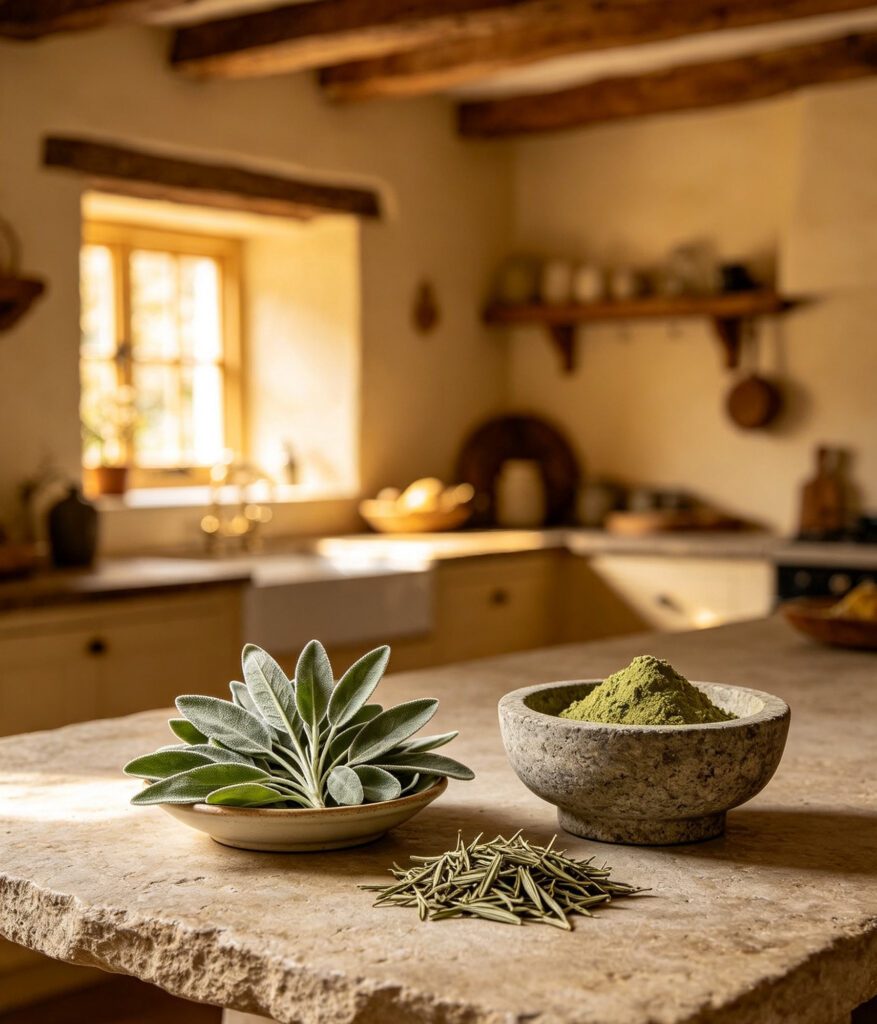
Sage
Salvia officinalis.
Local / Regional Names
Salvia (Italian); sauge (French).
Countries / Cuisines
Widespread across the Mediterranean and broader Europe, especially prominent in Italian cooking.
Flavor & Aroma
Earthy, slightly peppery, with a musky, somewhat camphorous edge.
Culinary Uses
A robust, assertive herb, often used sparingly given its strong flavor.
Classic Dishes
Saltimbocca; brown butter sage sauce for pasta; stuffing mixes.
Pairings
Butter, pork, veal, pumpkin.
Timing
Fresh leaves can be fried briefly in butter for a crisp garnish, or added early to a braise.
Storage
Dried keeps a year or more sealed and dark; fresh keeps 1-2 weeks refrigerated.
Substitutions
No close substitute for its distinctive musky flavor; used more sparingly if substituting with a milder herb.
Cultural / History Notes
The fried-sage-in-brown-butter preparation is one of the most iconic and widely recognized applications of any herb in Italian cooking, showcasing the herb at its most concentrated and appealing.
Blend Cross-References
Not typically part of a standardized dry blend; used as a distinct standalone herb given its assertive character.
Please log in to leave a comment.