
Europe & Mediterranean
Mediterranean Oregano
Origanum vulgare subsp. hirtum, primarily – botanically distinct from Mexican oregano, an unrelated plant sharing only the common name. Also (from Greek Oregano): Origanum vulgare subsp. hirtum.
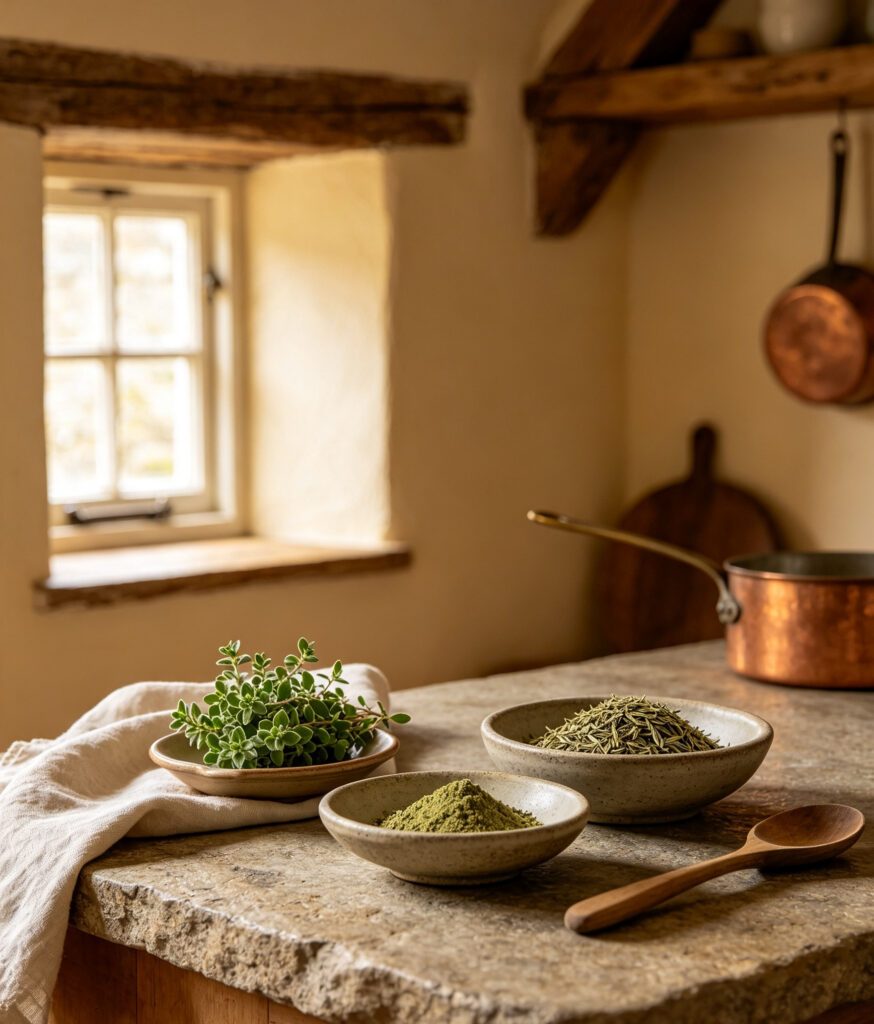
Local / Regional Names
Rigani (Greek); orégano (Spanish/Italian).
Countries / Cuisines
Greece, Italy, Spain, broader Mediterranean. Also (from Greek Oregano): Greece.
Flavor & Aroma
Pungent, peppery-herbal, more intense dried than fresh – one of the few herbs that genuinely improves with drying. Also (from Greek Oregano): Generally considered among the most pungent and aromatic oregano cultivars available.
Culinary Uses
Foundational herb for grilled meats, salads, and tomato-based sauces.
Classic Dishes
Greek salad; souvlaki seasoning; Italian tomato sauces.
Pairings
Olive oil, lemon, tomato, feta.
Timing
Add dried oregano early for sauces to allow flavor to bloom; sprinkle fresh or dried at the end for salads and grilled meats.
Storage
Dried keeps a year or more sealed and dark.
Substitutions
Marjoram for a milder, sweeter result.
Cultural / History Notes
Also (from Greek Oregano): Greek oregano is the most prized regional expression of the same Origanum vulgare subsp. hirtum.
Blend Cross-References
Italian mixed herbs; Greek seasoning; herbes de Provence (minor component in some formulations). Also (from Greek Oregano): Greek seasoning.
Please log in to leave a comment.