
Southeast Asia
Indonesian Bay Leaf / Salam
Syzygium polyanthum.
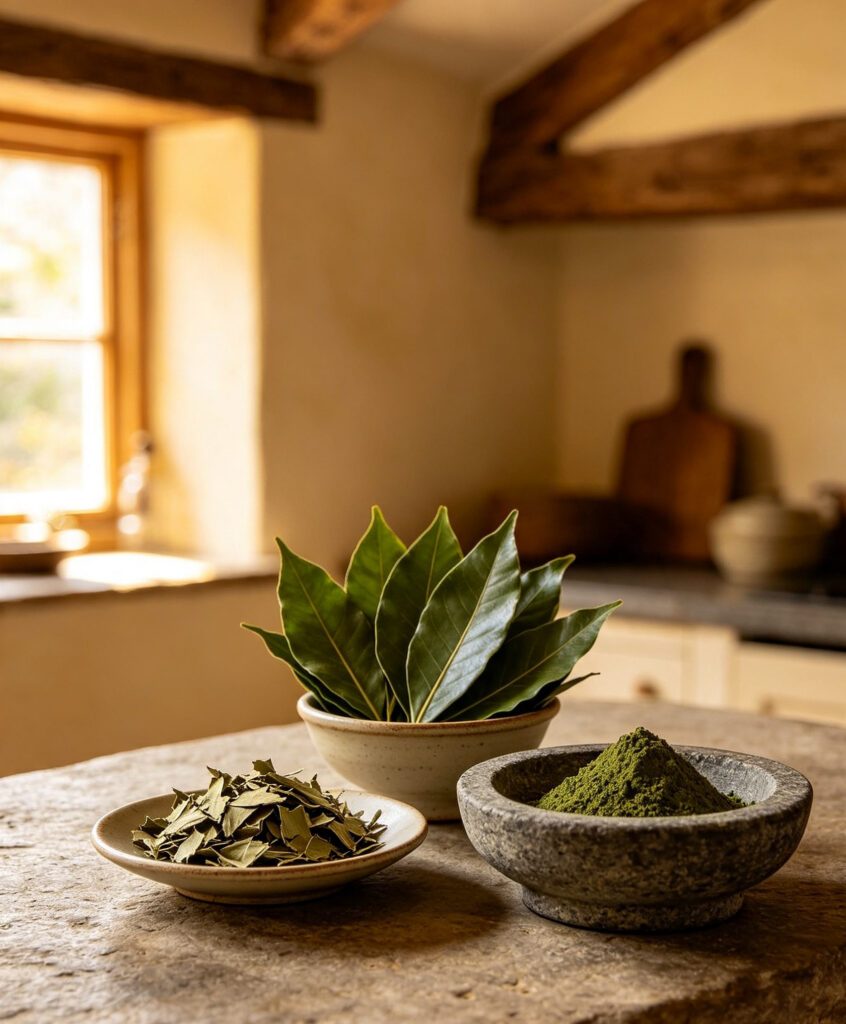
Local / Regional Names
Daun salam (Indonesian/Malay) – NOT the same plant as Mediterranean bay leaf (Laurus nobilis) or Indian bay leaf/tejpat, a three-way naming hazard worth flagging clearly.
Countries / Cuisines
Indonesia (Sumatra, Java, Bali), Malaysia.
Flavor & Aroma
Mild, earthy, slightly sour/astringent, with a faint cinnamon-like undertone – softer and less resinous than Mediterranean bay leaf.
Culinary Uses
Foundational aromatic for Indonesian curries, soups, and rice dishes.
Classic Dishes
Rendang; soto; nasi goreng; various gulai curries.
Pairings
Lemongrass, galangal, coconut milk.
Timing
Add whole leaves early in cooking; remove before serving, as with other bay-type leaves.
Storage
Fresh keeps about a week refrigerated; dried keeps several months to a year.
Substitutions
Indian bay leaf/tejpat is a closer flavor match than true Mediterranean bay leaf, though still not identical; Mediterranean bay leaf in a pinch, understanding the flavor shift.
Cultural / History Notes
A three-way name-identity hazard: 'Indonesian bay leaf,' 'Indian bay leaf', and true Mediterranean bay leaf (Laurus nobilis) are three botanically distinct plants from different families entirely, unified only by a shared English translation convention.
Blend Cross-References
Bumbu dasar (all varieties).
Please log in to leave a comment.